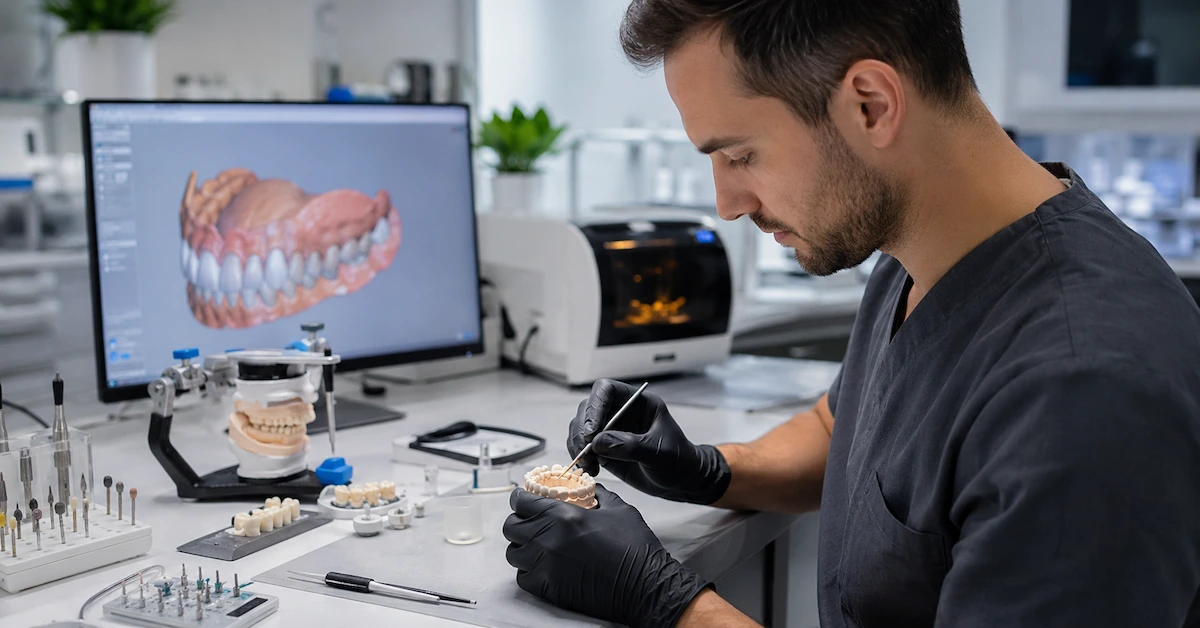

Zirconia has become one of the most widely used materials in modern dental restorations because it combines strength, durability, and aesthetic performance.
However, every clinical case has different requirements. A single posterior crown, anterior aesthetic restoration, implant crown, or multi-unit bridge requires different design considerations.
That is why many dental clinics choose a custom zirconia restoration lab instead of a standard restoration supplier.
A professional custom zirconia laboratory helps dentists manage:
- Individual tooth morphology
- Shade requirements
- Occlusion
- Implant conditions
- Restoration design
- Digital workflow
- Quality verification
At Digilabo Dental Laboratory, custom zirconia restorations are supported through CAD/CAM design, digital case processing, precision fabrication, ceramic finishing, QC inspection, and international dental laboratory services.

What Is a Custom Zirconia Restoration Lab?
A custom zirconia restoration lab is a dental laboratory that designs and manufactures zirconia restorations according to specific clinical requirements.
Unlike standard prefabricated solutions, custom zirconia restorations are created based on:
- Digital scans
- Tooth preparation
- Implant position
- Occlusal requirements
- Patient aesthetics
- Dentist instructions
Custom zirconia solutions may include:
- Zirconia crowns
- Zirconia bridges
- Implant zirconia crowns
- Full arch zirconia restorations
- Anterior zirconia restorations
- Posterior zirconia restorations
A reliable zirconia restoration lab combines digital technology with technician expertise to achieve both functional performance and natural appearance.
You can explore Digilabo’s crown and bridge restoration solutions through the Products page.
Why Choose Custom Zirconia Restorations?
High Strength and Long-Term Performance
Zirconia is widely selected for restorations that require durability.
Advantages include:
- High fracture resistance
- Strong mechanical performance
- Long-term stability
- Suitability for posterior areas
- Support for bridge applications
This makes zirconia suitable for cases where strength is a priority.
Natural Aesthetic Results
Modern zirconia materials have improved significantly in translucency and appearance.
Custom zirconia fabrication allows laboratories to adjust:
- Translucency
- Shade
- Surface texture
- Contour
- Incisal characteristics
For anterior restorations, these details help create a more natural smile.
Digital Manufacturing Compatibility
Zirconia is highly suitable for CAD/CAM production.
Digital workflows allow:
- Accurate scanning
- Precise CAD design
- Computer-controlled milling
- Consistent fabrication
- Digital case storage
This improves communication between clinics and laboratories.
Common Custom Zirconia Restoration Applications
A professional custom zirconia restoration lab should support different clinical applications.
| Restoration Type | Clinical Application | Lab Focus |
|---|---|---|
| Single zirconia crown | Individual tooth restoration | Fit and shade matching |
| Anterior zirconia crown | Cosmetic restoration | Translucency and aesthetics |
| Posterior zirconia crown | High-load areas | Strength and occlusion |
| Zirconia bridge | Multiple missing teeth | Framework strength |
| Implant zirconia crown | Implant cases | Implant compatibility |
| Full arch zirconia restoration | Complex rehabilitation | Digital planning |
Different cases require different zirconia designs and manufacturing approaches.
Custom Zirconia Restoration Workflow
A professional zirconia laboratory should have a structured process.
Step 1: Digital Case Submission
The clinic provides:
- STL/PLY scan files
- Digital prescription
- Bite registration
- Shade information
- Preparation details
- Implant information if required
- Restoration requirements
Complete case information helps the laboratory create accurate restorations.
Digilabo’s Service and FAQ page explains the workflow from case submission and design confirmation to fabrication, QC, and delivery.
Step 2: CAD Design and Customization
The CAD team creates the zirconia restoration based on clinical requirements.
Important design factors include:
- Margin adaptation
- Crown contour
- Contact points
- Occlusion
- Emergence profile
- Implant position
- Tooth morphology
For aesthetic cases, the design also considers:
- Smile harmony
- Natural tooth shape
- Surface texture
- Shade requirements
Step 3: Zirconia Manufacturing
After design approval, the restoration enters production.
The process may include:
- CAD/CAM milling
- Zirconia shaping
- Sintering
- Staining
- Glazing
- Final polishing
The combination of digital precision and technician experience determines the final quality.
Step 4: Quality Control Before Delivery
Before shipment, the laboratory should inspect:
- Marginal fit
- Internal adaptation
- Contact points
- Occlusion
- Crown contour
- Shade consistency
- Surface finish
- Final appearance
QC helps clinics reduce chairside adjustments and improve treatment efficiency.
Monolithic Zirconia vs Customized Layered Zirconia
| Feature | Monolithic Zirconia | Layered Zirconia |
| Strength | Very high | High |
| Aesthetic customization | Moderate | Excellent |
| Best use | Posterior and strength-focused cases | Anterior aesthetic cases |
| Production efficiency | Higher | More technician involvement |
| Appearance | Natural improved options | More detailed characterization |
The best choice depends on restoration location, functional requirements, and aesthetic expectations.
What Clinics Should Look for in a Custom Zirconia Restoration Lab
Choosing a zirconia laboratory requires evaluating more than price.
| Evaluation Factor | Why It Matters |
| Zirconia experience | Ensures predictable results |
| CAD/CAM capability | Improves design accuracy |
| Material knowledge | Supports different clinical needs |
| Customization ability | Improves aesthetic outcomes |
| QC process | Reduces remake risk |
| Communication | Supports complex cases |
| Delivery reliability | Helps clinic scheduling |
A reliable lab partner should help clinics manage cases efficiently and consistently.
Common Problems With Poor Zirconia Restoration Quality
Working with an unsuitable supplier may cause:
- Poor marginal fit
- Incorrect crown contour
- Occlusion issues
- Shade mismatch
- Limited customization
- Excessive chairside adjustment
- Delivery delays
These issues affect both clinic efficiency and patient satisfaction.
A professional custom zirconia restoration lab reduces these risks through structured design, manufacturing, and quality control.
Why Choose Digilabo as a Custom Zirconia Restoration Lab?
Digilabo provides custom zirconia restoration services for global dental clinics and laboratory partners.
Supported solutions include:
- Zirconia crowns
- Zirconia bridges
- Implant zirconia restorations
- Crown and bridge restorations
- CAD/CAM digital workflow
- Shade customization
- Ceramic finishing
- QC inspection
- International delivery
With experienced technicians and digital production capabilities, Digilabo helps clinics achieve reliable zirconia restoration results.
Learn more about Digilabo’s laboratory capabilities through the About Us page.
Custom Zirconia Case Submission Checklist
| Information | Purpose |
| STL/PLY scan | Provides accurate digital data |
| Bite record | Supports occlusion |
| Shade information | Improves aesthetics |
| Preparation details | Supports margin design |
| Implant information | Ensures compatibility |
| Restoration type | Defines workflow |
| Patient expectations | Improves communication |
| Delivery schedule | Supports planning |
Complete case information helps create more predictable zirconia restorations.
FAQ About Custom Zirconia Restoration Lab
1. What is a custom zirconia restoration lab?
A custom zirconia restoration lab designs and manufactures personalized zirconia crowns, bridges, implant restorations, and other zirconia solutions based on clinical requirements.
2. Why do clinics choose custom zirconia restorations?
Clinics choose custom zirconia because it provides strength, durability, digital manufacturing compatibility, and aesthetic customization.
3. What zirconia restorations can a lab produce?
A professional lab can produce zirconia crowns, bridges, implant crowns, anterior restorations, posterior restorations, and full arch solutions.
4. What files are needed for zirconia restoration cases?
Clinics should provide STL/PLY scans, prescriptions, bite records, shade information, and clinical requirements.
5. Can zirconia restorations be used for implants?
Yes. Zirconia implant restorations can be designed according to implant system requirements.
6. How can clinics reduce zirconia remake risk?
Providing accurate digital scans, complete prescriptions, shade information, and clear communication helps reduce remake risk.
7. Does Digilabo provide custom zirconia restoration services?
Yes. Digilabo provides custom zirconia crowns, bridges, implant restorations, CAD/CAM workflows, QC, and international dental laboratory services.
8. How can clinics work with Digilabo?
Clinics can visit Digilabo Dental Laboratory, explore the Products page, or contact the team through the website.
Conclusion
Choosing the right custom zirconia restoration lab helps dental clinics achieve accurate, aesthetic, and predictable restorations.
A professional zirconia partner should provide more than manufacturing. It should support digital workflow, customization, quality control, communication, and reliable delivery.
Digilabo supports global dental clinics with custom zirconia restorations, CAD/CAM technology, crown and bridge solutions, and professional laboratory services. For clinics looking for a reliable zirconia restoration partner, Digilabo provides complete support from digital case submission to final delivery.