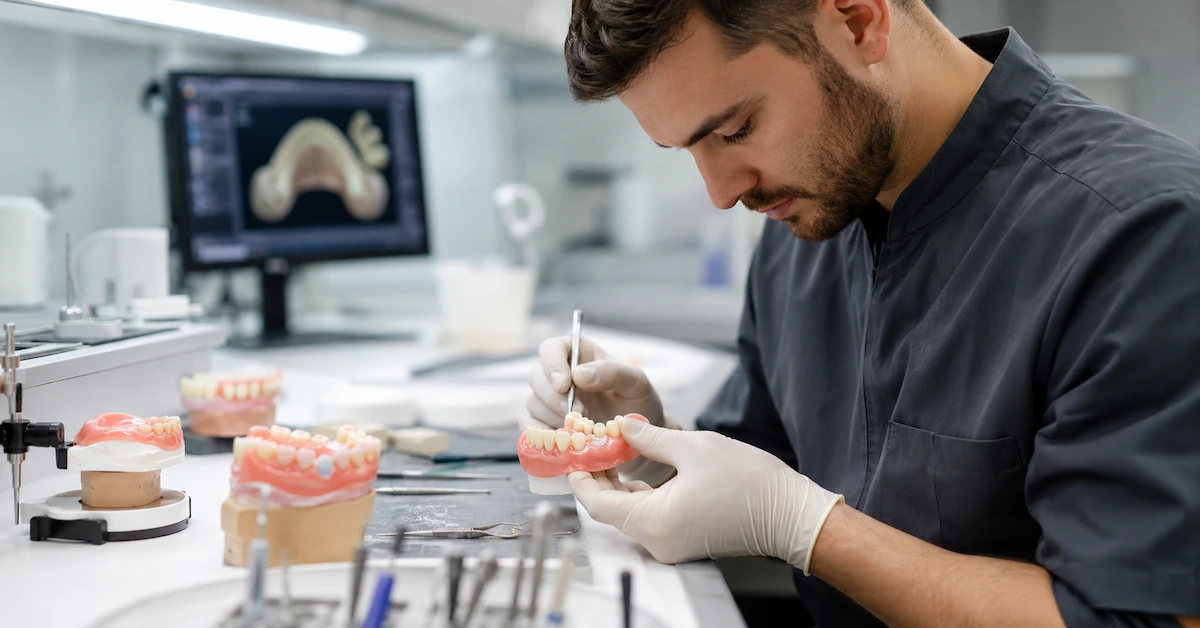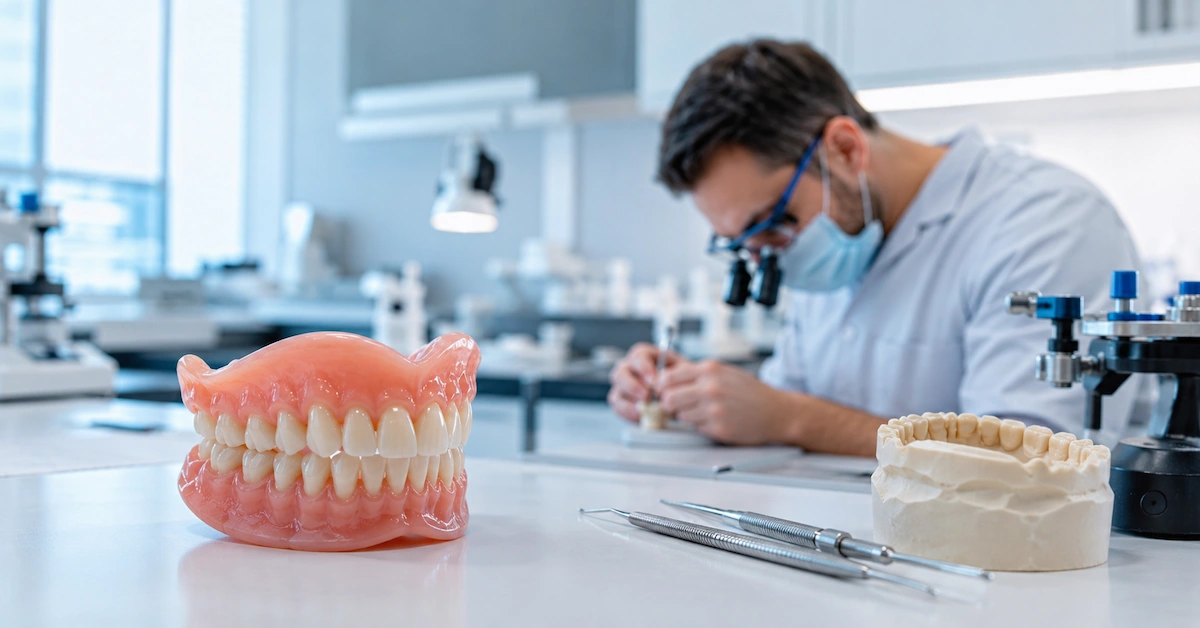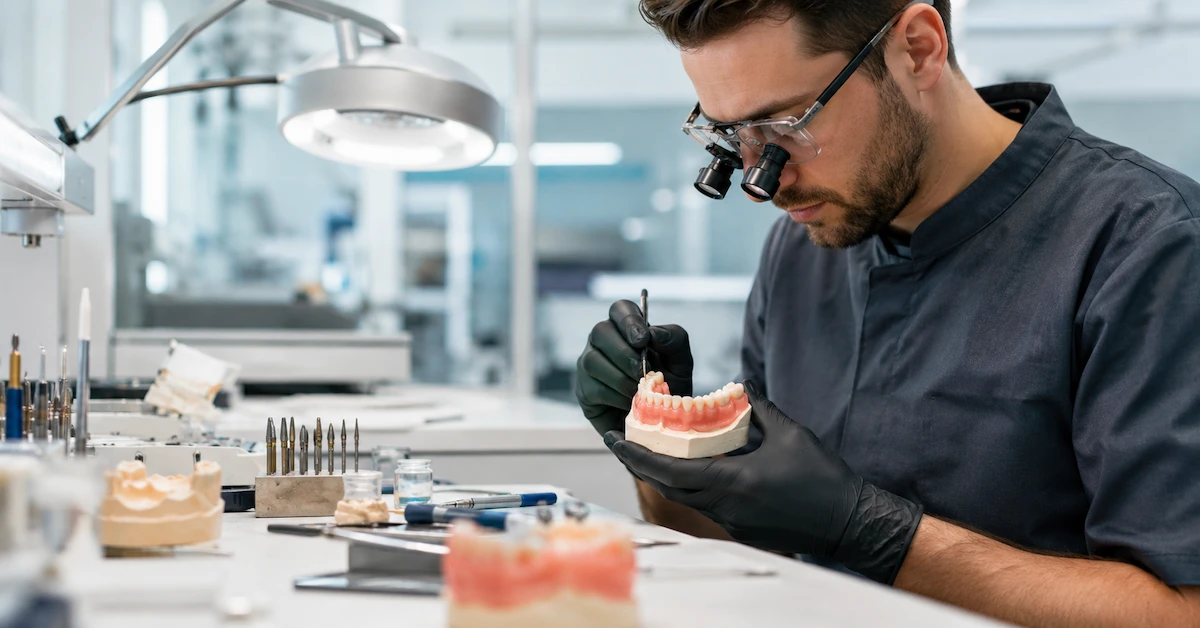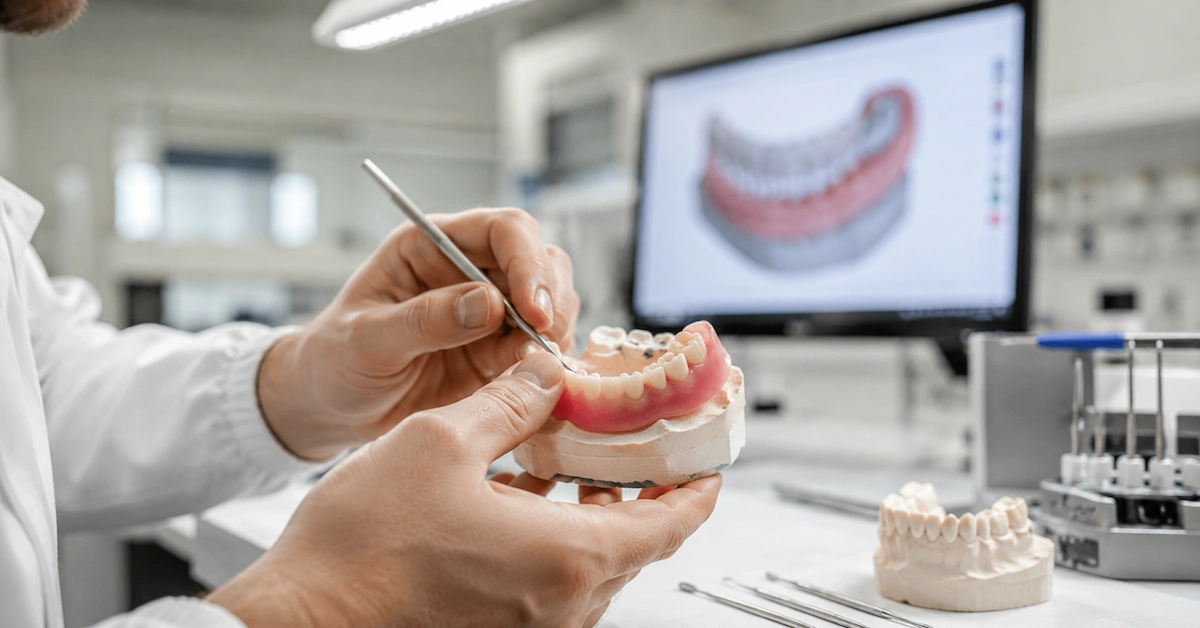

Partial dentures are often used when patients still have some natural teeth but need a removable solution for missing teeth. For dental clinics, these cases are not only about replacing gaps. They also involve retention, stability, tooth support, gum support, occlusion, comfort, and aesthetics.
A poorly designed partial denture can cause loose fit, visible clasp concerns, sore spots, food trapping, difficult insertion, or repeated chairside adjustments. A well-made partial denture helps the clinic deliver a more comfortable and predictable removable restoration.
That is why choosing a reliable partial denture manufacturer is important. The right partner should understand removable design, clasp planning, framework support, flexible materials, digital case submission, and quality control.
At Digilabo Dental Laboratory, partial denture cases are supported through removable restoration experience, digital workflow, material options, framework design, QC inspection, and international dental lab services for global clinics and lab partners.
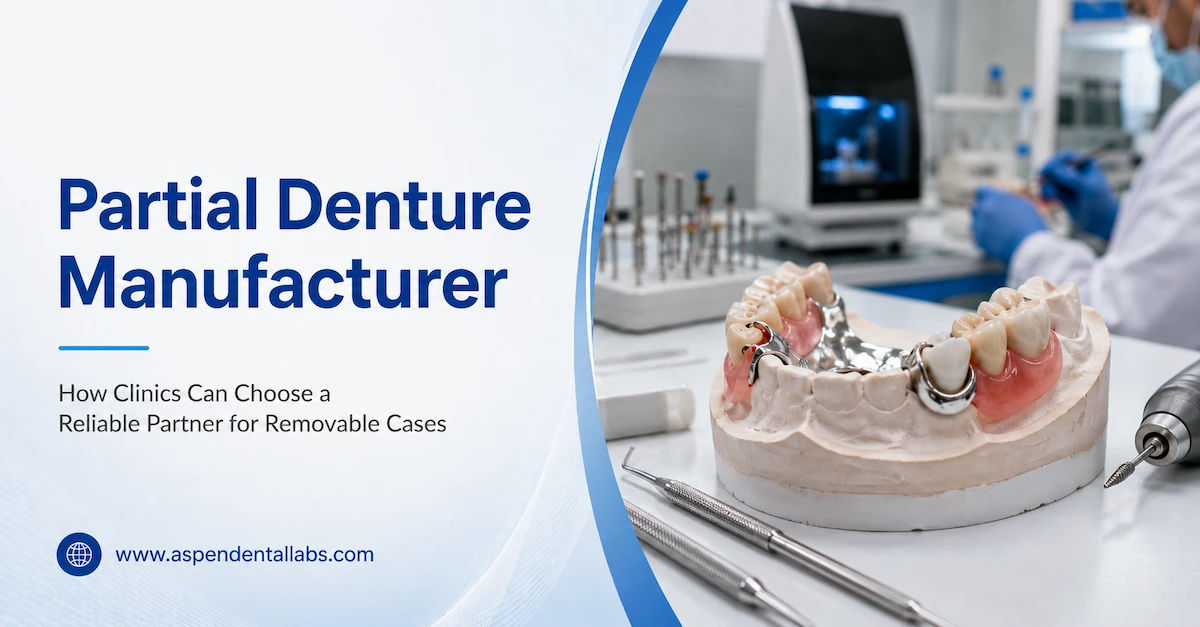
What Does a Partial Denture Manufacturer Do?
A partial denture manufacturer designs and fabricates removable restorations for patients who are missing some teeth while retaining natural teeth.
Partial denture manufacturing may include:
- Removable partial dentures
- Flexible partial dentures
- Acrylic partial dentures
- Co-Cr partial frameworks
- Vitallium partial dentures
- TCS-style flexible partials
- Valplast-style flexible partials
- Cast framework partials
- Combination crowns and partials
- Repair, reline, or add-tooth support
Unlike full dentures, partial dentures must work around remaining teeth. This means the manufacturer must carefully consider support, retention, clasp position, undercuts, occlusion, insertion path, and long-term comfort.
You can explore Digilabo’s removable product categories on the Products page, including dentures, frameworks, and removable partial denture solutions.
Who Needs a Partial Denture Manufacturer?
Partial denture manufacturing is suitable for clinics and dental professionals who need consistent removable case support.
| Buyer Type | Main Need | Recommended Lab Support |
|---|---|---|
| General dental clinics | Reliable partial denture outsourcing | Acrylic and flexible partial dentures |
| Prosthodontists | Complex removable cases | Framework partials and combination cases |
| Geriatric dental clinics | Comfortable tooth replacement | Flexible partials and lightweight designs |
| Dental lab partners | Extra removable production capacity | Partial denture outsourcing |
| Clinics with scanners | Faster case communication | STL/PLY scan-based workflow |
| Implant clinics | Transitional removable solutions | Temporary or planned partial cases |
For these buyers, the manufacturer should provide more than a finished appliance. It should support case review, material selection, design feedback, and predictable delivery.
Main Types of Partial Dentures
A reliable partial denture manufacturer should support different case types because patient needs vary.
1. Flexible Partial Dentures
Flexible partial dentures are often selected when patients want a lightweight and aesthetic removable option. They can reduce visible metal clasp concerns and may provide better visual blending with gum tissue.
They are often used for:
- Small to medium partial cases
- Aesthetic removable cases
- Patients concerned about visible clasps
- Transitional tooth replacement
- Comfort-focused removable solutions
2. Acrylic Partial Dentures
Acrylic partial dentures are commonly used for economical removable treatment plans or temporary cases. They can be useful when the clinic needs a practical solution for missing teeth.
They are suitable for:
- Cost-sensitive cases
- Temporary restorations
- Immediate partial denture needs
- Transitional treatment planning
3. Metal Framework Partial Dentures
Metal framework partials, such as Co-Cr or Vitallium partial dentures, are designed for stronger support and long-term stability.
They are often suitable for:
- Long-span missing tooth cases
- Higher chewing load
- Patients needing stronger retention
- Complex removable cases
- Cases requiring durable framework design
4. Combination Crowns and Partials
Combination cases involve fixed restorations and removable partials working together. These cases require strong lab-clinic communication because crown contours, rests, attachments, and framework design must match precisely.
Partial Denture Manufacturing Workflow
A clear workflow helps clinics reduce remake risk and improve patient satisfaction.
Step 1: Case Submission
The clinic submits complete case details to the manufacturer.
Recommended information includes:
- Digital scan or physical impression
- Upper and lower arch records
- Bite registration
- Remaining tooth condition
- Missing tooth position
- Shade selection
- Gum shade
- Denture type preference
- Framework or clasp design notes
- Undercut or insertion path concerns
- Existing denture reference if available
- Delivery schedule
Digilabo’s Service and FAQ page explains the workflow from case upload and prescription to design validation, production, finishing, QC, and shipping.
Step 2: Case Review
Before fabrication, the manufacturer should review whether the case is suitable for the selected partial denture type.
Important review questions include:
- Are the scan or impression details clear?
- Are the remaining teeth stable enough for support?
- Is the bite record accurate?
- Is the case better for flexible or metal framework design?
- Are clasp areas and undercuts suitable?
- Is gum shade provided?
- Does the patient need a temporary or long-term solution?
This review helps prevent problems before production begins.
Step 3: Design and Framework Planning
Partial denture design must balance comfort, retention, and function.
The manufacturer should consider:
- Support areas
- Retention zones
- Clasp position
- Major connector design
- Minor connector design
- Occlusal rests
- Denture base extension
- Tooth arrangement
- Insertion and removal path
- Tissue and tooth support balance
A partial denture must be easy for the patient to insert and remove while still feeling stable during normal use.
Step 4: Fabrication and Finishing
Depending on the case, the manufacturer may fabricate a flexible partial, acrylic partial, or metal framework partial.
Finishing may include:
- Framework finishing
- Base polishing
- Artificial tooth setup
- Gum contour shaping
- Clasp adjustment
- Occlusion checking
- Surface smoothing
- Final cleaning and packaging
Step 5: Quality Control and Delivery
Before shipping, a reliable manufacturer should check:
- Framework fit
- Base adaptation
- Retention design
- Tooth arrangement
- Occlusion
- Clasp smoothness
- Surface polish
- Shade consistency
- Case details
QC helps clinics receive a more predictable removable restoration and reduces chairside correction time.
Flexible Partial Dentures vs. Metal Framework Partials
| Factor | Flexible Partial Denture | Metal Framework Partial |
| Main benefit | Lightweight and aesthetic | Strong support and stability |
| Common material style | Valplast-style or TCS-style flexible material | Co-Cr or Vitallium framework |
| Clasp appearance | More gum-colored appearance | Metal clasp may be visible |
| Best for | Aesthetic and comfort-focused cases | Complex or long-term support cases |
| Lab focus | Flexibility, fit, gum shade | Framework design, rests, retention |
| Clinic concern | Comfort and appearance | Durability and function |
The best option depends on the patient’s oral condition, remaining teeth, aesthetic expectations, chewing load, and treatment plan.
What Clinics Should Check Before Choosing a Manufacturer
Clinics should not choose a partial denture manufacturer based only on price. A low-cost appliance may create more adjustment time later.
| Evaluation Point | Why It Matters | What Clinics Should Ask |
| Product range | Different patients need different solutions | Do you make flexible, acrylic, and metal framework partials? |
| Material options | Affects comfort, aesthetics, and strength | Do you support TCS, Valplast-style, Co-Cr, or Vitallium partials? |
| Framework capability | Important for complex cases | Can you design cast frameworks? |
| Digital workflow | Improves communication | Do you accept STL/PLY files? |
| QC process | Reduces adjustment risk | What do you check before shipping? |
| Communication | Prevents case misunderstanding | Can you confirm unclear design details before production? |
| Delivery support | Helps clinic scheduling | Do you support international shipping? |
A good manufacturer should help the clinic manage removable cases more efficiently and reduce remake uncertainty.
Common Problems in Partial Denture Cases
Partial denture problems often happen when case information is incomplete or design planning is weak.
Common issues include:
- Loose retention
- Visible clasp complaints
- Sore spots
- Difficult insertion or removal
- Poor bite relationship
- Food trapping
- Unstable framework
- Gum shade mismatch
- Artificial tooth arrangement looks unnatural
- Repeated chairside adjustment
A professional partial denture manufacturer helps reduce these risks by reviewing the case early, selecting suitable materials, planning support properly, and checking the restoration before delivery.
How Digilabo Supports Partial Denture Manufacturing
Digilabo supports dental clinics and lab partners with removable partial denture manufacturing and broader dental lab services.
For partial denture cases, Digilabo can support:
- Removable partial dentures
- Flexible partial dentures
- Acrylic partial dentures
- TCS-style flexible partials
- Valplast-style flexible cases
- Co-Cr partial dentures
- Vitallium partial dentures
- Cast framework partials
- Combination crowns and partials
- Digital case submission
- Framework design support
- QC inspection
- International delivery
For clinics that need other restoration support, Digilabo also provides full dentures, crown and bridge, veneers, implant restorations, and orthodontic appliances. You can learn more about the company’s lab capabilities on the About Us page, or read more removable restoration topics on the Blog page.
Partial Denture Case Submission Checklist
Before sending a partial denture case, clinics can prepare this checklist.
| Case Detail | Why It Matters |
| Digital scan or impression | Captures arch form and remaining teeth |
| Bite record | Supports occlusal accuracy |
| Missing tooth position | Clarifies replacement area |
| Remaining tooth condition | Helps plan support and retention |
| Denture type | Clarifies flexible, acrylic, or framework design |
| Shade selection | Matches patient expectations |
| Gum shade | Improves natural appearance |
| Framework notes | Helps retention and stability |
| Existing denture reference | Useful for remake or repair cases |
| Delivery schedule | Supports patient appointment planning |
Complete case information helps the manufacturer deliver a more predictable partial denture and reduces adjustment time for the clinic.
FAQ About Partial Denture Manufacturer
1. What is a partial denture manufacturer?
A partial denture manufacturer is a dental lab partner that designs and fabricates removable partial dentures based on patient-specific impressions, digital scans, bite records, shades, and dentist prescriptions.
2. What types of partial dentures can be manufactured?
Common options include flexible partial dentures, acrylic partial dentures, metal framework partials, Co-Cr partials, Vitallium partials, TCS-style flexible partials, and Valplast-style flexible cases.
3. What should clinics send for partial denture fabrication?
Clinics should send digital scans or impressions, bite records, shade selection, gum shade, missing tooth positions, denture type preference, framework notes, and delivery requirements.
4. What is the difference between flexible partials and metal framework partials?
Flexible partials are often lightweight and aesthetic, while metal framework partials provide stronger support and stability for more complex removable cases.
5. Can partial dentures be made from digital scans?
Yes. Many partial denture cases can begin with STL/PLY digital scans, depending on case requirements and clinical records.
6. How can clinics reduce adjustment time for partial dentures?
Clinics can reduce adjustment time by sending accurate scans or impressions, stable bite records, clear missing tooth information, shade details, framework notes, and patient concerns.
7. Does Digilabo support partial denture manufacturing?
Yes. Digilabo supports removable partial dentures, flexible partials, acrylic partials, Co-Cr partials, Vitallium partials, framework design, QC inspection, and international delivery.
8. Where can clinics learn more about Digilabo’s removable restorations?
Clinics can visit Digilabo Dental Laboratory, explore the Products page, or review the Service and FAQ page.
Conclusion
Choosing the right partial denture manufacturer helps clinics improve removable restoration fit, retention, comfort, aesthetics, and patient satisfaction.
A reliable manufacturer should support more than basic production. It should help with case review, material selection, framework design, digital workflow, quality control, and delivery planning.
Digilabo provides partial denture manufacturing support for global clinics and lab partners, including removable partial dentures, flexible partials, metal frameworks, Co-Cr partials, Vitallium partials, and combination cases. If your clinic needs a dependable partial denture lab partner, Digilabo can help you manage removable cases with a clearer and more efficient workflow.