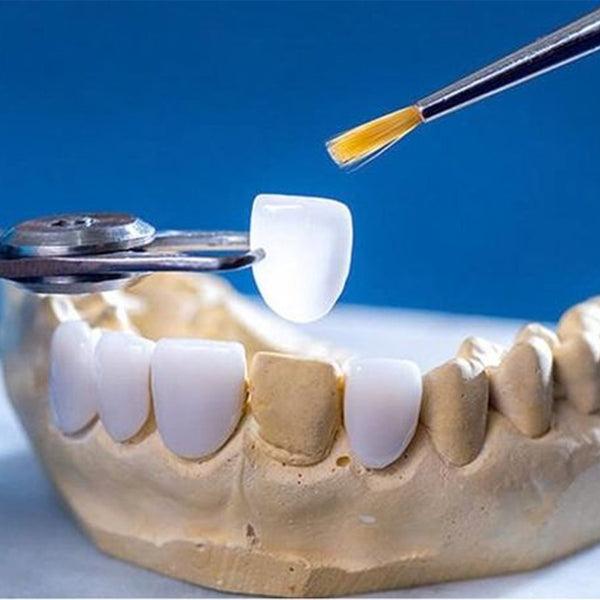

Modern cosmetic dentistry is moving toward more conservative treatment approaches. Patients increasingly want aesthetic improvements without aggressive tooth reduction, while dentists seek solutions that preserve healthy enamel whenever possible.
This shift has increased demand for an experienced ultra thin veneers lab capable of manufacturing highly aesthetic restorations with minimal thickness while maintaining strength, fit accuracy, and natural appearance.
Ultra-thin veneers are often measured in fractions of a millimeter. At these dimensions, even the smallest variation in ceramic processing, shade layering, or edge finishing can significantly influence the final result.
At Digilabo, our ultra thin veneers lab workflow combines digital smile design, CAD/CAM technology, advanced ceramic processing, and multi-stage quality inspection to support predictable cosmetic outcomes while preserving natural tooth structure.
According to the American Academy of Cosmetic Dentistry (AACD), minimally invasive restorative approaches continue to gain popularity due to their ability to preserve enamel while improving smile aesthetics.
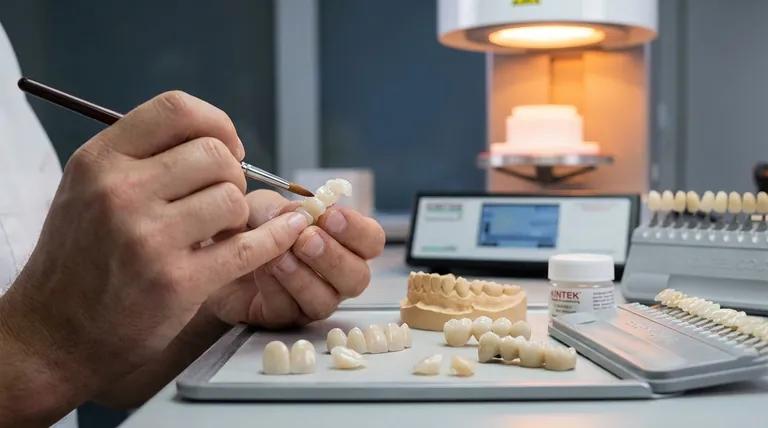
Why Ultra-Thin Veneers Require Specialized Manufacturing
Unlike conventional veneers, ultra-thin restorations provide less room for error.
A professional ultra thin veneers lab must control:
- ceramic thickness consistency
- edge translucency
- marginal adaptation
- shade stability
- surface texture characterization
Because the restoration is thinner, the underlying tooth color can influence the final appearance more significantly.
This makes digital planning and material selection essential parts of the manufacturing process.
Materials Commonly Used in Ultra-Thin Veneers
Not all ceramic materials are suitable for ultra-thin restorations.
The most common materials include:
- Lithium disilicate
- Feldspathic porcelain
- High-translucency ceramics
- Multi-layer ceramic systems
Material Comparison for Ultra-Thin Veneers
| Material | Translucency | Strength | Typical Use |
|---|---|---|---|
| Lithium Disilicate | High | 360–400 MPa | Minimal-prep veneers |
| Feldspathic Porcelain | Very High | Lower | Premium cosmetic cases |
| Multi-Layer Ceramic | High | Medium | Customized smile design |
| Hybrid Ceramic | Moderate | Medium | Conservative restorations |
The balance between translucency and strength is one of the most important factors in veneer selection.
Why Clinics Choose an Ultra Thin Veneers Lab
Many cosmetic practices are moving toward minimally invasive smile design because patients increasingly value tooth preservation.
An experienced ultra thin veneers lab helps clinics achieve:
- less tooth reduction
- improved enamel preservation
- natural-looking smile outcomes
- reduced patient sensitivity
- predictable aesthetic results
The goal is not simply creating thinner veneers.
The goal is creating thinner veneers without sacrificing aesthetics or clinical reliability.
Standard Veneers vs Ultra-Thin Veneers
| Factor | Standard Veneers | Ultra-Thin Veneers |
|---|---|---|
| Tooth Reduction | Moderate | Minimal |
| Enamel Preservation | Moderate | High |
| Aesthetic Potential | High | Very High |
| Patient Comfort | High | Very High |
| Treatment Acceptance | High | Higher |
As patient awareness increases, ultra-thin restorations continue gaining popularity in cosmetic dentistry.
Case Insight: Improving Smile Design with Conservative Preparation
A cosmetic clinic was seeking a solution for patients who wanted aesthetic improvements while preserving as much enamel as possible.
After collaborating with Digilabo:
- digital smile simulations improved treatment planning
- lithium disilicate veneers enhanced translucency
- customized edge finishing improved natural integration
Within several smile makeover cases:
- preparation depth was reduced
- patient acceptance improved
- aesthetic satisfaction increased
The success of these cases was driven by precise planning and manufacturing rather than aggressive preparation.
How Digilabo Supports Ultra-Thin Veneer Workflows
As a specialized ultra thin veneers lab, Digilabo supports clinics through:
- digital STL file workflows
- CAD/CAM veneer design
- advanced ceramic layering
- customized shade mapping
- multi-stage aesthetic inspection
Each veneer is evaluated for:
- marginal fit
- translucency balance
- surface texture
- shade consistency
Our production systems are designed to help clinics deliver highly aesthetic and minimally invasive cosmetic restorations.
FAQ
Q: What is an ultra thin veneers lab?
A: An ultra thin veneers lab specializes in manufacturing minimally invasive veneer restorations designed to preserve natural tooth structure while improving smile aesthetics.
Q: How thin are ultra-thin veneers?
A: Depending on the case, ultra-thin veneers may range from approximately 0.2 mm to 0.5 mm in thickness.
Q: Are ultra-thin veneers durable?
A: Yes. When properly designed and bonded, ultra-thin veneers can provide long-term aesthetic and functional performance.
Working With Digilabo
As an experienced ultra thin veneers lab, Digilabo helps dental clinics achieve predictable cosmetic outcomes through digital workflows, advanced ceramic manufacturing, and precise aesthetic control.
Learn more about our laboratory expertise:
https://www.aspendentallabs.com/about-us
Explore our veneer and restoration solutions:
https://www.aspendentallabs.com/products
Review our workflow and support services:
https://www.aspendentallabs.com/service-page
An ultra-thin veneer is more than a cosmetic restoration. When manufactured correctly, it becomes a conservative solution that preserves natural enamel while delivering long-lasting smile enhancement.