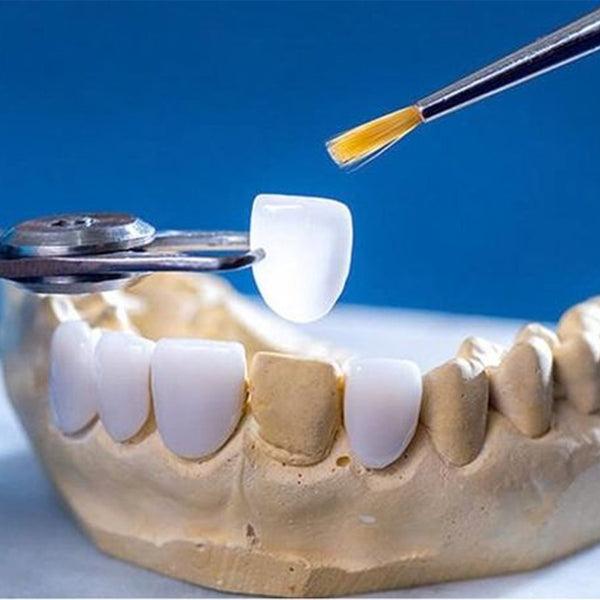

As cosmetic dentistry continues to expand, clinics face growing expectations from patients seeking natural-looking smiles. Veneers are no longer viewed simply as restorative solutions—they are aesthetic treatments that must deliver consistent shade, translucency, and fit across every case.
Unfortunately, many cosmetic practices experience challenges caused by production variability. Even when clinical preparation is excellent, differences in ceramic processing, shade matching, or finishing techniques can result in remakes, additional chairside adjustments, and reduced patient satisfaction.
A professional veneers manufacturing service helps eliminate these variables by combining standardized production systems, digital workflows, and advanced ceramic expertise.
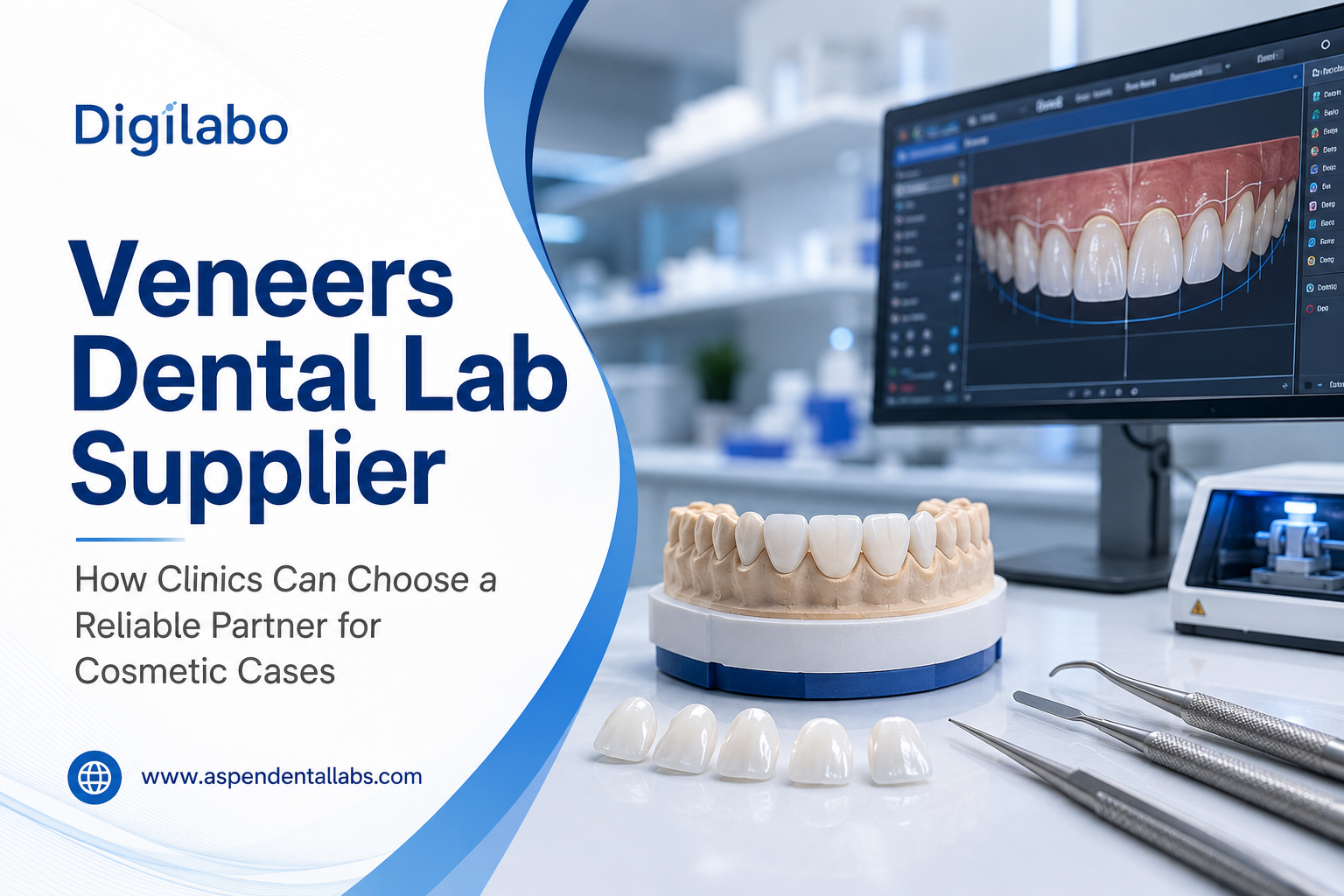
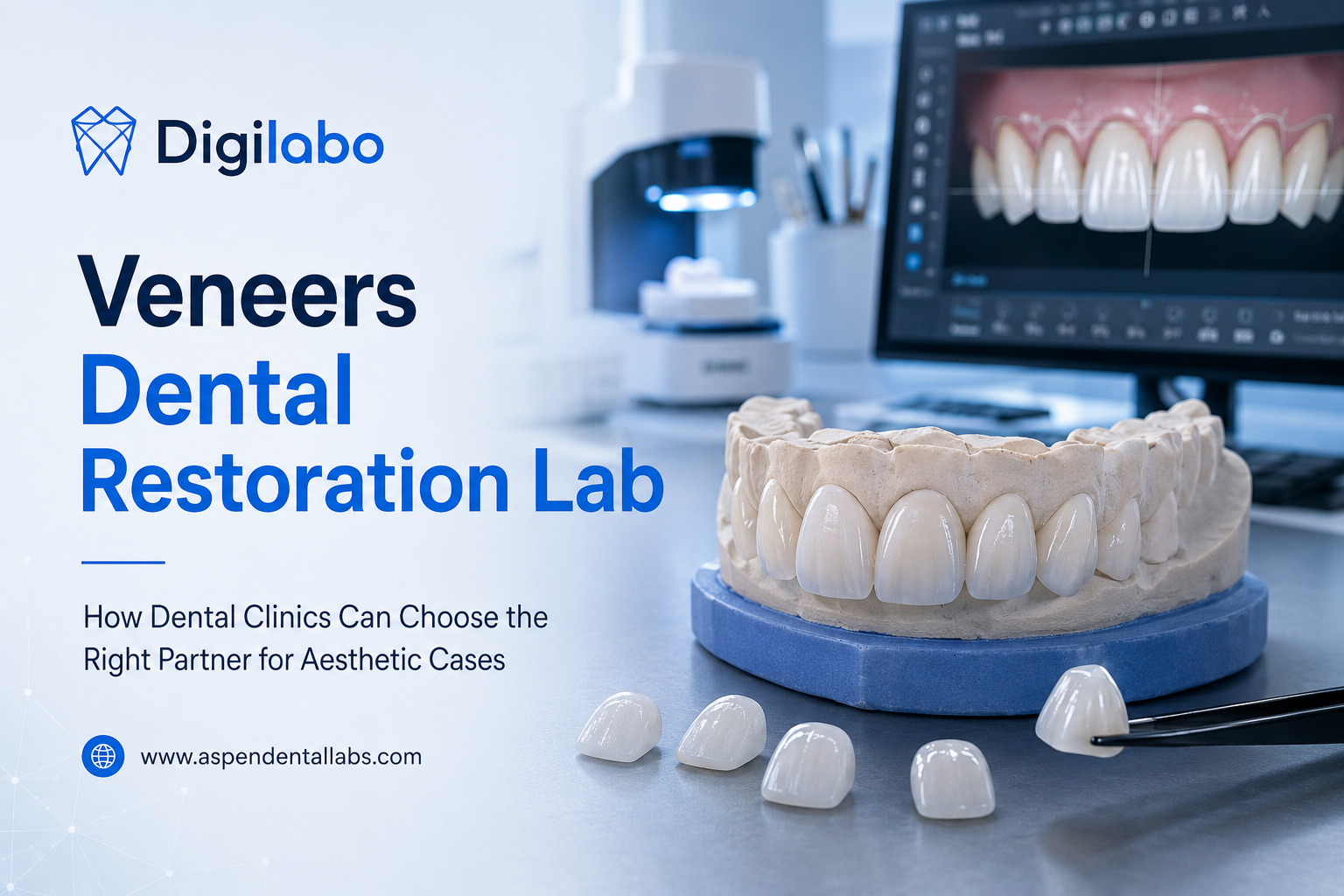
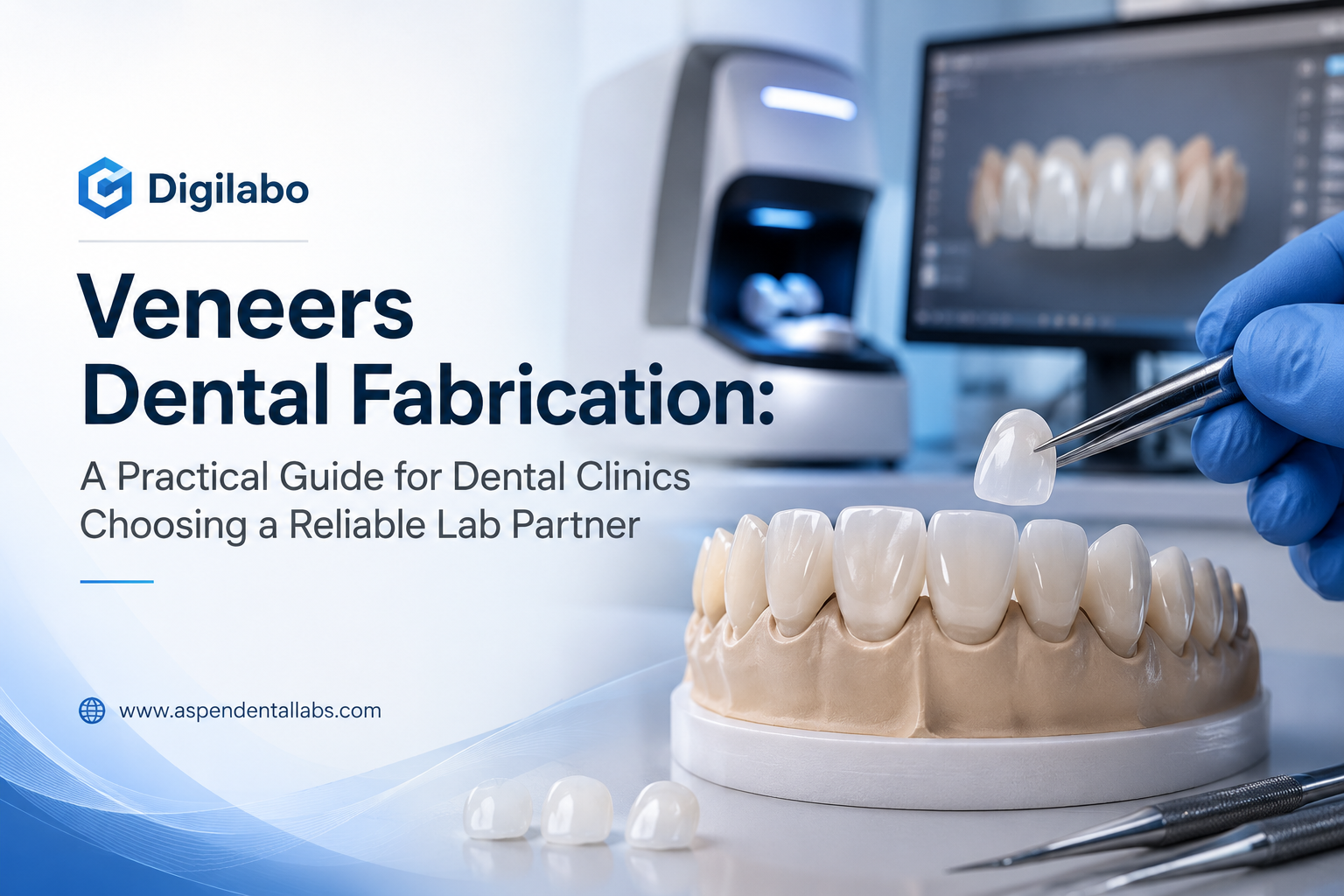
At Digilabo, our veneers manufacturing service integrates CAD/CAM technology, digital smile design, ceramic characterization, and multi-stage quality control to support predictable cosmetic outcomes for dental clinics worldwide.
According to the American Academy of Cosmetic Dentistry (AACD), laboratory precision remains one of the most important factors influencing aesthetic treatment success.
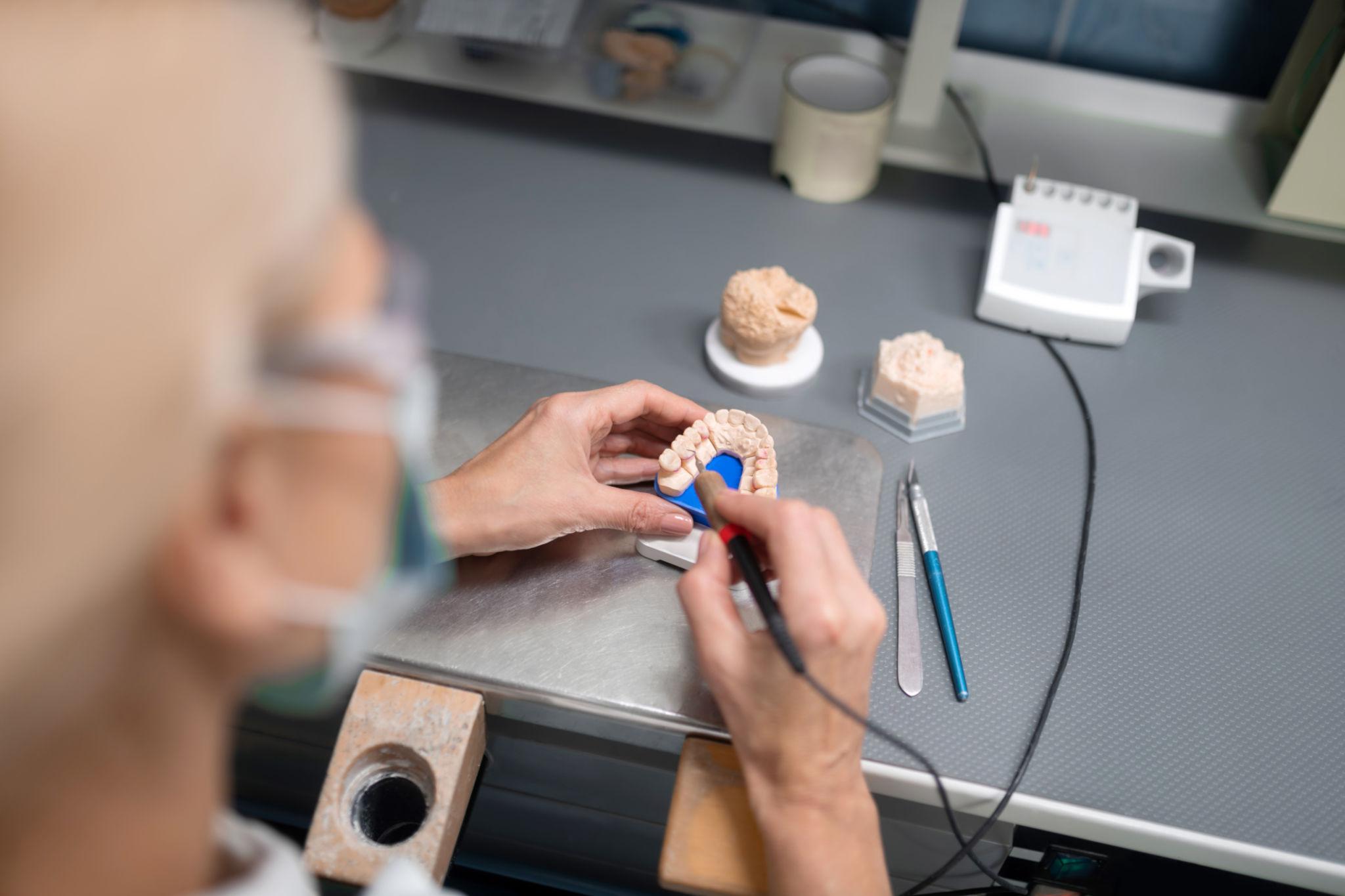
What Defines a Professional Veneers Manufacturing Service
A veneer restoration passes through multiple production stages before reaching the clinic.
A reliable veneers manufacturing service should provide:
- digital case acceptance
- CAD/CAM veneer design
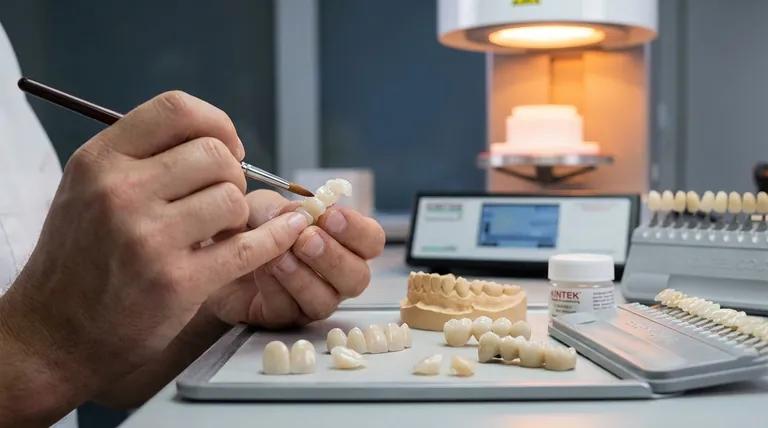
- precise ceramic processing
- customized shade characterization
- controlled firing protocols
- final quality inspection
Each stage directly affects the appearance and long-term performance of the restoration.
When production standards vary, aesthetic outcomes often become unpredictable.
Materials Commonly Used in Veneer Manufacturing
Different clinical situations require different ceramic materials.
At Digilabo, veneer production commonly includes:
- lithium disilicate veneers
- feldspathic porcelain veneers
- layered ceramic veneers
- hybrid ceramic restorations
Veneer Material Comparison
| Material | Translucency | Strength | Typical Application |
|---|---|---|---|
| Lithium Disilicate | High | 360–400 MPa | General cosmetic veneers |
| Feldspathic Porcelain | Very High | Lower | Premium smile design |
| Layered Ceramic | High | Medium | Customized aesthetic cases |
| Hybrid Ceramic | Moderate | Medium | Conservative restorations |
The selection process should balance aesthetics, durability, and clinical requirements.
Why Clinics Outsource Veneer Manufacturing
Many dental clinics choose to work with a dedicated veneers manufacturing service because maintaining high-quality in-house production can be difficult.
Common reasons include:
- increasing cosmetic case volume
- demand for aesthetic consistency
- limited internal production capacity
- need for digital workflow support
- pressure to reduce remake rates
Outsourcing allows clinics to focus on patient care while relying on specialized production teams for manufacturing precision.
Veneers Manufacturing Service vs General Laboratory Production
| Factor | General Lab | Specialized Veneers Manufacturing Service |
|---|---|---|
| Cosmetic Focus | Moderate | High |
| Shade Matching | Standard | Advanced |
| Digital Workflow Integration | Basic | Comprehensive |
| Production Scalability | Limited | Flexible |
| Remake Reduction | Moderate | Significant |
Specialized veneer production workflows often provide more predictable cosmetic results.
Case Insight: Improving Cosmetic Workflow Efficiency
A cosmetic dental clinic was struggling with inconsistent veneer aesthetics across multiple suppliers. While some cases achieved acceptable results, others required additional adjustments or remakes due to shade discrepancies.
After transitioning to Digilabo's veneers manufacturing service:
- digital smile previews improved communication
- ceramic characterization became more consistent
- production variability decreased
Within several months:
- remake rates declined
- patient acceptance improved
- delivery scheduling became more predictable
The improvements were driven by workflow consistency rather than changes in clinical protocols.
How Digilabo Supports Veneer Manufacturing
As an experienced veneers manufacturing service provider, Digilabo supports clinics through:
- STL file compatibility
- CAD/CAM veneer design
- customized shade analysis
- ceramic layering and finishing
- multi-stage inspection procedures
Every veneer restoration is evaluated for:
- marginal adaptation
- shade accuracy
- translucency balance
- surface texture realism
Our production systems are designed to support reliable cosmetic outcomes across both small and high-volume cases.
FAQ
Q: What is a veneers manufacturing service?
A: A veneers manufacturing service specializes in producing cosmetic veneer restorations through digital workflows and controlled ceramic processing.
Q: Why do clinics use a specialized veneers manufacturing service?
A: Specialized providers improve aesthetic consistency, reduce remakes, and offer scalable production support.
Q: Which materials are commonly used for veneer manufacturing?
A: Lithium disilicate, feldspathic porcelain, layered ceramics, and hybrid ceramics are among the most common materials.
Working With Digilabo
As a trusted veneers manufacturing service, Digilabo helps dental clinics achieve predictable cosmetic outcomes through advanced ceramic production, digital workflows, and rigorous quality control.
Learn more about our laboratory expertise:
https://www.aspendentallabs.com/about-us
Explore our veneer and restoration solutions:
https://www.aspendentallabs.com/products
Review our workflow and support services:
https://www.aspendentallabs.com/service-page
A reliable veneers manufacturing service does more than produce restorations. It helps clinics deliver aesthetic treatments with confidence, consistency, and efficiency.