
When the failure of a crown or bridge restoration occurs at the junction rather than in a single component
In restorative dentistry, cases of crowns and bridges may seem simple at the individual tooth level, but they become complex at the systemic level. The marginal fit of an individual tooth may be acceptable, but once multiple teeth are combined, problems such as connectors, contact points, or occlusal balance will arise.
These inconsistencies are rarely caused by a single step. They are usually due to fragmented workflows—different design standards, different material processing methods, and inconsistent occlusion modeling between different units.
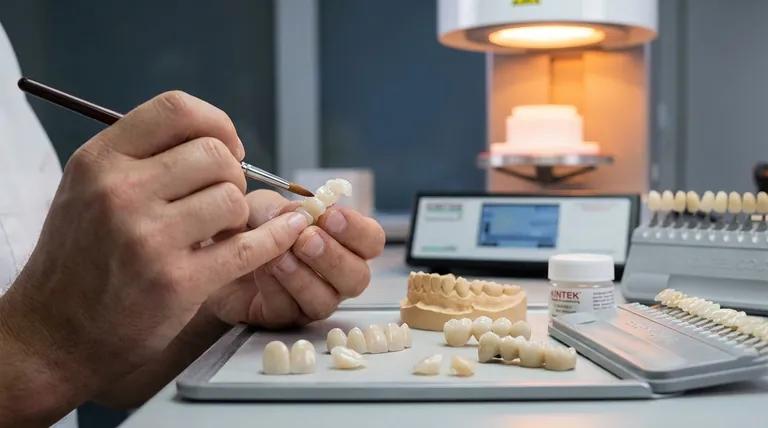
Specialized crown and bridge laboratories are dedicated to integrating these variables into a unified production system. At Digilabo, the design, simulation, and fabrication of crown and bridge cases are performed as a holistic functional structure , ensuring consistent fit, stable contact, and predictable clinical outcomes.
What aspects must a modern dental laboratory for crowns and bridges control?
The key to crown and bridge restorations lies in the combination of precision (margins) and structure (connectors). A good dental laboratory must take both aspects into account.
Main functions include:
- Unified CAD design applicable to multi-unit enclosures
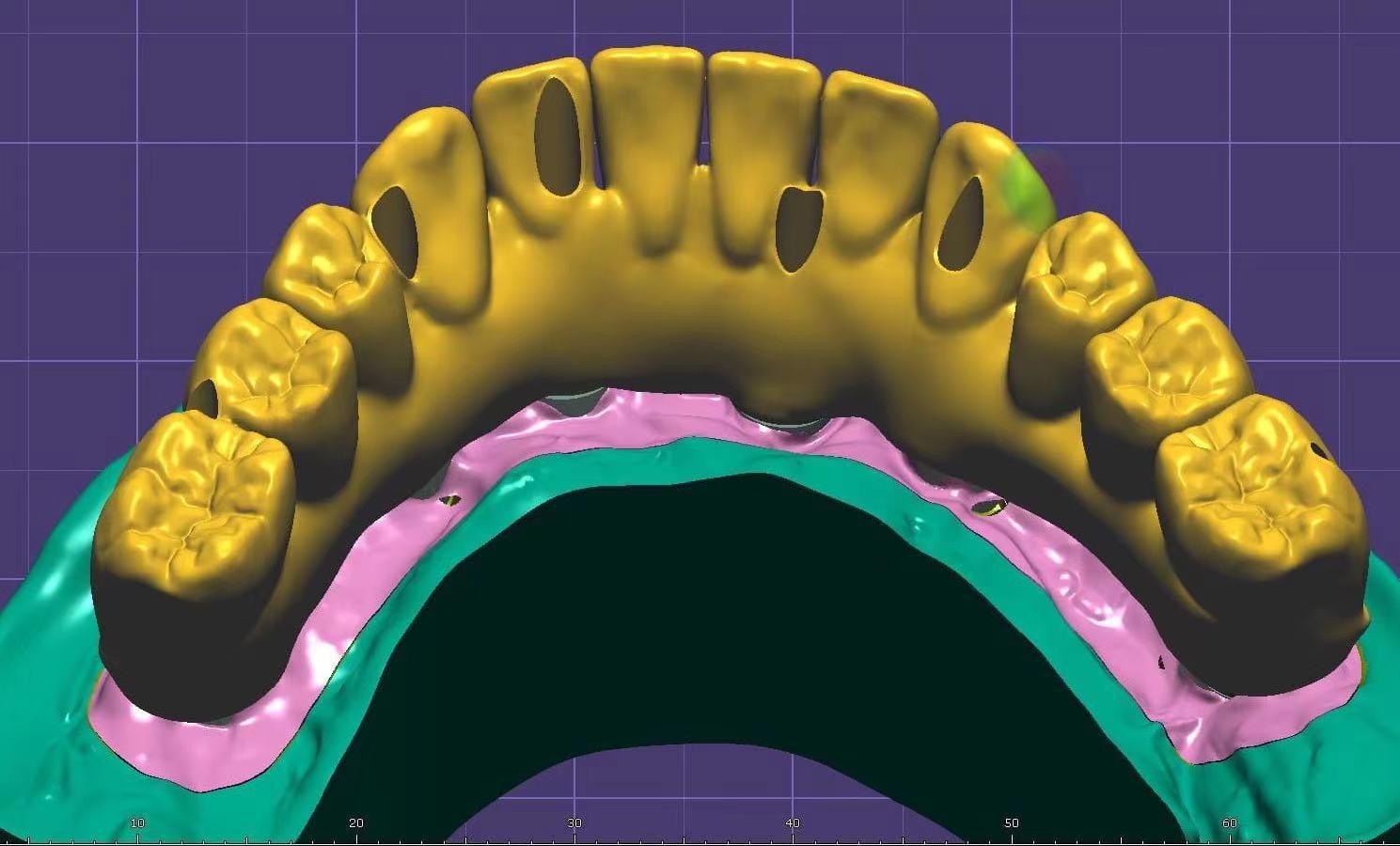
- It simulates the occlusion of the entire dental arch , not just a single tooth.
- Connector optimization based on span and load
- All units within the box use the same material processing technology.
- Pre-production validation to reduce chairside adjustments
When these controls are missing, clinics often encounter the following situations:
- Are the contacts between units tight or loose?
- Uneven occlusal load
- Increase adjustment time
- Higher bridge reconstruction rate
Materials and processing: coordination of strength with span and location
The selection of materials for dental crowns and bridges must take into account the span length, location, and load conditions .
At Digilabo, common options include:
- Monolithic zirconia for posterior teeth and long-span bridges
- Layered zirconia for anterior teeth that provides both aesthetics and sufficient strength
- Traditional long-span reliability PFM
- Lithium disilicate is suitable for anterior tooth restoration cases with short spans and high aesthetic appeal.
Material properties in crown bridge applications
| Material | Strength range | Best Use | Risk control focus |
|---|---|---|---|
| Monolithic Zirconia | 900–1200 MPa | Rear/Long Span | Connector strength |
| Layered Zirconia | 700–900 MPa | Front axle | Layer Integrity |
| pelvic floor muscles | 700–900 MPa | Long span | Metal frame adapter |
| Lithium disilicate | 360–400 MPa | Short span aesthetics | Preventing fractures |
Processing discipline is of paramount importance:
- Sintering deviations can cause a 10-15% change in the density of zirconium oxide.
- Inconsistent milling tolerances can affect the marginal continuity between units.
- Geometric errors in connectors can increase the risk of breakage by 20-30%.
A reliable dental laboratory specializing in crowns and bridges will standardize these parameters on a case-by-case basis.
Why do clinics centralize the fabrication of dental crowns and bridges in one laboratory?
Many clinics initially assign cases to different suppliers—one lab for crowns, another for bridges. Over time, this can lead to inconsistencies at the interface.
Clinics typically switch to using single crowns and bridges in dental laboratories when the following situations are observed:
- Poor contact between adjacent units
- The occlusal philosophy varies from case to case.
- Repeated adjustments during childbirth
- Delays may occur when cases require coordination.
A unified laboratory partner can provide:
- Each unit uses a consistent design language
- Predictable contact and occlusion
- Reduce chair time
- Clear and focused communication
Performance Comparison: Fragmented vs. Integrated Crown Bridge Workflow
| Work process factors | Multiple laboratory setup | Comprehensive Crown Bridge Laboratory |
|---|---|---|
| Consistency | changeable | standardization |
| Blockage predictability | medium | high |
| Adjust time | 10-20 minutes | 4-8 minutes |
| Reproduction rate | 6-10% | 2-4% |
| turn around | 10-15 days | 5-8 days |
Integration reduces variability—a major cause of inefficiency in multi-unit systems.
Case Study: Stable 4-Unit Posterior Bridge
A clinic reported recurring problems with the 3rd and 4th unit posterior bridges:
- Tight contact during insertion
- Uneven bite after sitting
- Occasionally, signs of connector stress appeared during follow-up.
After moving to Dijrabo:
- A full-arch engagement simulation was applied prior to milling.
- The thickness and geometry of the connectors have been standardized.
- The load-bearing area uses monolithic zirconia .
Next quarter's results:
- Chairside adjustment time reduced by approximately 45%.
- The remake rate has decreased by more than 40%.
- Minimal postoperative bite correction
This change did not involve the introduction of new materials, but rather an upgrade to the system-level workflow .
How Crownbridge Laboratory Improves Long-Term Stability
Besides site selection, long-term success also depends on the structure's performance in actual use.
A highly skilled dental crown and bridge restoration laboratory can ensure:
- The load distribution on the bridge abutment is balanced.
- Stable connectors for multi-unit integrity
- Consistent marginal fitting among units
- Material integrity under repeated stress cycles
Because dental crowns and bridges are not isolated units—they function as a system over time .
Q&A
Q: What services does the dental laboratory offer for crowns and bridges?
A: It designs and manufactures single crowns and multiple bridges with coordinated occlusion, contact and structural integrity.
Q: Why is dental bridge restoration more challenging than single crown restoration?
A: Bridges require management of multi-unit load distribution, connector strength, and consistent coordination between all units.
Q: Can digital workflows shorten the adjustment time for dental crowns and bridges?
A: Yes. Full bow-shaped simulation and standardized manufacturing processes can significantly reduce chairside adjustments.
Partnering with Digilabo
Digilabo is a digitally-driven dental laboratory for crowns and bridges that integrates design, simulation, and manufacturing into a controlled workflow.
Get to know our team and processes:
https://www.aspendentallabs.com/about-us
View all repair categories and solutions:
https://www.aspendentallabs.com/products
When crowns and bridges are manufactured as a system, clinical outcomes are more predictable.