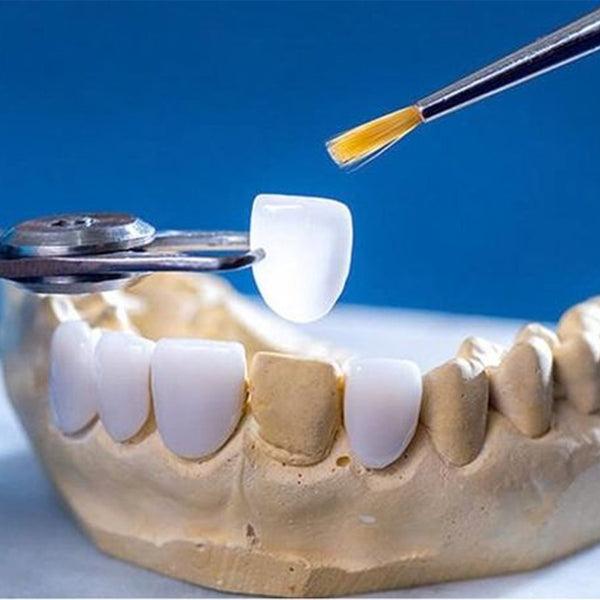

For cosmetic dental clinics, veneers are one of the most visible restorations. Patients care about shape, color, brightness, symmetry, and natural appearance. Dentists care about marginal fit, contact points, occlusion, material strength, and chairside efficiency.
That is why choosing a reliable veneers dental lab supplier is not only a purchasing decision. It is a clinical workflow decision.
A good supplier should help clinics reduce adjustment time, improve case consistency, and support aesthetic communication from digital scan to final restoration. For single anterior veneers, multi-unit smile design, or diagnostic wax-up cases, the dental lab supplier directly affects both treatment efficiency and patient satisfaction.
At Digilabo Dental Laboratory, veneer cases are supported by digital dental lab services, CAD/CAM workflows, material selection, ceramic finishing, and quality control for global dental clinics and lab partners.
What Does a Veneers Dental Lab Supplier Do?
A veneers dental lab supplier designs and fabricates custom veneers for cosmetic and restorative dental cases. The supplier may also provide diagnostic wax-ups, digital case review, material guidance, shade communication, finishing, and international shipping.
A professional veneer supplier should understand that veneers are different from standard posterior crowns. Veneer cases require stronger attention to:
- Smile design
- Tooth proportion
- Incisal translucency
- Surface texture
- Shade matching
- Preparation thickness
- Margin adaptation
- Contact points
- Occlusal guidance
- Patient expectations
The final veneer should not look bulky, flat, or overly white. It should blend naturally with surrounding teeth while maintaining proper function and fit.
You can review Digilabo’s veneer-related product categories through the Products page, including veneers and diagnostic wax-ups.
Who Needs a Veneer Dental Lab Supplier?
Veneer lab services are mainly suitable for clinics and partners handling cosmetic or anterior restorative cases.
| Buyer Type | Main Need | Recommended Lab Support |
|---|---|---|
| Cosmetic dental clinics | Natural-looking smile design | Veneers, E.max veneers, diagnostic wax-ups |
| General dental clinics | Reliable outsourcing for aesthetic cases | Digital veneer fabrication and QC |
| Prosthodontists | Accurate margins and functional design | Custom veneer restorations |
| Dental lab partners | Extra production capacity | Veneer outsourcing supplier |
| Clinics with intraoral scanners | Digital workflow support | STL/PLY scan-based design |
| Smile design clinics | Patient communication tools | Diagnostic wax-ups and preview cases |
For these customers, the supplier should not only provide products. It should provide a workflow that helps the clinic manage communication, quality, and delivery.
Key Products a Veneers Dental Lab Supplier Should Offer
A reliable veneer supplier should support more than one basic veneer option.
1. E.max Veneers
E.max or lithium disilicate veneers are commonly used for cosmetic anterior cases because they offer natural translucency and strong aesthetic performance.
They are suitable for:
- Smile design cases
- Anterior veneers
- Mild discoloration correction
- Shape improvement
- Minimal-prep or conservative cases, depending on clinical requirements
2. Layered Ceramic Veneers
Layered ceramic veneers allow more detailed customization of shade, texture, and incisal effects. They are suitable for cases where natural character is important.
3. Diagnostic Wax-Ups
Diagnostic wax-ups help dentists preview the possible final result before treatment. They are useful for treatment planning, patient communication, and multi-unit veneer cases.
4. Digital Design Support
A digital veneer supplier should support STL/PLY files, scan codes, digital prescriptions, CAD design, and case review before production.
5. Shade and Texture Customization
Veneer cases often require customized shade mapping, surface texture, and incisal characterization. A supplier with strong ceramic finishing skills can help cases look more natural.
Digital Workflow for Veneer Lab Supply
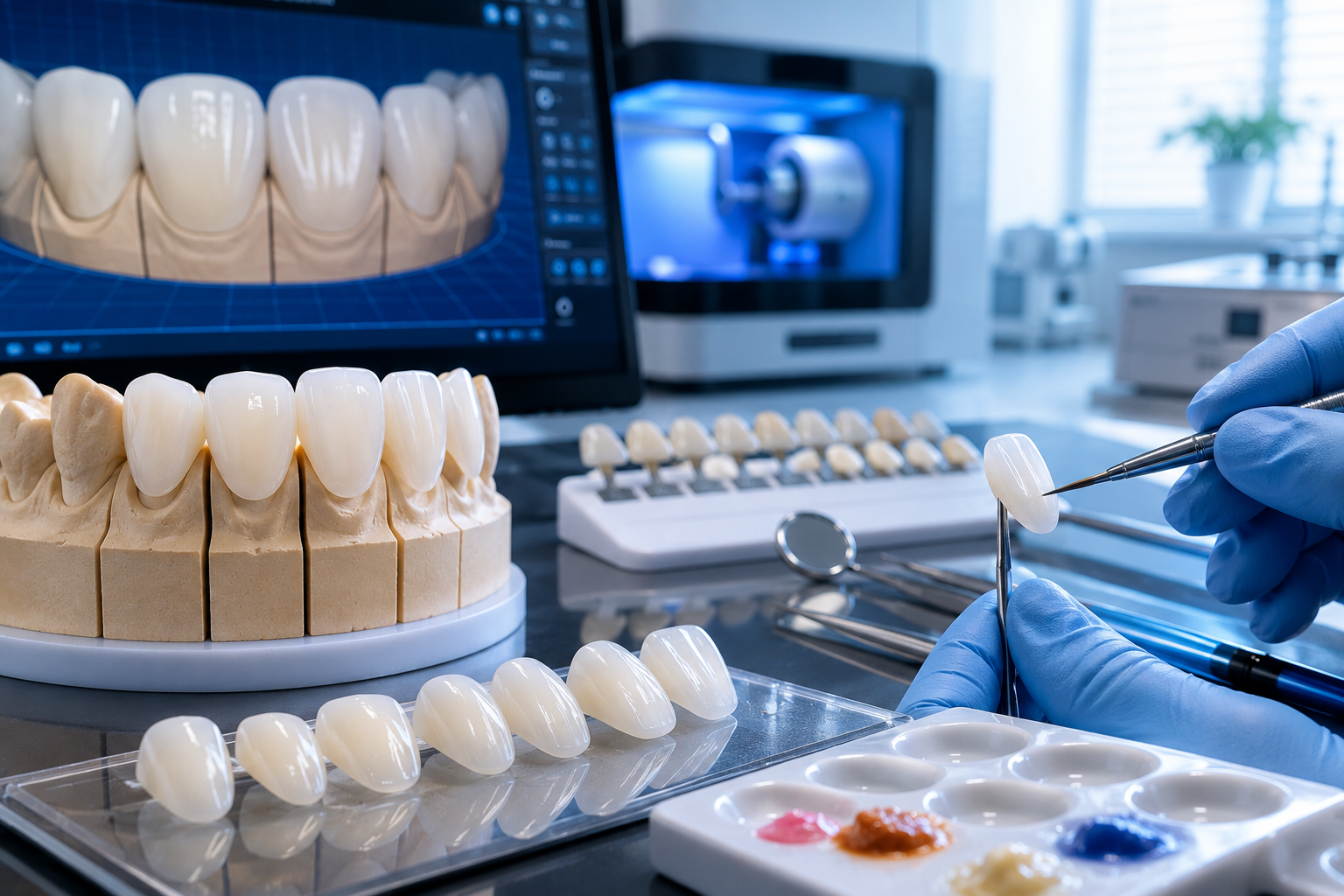
A clear digital workflow makes veneer cases easier to manage.
Step 1: Case Submission
The clinic sends the required case files and instructions, such as:
- STL or PLY digital scan files
- Bite record
- Digital prescription
- Preparation margin
- Smile photos
- Shade tab photos
- Stump shade if needed
- Number of veneer units
- Material preference
- Patient expectation notes
Clear case information helps reduce misunderstandings and remake risk.
Digilabo’s Service and FAQ page explains the digital lab workflow from upload and prescription to design validation, production, finishing, QC, and shipping.
Step 2: Case Review
Before design, the supplier should check whether the case is suitable for veneer fabrication.
Important review points include:
- Are the margins clear?
- Is there enough space for the selected material?
- Is the bite record stable?
- Are the photos useful for shade communication?
- Is the stump shade dark or normal?
- Does the case need a diagnostic wax-up first?
- Are there occlusal risks?
This review helps the clinic avoid problems before production begins.
Step 3: CAD Design
The CAD team designs the veneer according to the scan and prescription.
Good veneer design should consider:
- Tooth length
- Width-to-height ratio
- Midline
- Incisal edge position
- Emergence profile
- Contact strength
- Surface contour
- Margin fit
- Smile harmony
For 6-unit, 8-unit, or 10-unit veneer cases, symmetry and proportion are especially important.
Step 4: Fabrication and Finishing
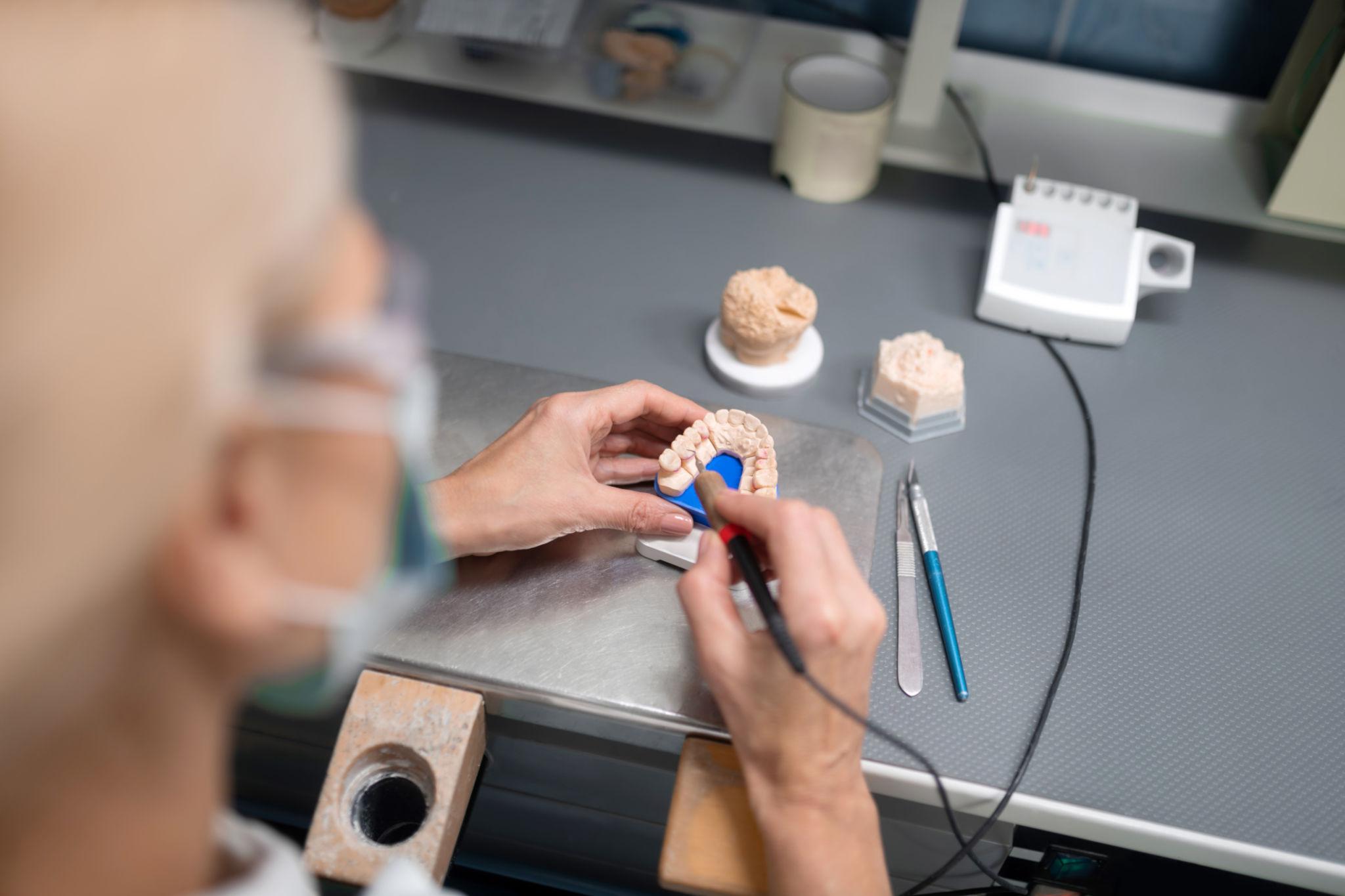
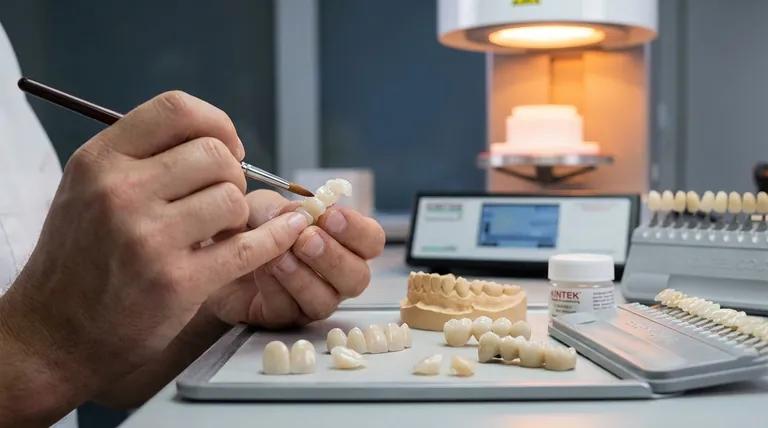
After design approval, the veneers are fabricated, finished, stained, glazed, and polished.
The finishing stage is important because the final appearance depends on more than shape. Natural veneers need controlled translucency, proper value, surface texture, and light reflection.
Step 5: Quality Control and Shipping
Before shipping, a professional supplier should inspect:
- Marginal fit
- Seating
- Contact points
- Occlusion
- Shade consistency
- Surface finish
- Case details
- Final appearance
QC photos can help clinics review the case before delivery.
What to Check Before Choosing a Veneers Dental Lab Supplier
Not every dental lab is a good supplier for cosmetic veneer cases. Clinics should evaluate suppliers based on quality, communication, and workflow.
1. Does the Supplier Understand Aesthetic Dentistry?
A veneer supplier should understand natural tooth morphology, smile design, translucency, texture, and patient expectations. Veneers are not only technical restorations. They are aesthetic restorations.
2. Does the Supplier Support Digital Files?
A modern veneers dental lab supplier should accept digital scans, STL/PLY files, scan codes, and digital prescriptions. This improves communication and supports faster case review.
3. Are Material Options Clear?
The supplier should explain material options based on case needs, including E.max veneers, layered ceramic, zirconia-based options when needed, and diagnostic wax-ups.
4. Is Shade Communication Practical?
Shade matching is one of the biggest challenges in veneer cases. A good supplier should request shade tab photos, smile photos, stump shade, and clear notes about the desired final result.
5. Is the QC Process Reliable?
Clinics should ask how the supplier checks margins, contacts, occlusion, seating, shade, and ceramic finish before shipping.
6. Can the Supplier Support Repeat Orders?
For long-term cooperation, the supplier should understand the clinic’s preferred tooth shape, contact tightness, shade style, and communication habits. This improves consistency over time.
You can learn more about Digilabo’s production capacity, technician team, and lab capabilities on the About Us page.
Veneer Supplier Comparison Table
| Supplier Factor | Why It Matters | What Clinics Should Ask |
| Digital workflow | Improves case review and communication | Do you accept STL/PLY files? |
| Material options | Affects strength and aesthetics | Do you offer E.max veneers? |
| Shade process | Reduces mismatch risk | What photos do you need for shade matching? |
| Diagnostic wax-ups | Helps patient communication | Can you support smile design planning? |
| QC inspection | Reduces adjustment and remake risk | Do you check margins and occlusion before shipping? |
| Delivery support | Helps appointment planning | What is the typical turnaround time? |
| Long-term cooperation | Improves consistency | Can you store digital case records? |
Common Problems When Choosing the Wrong Veneer Supplier
A low-quality or unsuitable veneer supplier can create problems such as:
- Veneers look too opaque or unnatural
- Margins do not seat properly
- Contact points are too tight or too loose
- Surface texture looks flat
- Shade does not match adjacent teeth
- Multi-unit cases lack symmetry
- Delivery time is unstable
- Remake communication is slow
- The clinic spends too much chairside time adjusting
These problems can affect both clinic efficiency and patient trust. That is why the right supplier should be evaluated by fit, aesthetics, communication, and consistency, not only by price.
How Digilabo Supports Veneer Dental Lab Supply
Digilabo provides dental lab services for global clinics and lab partners, including veneers, diagnostic wax-ups, crown and bridge, implant restorations, removable restorations, and orthodontic appliances.
For veneer cases, Digilabo can support clinics with:
- Digital file submission
- STL/PLY scan workflow
- CAD/CAM design
- E.max veneer fabrication
- Diagnostic wax-ups
- Custom shade communication
- Ceramic finishing
- Stain and glaze
- QC inspection
- International delivery support
For clinics that need a broader dental lab partner, Digilabo also provides crown and bridge, implant restorations, removable dentures, and orthodontic appliances. You can explore more dental lab insights on the Blog page.
Veneer Case Submission Checklist
Before sending a veneer case to a supplier, clinics can prepare the following details:
| Case Detail | Why It Matters |
| Digital scan file | Helps the lab evaluate fit and margins |
| Bite record | Supports occlusal design |
| Digital prescription | Clarifies material and restoration plan |
| Shade photos | Helps improve color matching |
| Smile photos | Supports aesthetic design |
| Stump shade | Important for dark underlying teeth |
| Material preference | Guides translucency and strength |
| Diagnostic wax-up request | Helps with patient communication |
| Delivery schedule | Helps plan appointments |
| Special notes | Reduces design misunderstanding |
A complete submission improves the chance of receiving a seat-ready restoration with fewer adjustments.
FAQ About Veneers Dental Lab Supplier
1. What is a veneers dental lab supplier?
A veneers dental lab supplier is a dental laboratory partner that fabricates custom veneers for cosmetic and restorative dental cases. The supplier may also provide digital design, diagnostic wax-ups, material selection, finishing, and QC.
2. What should clinics send for veneer fabrication?
Clinics should send STL/PLY digital scans, bite record, prescription, shade photos, smile photos, stump shade if needed, material preference, and any special design notes.
3. What material is commonly used for veneers?
E.max or lithium disilicate is commonly used for cosmetic veneers because it offers natural translucency and good aesthetic performance. The best material depends on case requirements.
4. Why are diagnostic wax-ups useful?
Diagnostic wax-ups help dentists preview the final smile design, explain the treatment plan to patients, and reduce uncertainty before final veneer fabrication.
5. Can veneers be made from digital scans?
Yes. Veneers can be fabricated from intraoral scan data, STL/PLY files, or scan codes through a digital dental lab workflow.
6. How can clinics improve shade matching?
Clinics can improve shade matching by providing high-quality shade tab photos, smile photos, stump shade information, and clear notes about the desired final result.
7. How do I choose a reliable veneer supplier?
Choose a supplier that understands cosmetic dentistry, supports digital files, offers suitable materials, provides clear QC, communicates well, and can support repeat cases.
8. Does Digilabo provide veneer lab supply services?
Yes. Digilabo supports veneer cases, diagnostic wax-ups, CAD/CAM design, ceramic finishing, QC, and international dental lab services for clinics and lab partners.
9. Where can I see Digilabo’s veneer-related products?
You can visit the Digilabo Products page to view veneers, diagnostic wax-ups, crown and bridge, implant restorations, removables, and orthodontic appliances.
10. How can clinics start working with Digilabo?
Clinics can visit Digilabo Dental Laboratory, review the Service and FAQ page, or learn more about the lab through the About Us page.
Conclusion
A reliable veneers dental lab supplier should provide more than veneer production. It should support case review, digital design, material selection, shade communication, ceramic finishing, QC, and delivery planning.
For cosmetic dental clinics, the right supplier can help reduce chairside adjustments, improve aesthetic predictability, and build a smoother workflow for repeat veneer cases.
Digilabo supports global clinics and lab partners with veneer fabrication, diagnostic wax-ups, and broader digital dental lab services. If your clinic needs a stable veneer lab supplier for aesthetic cases, Digilabo can help you manage cases with a clearer and more efficient workflow.