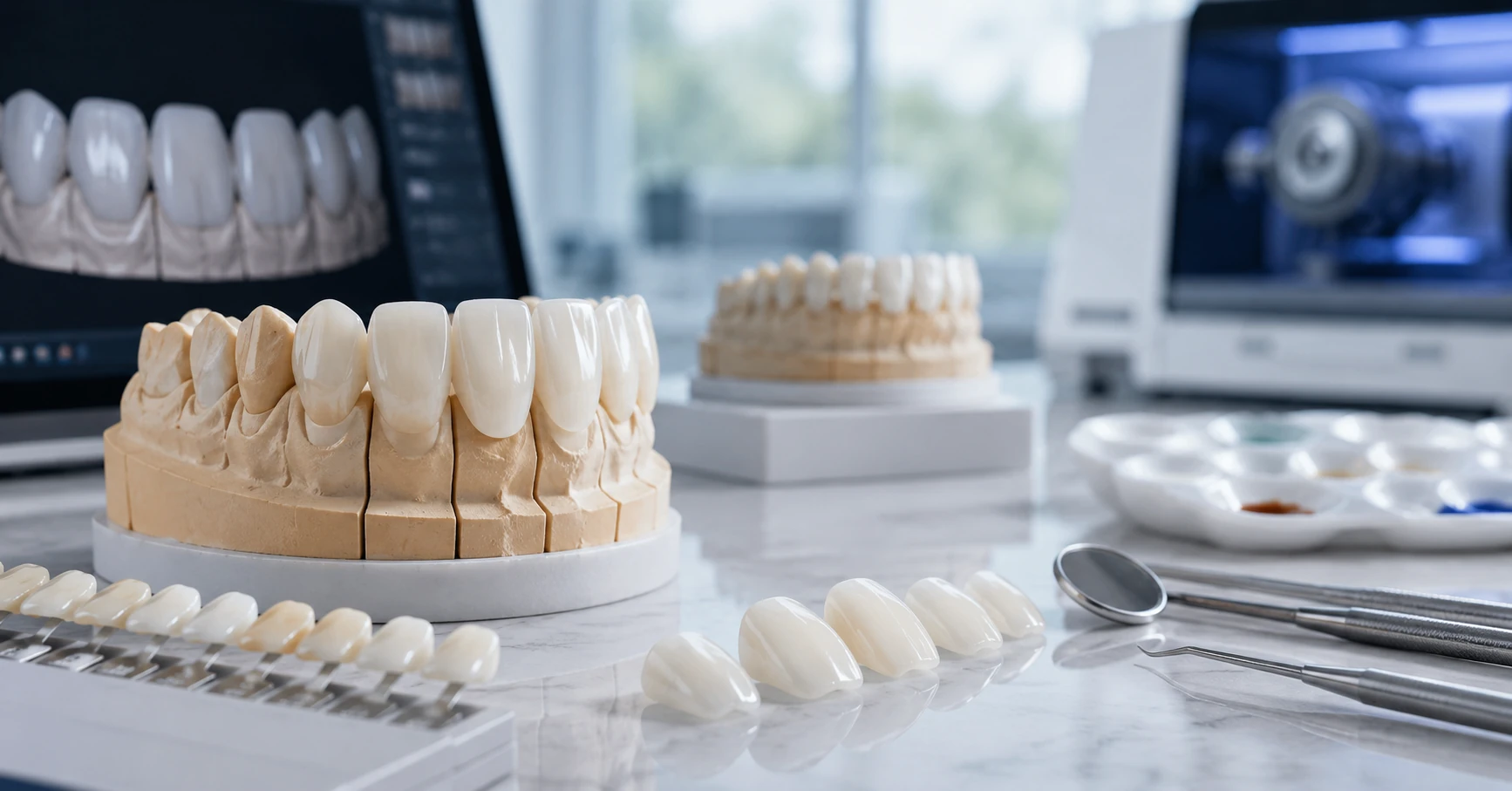

Why Choosing a Diagnostic Wax Up Partner Is a Long-Term Clinical and Business Decision
Finding a reliable diagnostic wax up partner involves more than identifying a laboratory that can produce an attractive digital tooth design. For cosmetic dentists, prosthodontists, restorative clinics, and multi-location dental groups, the more important question is whether the laboratory can support consistent treatment planning, communicate clinical requirements accurately, and maintain design continuity from the initial wax-up to the definitive restoration.
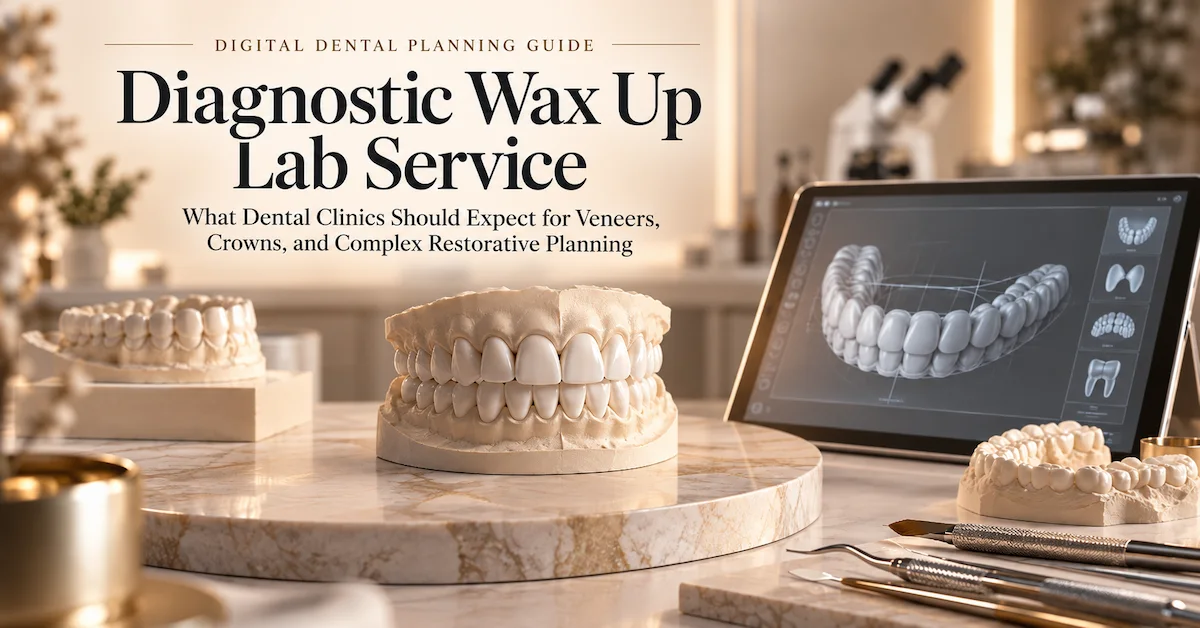
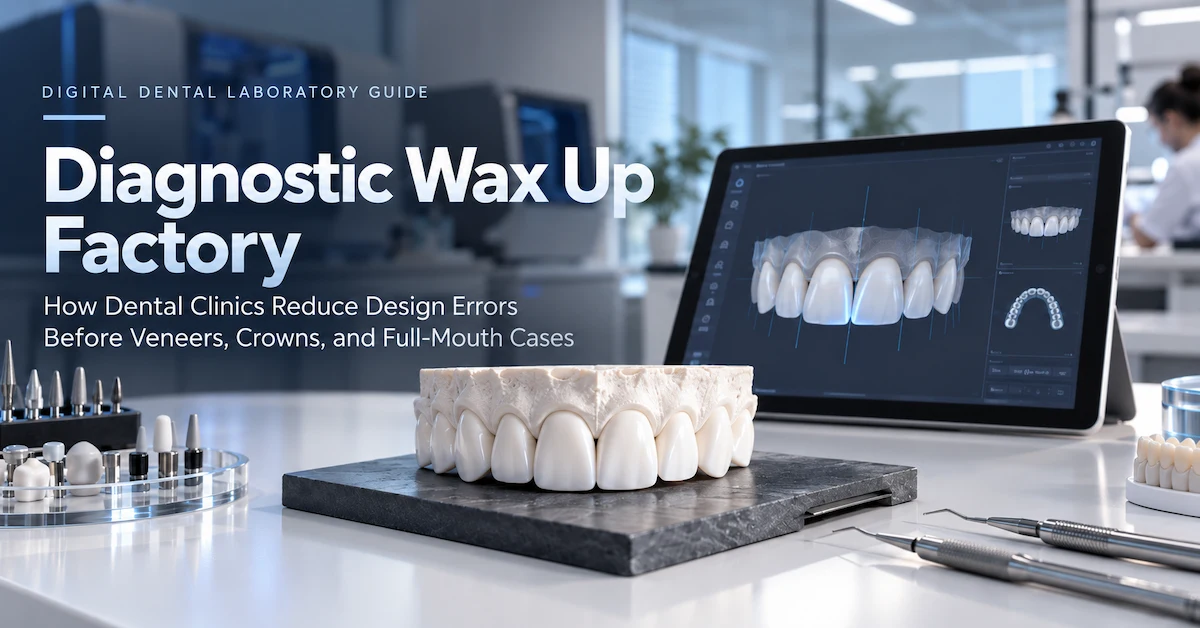
A diagnostic wax-up can serve as an important reference before restorative treatment begins. It allows the clinical team to examine proposed tooth proportions, incisal edge positions, occlusal relationships, aesthetic changes, and restorative contours before proceeding to final fabrication.
However, the usefulness of a diagnostic wax-up depends heavily on how the laboratory interprets the case.
A technically polished design may still be unsuitable if it ignores the prescribed preparation strategy, available restorative space, functional requirements, or patient-specific aesthetic expectations.
This is where the distinction between a one-time production supplier and a long-term laboratory partner becomes important.
A production supplier may focus primarily on completing the requested design. A collaborative laboratory partner should also help establish a structured process for receiving records, identifying incomplete information, managing revisions, documenting approvals, and transferring the accepted design into subsequent restorative stages.
For dental clinics handling repeated veneer cases, anterior rehabilitation, complex crowns, or full-mouth treatment, these activities have operational consequences.
Poor communication can result in additional design revisions, delayed appointments, unnecessary chairside discussions, and disagreements about what was originally approved.
By contrast, a well-organized collaboration can make case planning more transparent and easier to repeat.
Digilabo Dental Laboratory provides digital case workflows and aesthetic restoration support for dental clinics and laboratory partners. Its broader dental laboratory services include digital prescription submission, CAD-based design review, manufacturing, quality inspection, and international case delivery.
For clinics evaluating a potential partner, the goal should not be to find the laboratory offering the most impressive marketing claims. It should be to identify a team capable of following the dentist's instructions and supporting a controlled, clinically relevant design process.
What Is a Diagnostic Wax Up Partner?
A diagnostic wax up partner is a dental laboratory or specialized design team that collaborates with dental professionals to create and refine proposed restorative tooth morphology before definitive treatment.
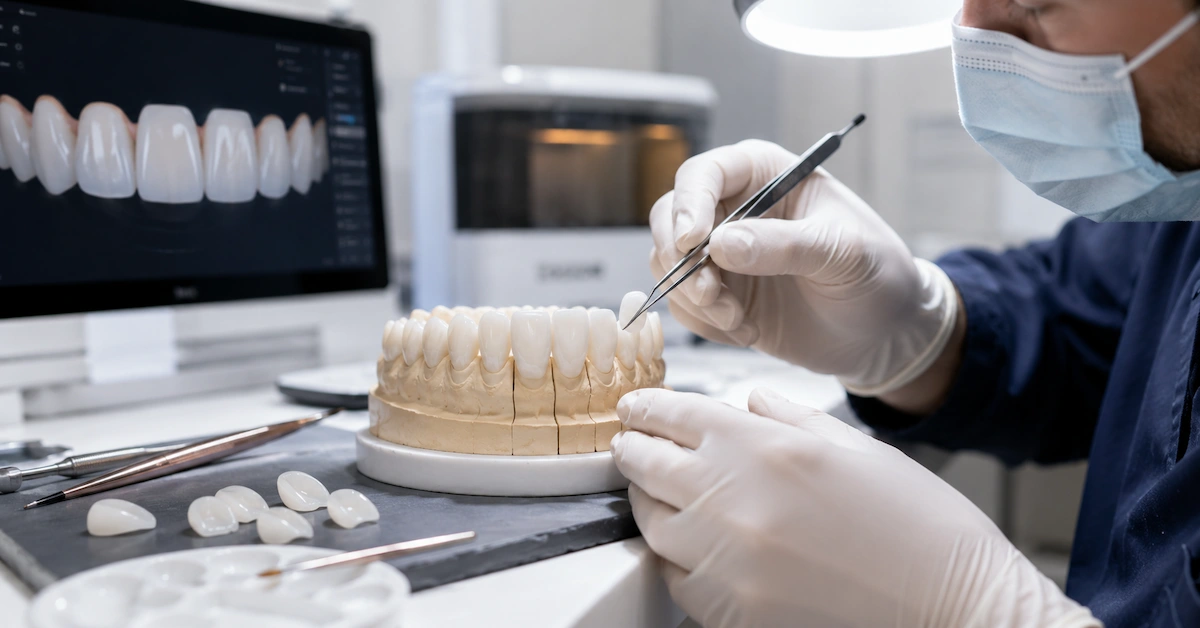
The service may involve conventional wax applied to physical models, digital CAD wax-ups created from intraoral scans, or a combination of digital and physical production methods.
Unlike a simple model-production service, a partnership-oriented workflow emphasizes communication and continuity.
The laboratory may contribute technical expertise in:
-
Digital model evaluation and preparation
-
Tooth morphology and aesthetic design
-
Diagnostic wax-up CAD development
-
Proposed tooth proportions and arch relationships
-
Design visualization and revision
-
Physical diagnostic model production, where available
-
Coordination with subsequent veneer or crown fabrication
-
Digital case organization and approved design records
The treating dentist remains responsible for diagnosis, treatment planning, clinical feasibility, material prescription, informed consent, and final approval.
The laboratory's responsibility is to translate those clinical instructions into a technically appropriate design and communicate any information gaps or manufacturing concerns.
The distinction is important: a diagnostic wax-up is a planning tool, not an independent clinical diagnosis or a guarantee of treatment outcome.
A reliable partner understands these boundaries and does not substitute laboratory assumptions for clinical decisions.
Who Benefits Most From a Long-Term Dental Wax-Up Laboratory Partnership?
Different buyers need different levels of diagnostic support.
Understanding those differences helps clinics select a partner whose workflow matches their actual case mix.
Cosmetic Dentists and Smile Makeover Clinics
Cosmetic clinics frequently require diagnostic planning for:
-
Porcelain veneers
-
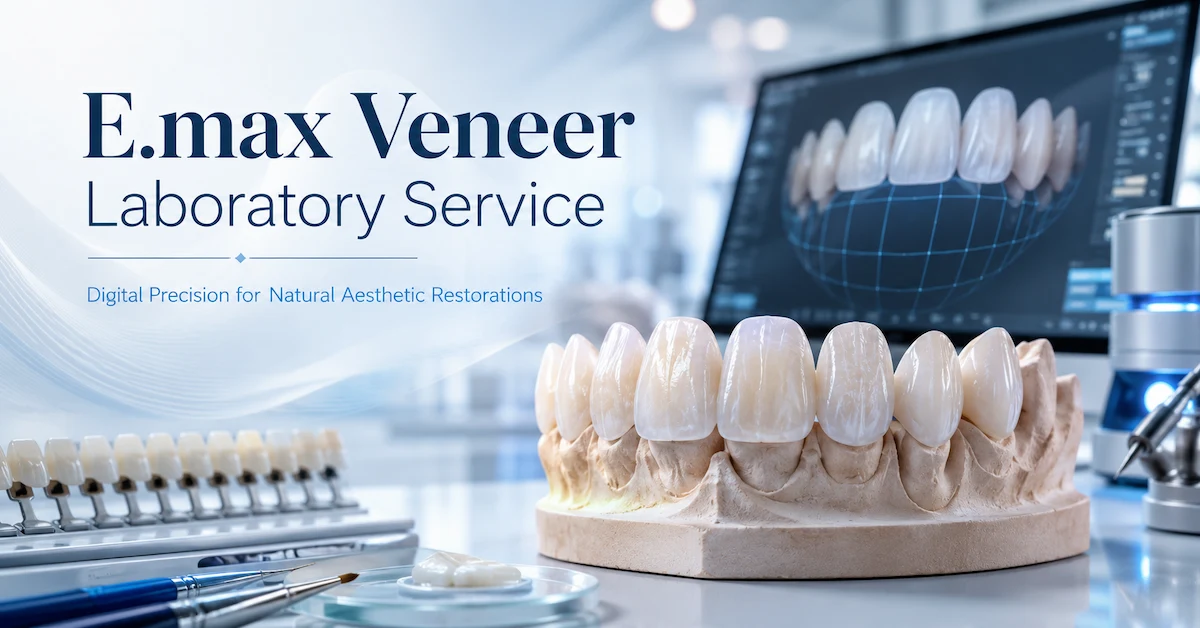
E.max veneers
-
Multi-unit anterior restorations
-
Diastema closure
-
Changes in tooth length or shape
-
Smile symmetry improvements
-
Replacement of existing aesthetic restorations
-
Combined crown and veneer treatment
These cases are particularly sensitive to aesthetic interpretation.
A patient may request a more natural appearance without being able to describe the desired incisal shape, surface character, or tooth proportion in technical terms.
The dentist must translate those expectations into a clinical objective, and the laboratory must then interpret the prescription consistently.
A long-term partner becomes valuable because the laboratory gradually becomes familiar with the dentist's preferred design language, communication methods, and review expectations.
For clinics offering veneers and aesthetic dental restorations, this continuity can be especially useful across repeated multi-unit cases.
Prosthodontists and Restorative Specialists
Prosthodontists may need wax-up support for cases involving more complex functional and restorative considerations.
Examples include worn dentition, multiple crowns, rehabilitation involving several segments, and selected full-mouth restorative cases.
These cases require more than a visually appealing anterior design.
The partner may need to interpret information about:
-
Existing occlusal relationships
-
Intended occlusal scheme
-
Restorative space
-
Proposed vertical dimension
-
Functional guidance
-
Existing restorations
-
Planned tooth preparation
-
Provisional restoration requirements
The laboratory should not decide these clinical parameters independently.
Instead, it should work from the treating clinician's approved plan and communicate when the supplied information is insufficient to proceed.
General Dental Practices
General dentists may not need a diagnostic wax-up for every routine crown.
However, they can benefit from a trusted laboratory relationship when treatment involves several visible restorations or significant changes in tooth form.
A repeatable process helps avoid restarting the same communication discussion with a new technician on every case.
Implant and Full-Arch Treatment Centers
In selected implant and full-arch cases, a diagnostic setup may help define the intended prosthetic outcome.
The clinical team can use the proposed tooth arrangement as one reference when evaluating restorative space, tooth position, prosthetic contours, and the overall rehabilitation plan.
Complex implant treatment may also require radiographic records, implant system information, surgical planning, and additional clinical verification.
A wax-up partner should understand where its restorative design contribution fits within the broader treatment team.
Dental Service Organizations and Multi-Location Clinics
Dental groups face a different challenge: maintaining consistent workflows across several clinicians and locations.
A central diagnostic design partner may help establish common submission templates, approval records, file naming conventions, and revision procedures.
The objective is not to make every dentist produce identical smiles.
It is to give every clinic a reliable process for communicating the unique requirements of each patient.
Dental Laboratories With Limited CAD Capacity
Smaller dental laboratories may outsource diagnostic design during workload peaks or when specialized resources are needed.
In this scenario, the buyer is another laboratory rather than the treating clinic.
The most important selection criteria may include clear technical specifications, predictable communication, confidentiality, design ownership, and compatibility with downstream fabrication.
Diagnostic Wax Up Partner vs One-Time Dental Lab Supplier
A supplier relationship and a partnership relationship can both be useful.
The difference lies mainly in how responsibilities, communication, and repeat work are managed.
| Evaluation Factor | One-Time Production Supplier | Long-Term Diagnostic Wax-Up Partner |
|---|---|---|
| Primary objective | Deliver a requested design | Support recurring case-planning needs |
| Case submission | Individual order instructions | Standardized prescription workflow |
| Clinical communication | Usually case-specific | Defined communication and escalation process |
| Design revisions | Handled individually | Agreed revision and approval procedure |
| Technical preferences | Re-explained with each case | Documented where appropriate |
| File management | Order-level organization | Consistent case and version records |
| Quality control | Output inspection | Intake, design, approval, and handoff checks |
| Downstream production | May be handled elsewhere | Can be coordinated where services are available |
| Performance review | Usually limited | Can be evaluated across repeated cases |
| Best application | Occasional simple requests | Recurring aesthetic and complex restorative cases |
Neither model is automatically superior.
A clinic that only needs an occasional diagnostic model may not require an extensive partnership structure.
However, a practice that regularly handles eight-unit veneer cases or rehabilitation involving several restorative stages may benefit considerably from consistent laboratory procedures.
The best partnership is one where the laboratory understands not only what to design, but also how the dentist intends to use the approved design.
Define the Wax-Up Deliverables Before Comparing Laboratories
One of the most overlooked outsourcing problems is that different laboratories may use the term "diagnostic wax-up" to describe different deliverables.
A clinic may expect an editable digital design file.
The laboratory may assume that a rendered preview is sufficient.
Another practice may require a physical model for a silicone index or clinical mock-up.
These are different requirements, even if they originate from the same diagnostic concept.
Before requesting a quotation, define the expected output.
| Deliverable | Potential Use | What Buyers Should Confirm |
|---|---|---|
| Digital wax-up preview | Initial clinical and aesthetic review | Views supplied and review format |
| Approved CAD geometry | Reference for later technical stages | File format and usability |
| Physical diagnostic model | Clinical assessment or model-based planning | Printing or conventional production method |
| Mock-up reference | Transfer of proposed morphology for clinical evaluation | Compatibility with intended technique |
| Silicone index reference | Selected preparation or provisional workflows | Whether index fabrication is included |
| Before-and-after design comparison | Explaining proposed morphological changes | Availability of comparative views |
| Revision record | Maintaining design accountability | Version identification and approval history |
| Final restorative design reference | Supporting subsequent CAD work | Transfer method and responsible laboratory |
Not every supplier provides every item.
Some laboratories specialize in digital design only. Others can also manufacture diagnostic models, indexes, provisionals, veneers, crowns, or related prosthetic components.
For purchasing purposes, the correct question is:
Which specific deliverables are included in the quotation, and what must be ordered separately?
This clarification should happen before the first case is started.
The Clinical Information a Diagnostic Wax Up Partner Should Request
A strong partnership begins with a complete case brief.
The laboratory should not rely on the technician to infer missing treatment objectives from the scan geometry.
The following records are particularly important.
Full-Arch Digital Records
For digital cases, upper and lower arch scans help establish the existing dentition and relevant anatomical relationships.
Depending on the case, the files may include STL or PLY data.
The clinic should confirm the accepted formats, how to submit them securely, and whether any scanner-specific export requirements apply.
Complete scans are often more useful than isolated segments because the laboratory may need surrounding anatomy to interpret the proposed changes.
Interarch Records
Appropriate bite information is necessary when the wax-up involves occlusal relationships.
A visually acceptable tooth setup may be clinically unsuitable if the submitted bite is incomplete, inaccurate, or inconsistent with the dentist's intended treatment position.
Where centric relation records, a revised vertical dimension, or another specific interarch relationship is required, the dentist must provide and approve that information.
Smile and Facial Photographs
For anterior aesthetic work, photographs may add information that cannot be derived from tooth geometry alone.
Useful views can include:
-
Natural smile
-
Full-face smile
-
Frontal retracted view
-
Right and left intraoral views
-
Occlusal photographs
-
Relevant facial reference views
Photographs should be captured using an appropriate clinical protocol and accompanied by clear instructions.
A laboratory should not assume that a single photograph provides a complete or calibrated three-dimensional representation of the face.
Treatment Scope
The prescription should identify the exact teeth and the intended restorative plan.
For example, a six-unit veneer wax-up requires a different approach from planning ten crowns across both arches.
It should also identify whether the case involves existing crowns, implants, orthodontic treatment, planned gingival changes, or other factors affecting the proposed result.
Desired Aesthetic Changes
Instructions such as "make the smile perfect" create unnecessary ambiguity.
A better prescription may specify:
-
Increase the apparent length of the central incisors
-
Maintain existing canine prominence
-
Reduce lateral incisor asymmetry
-
Close a defined anterior space
-
Preserve the current midline
-
Avoid excessive facial bulk
-
Maintain a natural, age-appropriate tooth form
The laboratory can then respond to an identifiable design target.
Planned Restorative Material and Preparation Strategy
A wax-up intended for additive veneers must reflect different clinical constraints from a design for full-coverage crowns.
Likewise, highly aesthetic anterior cases and posterior functional cases may require different technical priorities.
The clinician should communicate material plans and preparation constraints so the laboratory does not design morphology that conflicts with the proposed treatment.
Why Case Intake Is the First Quality-Control Stage
Many outsourcing problems begin before any CAD work takes place.
An incomplete prescription can move directly into production because the laboratory wants to maintain a short turnaround.
That may appear efficient initially.
However, a missing bite record, unclear tooth number, or conflicting photograph can create revisions that consume more time than the original intake review would have required.
An effective diagnostic wax-up partner should have a procedure for identifying missing or contradictory information.
A useful intake process answers four questions:
-
Is the case record complete enough for the requested design?
-
Are the dentist's objectives clearly defined?
-
Are any clinical decisions being incorrectly left to the laboratory?
-
Does the requested delivery format match the intended next treatment stage?
If an important answer is missing, the case should be clarified before the laboratory commits to a final design.
This is an example of quality control that cannot be measured by looking at the finished model alone.
A Collaborative Diagnostic Wax-Up Workflow: From First Contact to Approval
A repeatable workflow gives both parties a shared understanding of what happens next.
The following process is a practical framework for dental clinics evaluating an outsourcing partner.
Step 1: Discuss the Case Objective
The dentist explains the treatment purpose.
Is the wax-up intended for patient communication, an aesthetic mock-up, a restorative planning reference, or preparation of a larger rehabilitation?
This matters because the same digital tooth arrangement may not be appropriate for every downstream application.
The laboratory should identify the required outputs and any important clinical constraints.
Step 2: Receive and Review Case Data
The clinic submits the available scans, prescription, photographs, and other relevant information.
The laboratory checks whether the files are usable and whether the requested design can be developed from the supplied records.
Potential issues should be communicated before substantial work begins.
Step 3: Establish Design Priorities
The clinical team and laboratory agree on the primary planning objectives.
For an anterior veneer case, tooth proportion and smile appearance may dominate the discussion.
For a worn-dentition case, functional information and restorative space may require greater attention.
The dentist must resolve any decisions that involve diagnosis or treatment planning.
Step 4: Prepare the Initial Design
The laboratory creates the proposed morphology using the agreed workflow.
The design may address:
-
Incisal edge position
-
Tooth width and length
-
Facial contour
-
Line angles
-
Interproximal relationships
-
Embrasure progression
-
Arch form
-
Occlusal morphology
-
Selected functional relationships
The goal is to follow the approved clinical brief rather than impose a universal tooth-library design on every patient.
Step 5: Conduct Technical and Clinical Review
The laboratory checks the design against the supplied instructions.
The dentist then reviews the relevant aesthetic and clinical considerations.
A digital preview can help communicate changes more precisely than written descriptions alone.
The clinic may request that a particular tooth be shortened, a contour reduced, or a proposed contact relationship reconsidered.
Step 6: Manage Revisions
Revisions should refer to the current design version.
For example:
Case DW-024 — Version 02
Requested changes:
-
Reduce facial prominence of the lateral incisors
-
Maintain the central incisor length
-
Reassess the canine transition
-
Preserve the approved midline
These instructions are easier to follow than several unrelated messages sent through different communication channels.
Step 7: Record Approval
Once the dentist approves the design for its intended purpose, the accepted version should be identified.
Approval should state which aspects of the design have been reviewed and what remains subject to later clinical or technical verification.
It should not automatically imply approval of shade, definitive restoration material, cementation, implant placement, or other unresolved factors.
Step 8: Transfer the Approved Design
The final stage depends on the original request.
The design may be used as a reference for a physical model, clinical mock-up, provisional restoration, or subsequent restorative CAD workflow.
The handoff should preserve the correct approved version and any limitations recorded during review.
This is the stage where a coordinated dental laboratory relationship may offer operational advantages over disconnected design and manufacturing suppliers.
What Should a Partner Control During Aesthetic Design?
Diagnostic wax-ups involve several design variables that should not be treated as interchangeable.
Tooth Proportion and Individual Morphology
Aesthetic planning often considers the relationship between central incisors, lateral incisors, canines, and neighboring teeth.
However, standard proportions should be treated as references rather than fixed rules for every patient.
Tooth form must be evaluated in relation to the treatment objective and the patient's existing anatomy.
Incisal Edge Position
Incisal edge changes may influence visible tooth display, phonetics, restorative space, and functional relationships.
The laboratory should follow the dentist's clinical instructions when proposing these changes.
Facial Contour and Restorative Volume
A proposed restoration may look attractive from the frontal view while being excessively bulky from another angle.
Reviewing facial contours and the intended additive or reductive changes is therefore important.
A wax-up that demands an unrealistic restorative volume may not be suitable for the planned treatment.
Midline, Symmetry, and Smile Harmony
Aesthetic harmony does not require every tooth to be a perfect mirror image of its counterpart.
Natural morphology includes variation.
The objective is to create a design that matches the prescribed clinical and aesthetic goals.
Occlusal Relationships
Digital software can assist with the evaluation of supplied occlusal information.
However, virtual contacts are only as reliable as the clinical records and modeling assumptions used.
They do not replace clinical verification of the patient's actual function.
Gingival and Cervical Considerations
Proposed cervical contours should be considered in relation to the existing or planned gingival architecture.
If the dentist plans periodontal treatment or crown lengthening, the relevant information should be included in the case brief.
A trustworthy laboratory should flag unresolved concerns rather than silently treating them as design choices.
For additional discussion of anterior morphology, shade communication, and design approval, see Digilabo's anterior aesthetic dental lab selection guide.
Applying the Partnership Model to Different Dental Cases
A good diagnostic workflow is not identical for every restoration.
The most useful technical priorities change with the clinical scenario.
Case Scenario 1: Six-Unit Anterior Veneer Planning
A clinic is preparing a smile makeover involving six maxillary anterior teeth.
The patient wants a natural appearance with slightly longer central incisors and improved symmetry.
The laboratory receives upper and lower scans, a bite record, clinical photographs, and the dentist's design instructions.
The first review concentrates on incisal position, proportions, tooth form, and the relationship between the proposed restorations.
The dentist may then request modifications before discussing the proposed result with the patient.
The value of a continuing partnership is that the laboratory can follow a familiar review procedure for subsequent cases rather than requiring the dentist to explain the entire communication process again.
Case Scenario 2: Worn Anterior Dentition
A restorative clinic is planning treatment for a patient with significant anterior wear.
The dentist has completed the required clinical assessment and established the intended restorative approach.
A diagnostic wax-up may help visualize the proposed tooth form and support further planning.
Unlike a straightforward cosmetic case, functional information may be central to the prescription.
The laboratory should not independently select a new vertical dimension or occlusal relationship.
Its role is to design according to the approved clinical plan, identify technical questions, and provide a useful reference for subsequent steps.
Case Scenario 3: Combined Crowns and Veneers
A patient requires a combination of anterior crowns and veneers.
Even when the definitive restorative materials or preparation designs differ, the proposed tooth morphology should be considered as a coordinated aesthetic arrangement.
The diagnostic wax-up can help the clinic evaluate how the planned restorations relate to one another.
The partner should receive clear information about which teeth require full coverage, which are intended for veneers, and which clinical constraints apply.
Case Scenario 4: Full-Mouth Rehabilitation
Full-mouth rehabilitation can involve multiple arches, existing restorations, functional concerns, missing teeth, and a complex treatment sequence.
A diagnostic wax-up may support the planning process, but it cannot substitute for comprehensive clinical assessment.
The laboratory must receive the dentist's approved occlusal and restorative objectives.
Depending on the treatment, additional records or verification stages may be needed before the proposed design is transferred into definitive restorations.
Case Scenario 5: DSO or Multi-Clinic Design Outsourcing
A dental group operates several cosmetic practices.
Each location uses digital impressions but has different habits for sending photographs, prescriptions, and case notes.
A centralized laboratory partnership may help establish a standard intake process while allowing individual dentists to specify patient-specific requirements.
The commercial benefit is not that every case becomes identical.
It is that incomplete submissions, revision communication, and approval responsibilities can be managed more consistently.
Digital vs Conventional Wax-Up: What Should a Partner Recommend?
Digital technology provides useful opportunities for remote collaboration, but conventional workflows remain appropriate for some cases.
A partner should understand the available options rather than automatically presenting one method as universally superior.
| Consideration | Digital Wax-Up | Conventional Wax-Up |
|---|---|---|
| Primary working record | Digital scan or scanned model | Physical model |
| Design process | CAD-based modification | Physical wax application |
| Remote collaboration | Digital previews and files | Photographs, scans, or physical shipment |
| Revisions | Digital design changes | Manual modification |
| Archiving | Digital case records | Physical storage or subsequent digitization |
| Physical model | Requires manufacturing if needed | Already part of the workflow |
| Downstream production | Can integrate with CAD/CAM | Can support analogue or hybrid procedures |
| Principal limitation | Depends on reliable records and digital workflow control | Physical handling and manual transfer requirements |
A peer-reviewed case report published in General Dentistry in 2020 described a workflow where digital scans were sent to a dental laboratory, printed models supported a conventional diagnostic wax-up, and the approved planning information informed later veneer fabrication.
The example illustrates an important point: digital and conventional processes can be combined.
A 2025 review in the Australian Dental Journal similarly describes digital prosthodontic workflows as clinical, laboratory, or combined approaches rather than a single universally applicable process.
For buyers, the objective should be to choose the workflow that supports the case and the intended deliverables.
Digilabo's digital dental laboratory services guide provides additional background on digital case submission, CAD/CAM workflows, and restorative manufacturing.
Why the Transfer From Wax-Up to Final Restoration Matters
An approved diagnostic design should not disappear once the clinic orders definitive restorations.
However, the relationship between the wax-up and final restoration depends on the treatment plan.
A wax-up may establish a reference for morphology and proposed tooth position.
Subsequent stages can involve additional clinical and manufacturing requirements, including:
-
Preparation geometry
-
Restoration margins
-
Cement space
-
Final material selection
-
Material thickness requirements
-
Definitive interproximal contacts
-
Occlusal adjustments
-
Shade and translucency
-
Surface characterization
The final restoration is therefore not necessarily an exact duplication of the preliminary wax-up.
Some parameters must be reassessed using the definitive clinical records.
The advantage of retaining the accepted diagnostic design is that the laboratory can distinguish between intended aesthetic morphology and changes required by later clinical or manufacturing conditions.
A partner should document significant deviations rather than silently alter the accepted design.
This is particularly relevant to multi-unit anterior cases where even small changes in contour or tooth length may be visible.
How to Evaluate Quality Control in a Diagnostic Wax-Up Partnership
Quality control should not be limited to checking whether the finished file opens correctly.
A useful process examines the entire design pathway.
Intake Quality Control
Verify that the required scans, bite information, photographs, and prescription details are available.
Data Integrity
Confirm that the correct patient or case identifier, scan version, and prescribed tooth numbers are associated with the design.
Technical Design Review
Check the proposed morphology against the clinical instructions and the data supplied.
Revision Control
Record requested changes and identify the latest approved design.
Deliverable Inspection
Confirm that the agreed files, previews, models, or other outputs correspond to the correct case.
Handoff Verification
Where the design proceeds to later manufacturing, confirm that the receiving team has the appropriate approved reference.
This structure is more meaningful than a supplier simply claiming "100% quality inspection."
It tells the buyer what is actually being checked.
For clinics considering Digilabo, the company profile and technical capabilities provide an overview of its laboratory equipment, technicians, digital manufacturing resources, and broader restorative production.
Case-specific diagnostic design requirements should still be confirmed directly.
How to Measure Partnership Performance Over Time
A clinic should evaluate more than whether the supplier delivered the first wax-up successfully.
For recurring case volumes, several operational indicators can be useful.
| Performance Indicator | What It Measures | Why It Matters |
|---|---|---|
| First-pass submission completeness | Cases submitted with sufficient information | Identifies clinic-side process gaps |
| Intake clarification rate | Cases needing additional information | Shows communication friction |
| Initial design turnaround | Time from complete intake to first preview | Supports appointment planning |
| Revision cycle count | Number of review rounds | Helps identify unclear instructions or design mismatch |
| Approval turnaround | Time from first preview to approval | Measures total design coordination |
| Design deviation reports | Significant differences from approved instructions | Supports technical accountability |
| File delivery accuracy | Correct output and version supplied | Prevents downstream errors |
| Handoff-related corrections | Corrections linked to transfer or version problems | Evaluates workflow continuity |
No universal industry benchmark applies equally to every case type.
A two-unit additive wax-up should not be compared directly with a complex rehabilitation requiring extensive clinical review.
Instead, a dental practice can compare similar case categories over time.
A laboratory partner should be willing to discuss where delays originate.
Sometimes the problem is production capacity. In other cases, it may be incomplete prescriptions or delayed clinical approval.
Distinguishing those causes produces more useful improvements than assigning responsibility without reviewing the case history.
Diagnostic Wax-Up Pricing: Evaluate Total Case Cost, Not Only the Design Fee
A low design quotation does not necessarily produce the lowest total cost.
The relevant commercial question is how much effort the entire process requires before the clinic receives a clinically useful approved design.
Diagnostic wax-up pricing can depend on:
-
Number of teeth
-
Digital or conventional method
-
Case complexity
-
Aesthetic requirements
-
Functional planning requirements
-
Number of revisions
-
Physical model production
-
Additional outputs
-
Expedited processing
-
Shipping requirements
For an international clinic, the total cost may also involve staff time coordinating the design.
Consider a hypothetical comparison.
Supplier A offers a lower initial design fee but requires separate payments for several revisions and physical outputs.
Supplier B charges a higher initial fee but includes a defined design review and the required files.
Without knowing the exact scope, neither offer can be identified as the better value.
The buyer should request an itemized quotation.
A useful commercial comparison includes:
Initial design cost + agreed revision costs + additional deliverables + shipping + internal coordination time.
For recurring clients, consistent communication may reduce avoidable administrative effort even when the individual unit price is not the lowest.
However, savings should be measured from actual case records rather than assumed.
Questions to Ask About Revisions and Turnaround
Revision policies are often overlooked until a difficult case occurs.
Before beginning a partnership, confirm the following:
-
How is the initial turnaround calculated?
-
Does the clock begin when the laboratory receives the files or when the submission is accepted as complete?
-
How are routine design revisions handled?
-
What constitutes a major redesign?
-
Are revision fees included in the original quotation?
-
What happens if the dentist changes the treatment plan?
-
Can a case be paused while awaiting clinical approval?
-
How are urgent cases prioritized?
-
Is a physical model shipment included?
-
Who should be contacted if the next appointment is approaching?
A laboratory may publish general restorative turnaround times, but those figures should not automatically be applied to diagnostic wax-up design.
The timetable for each service should be confirmed according to its scope.
The most useful delivery commitment is one that identifies the precise milestone being promised.
For example, initial CAD preview, approved final file, completed physical model, and arrival at the clinic are different milestones.
Data Security and Confidentiality in Overseas Dental Lab Cooperation
Diagnostic case files may contain sensitive patient information.
They can include intraoral scans, clinical photographs, treatment plans, identifiers, and correspondence.
A potential laboratory partner should therefore be evaluated for more than file compatibility.
Clinics should clarify:
-
Which patient identifiers are necessary?
-
Can unnecessary identifying information be removed?
-
What secure method is used to transfer files?
-
Who can access case records?
-
How long are records retained?
-
How are files deleted when retention is no longer required?
-
Can approved designs be retrieved for authorized future work?
-
What happens if the clinic changes laboratories?
-
Are subcontractors involved in processing case information?
Legal obligations vary by jurisdiction and the nature of the patient information being processed.
A dental laboratory's willingness to accept a file does not establish compliance with every applicable privacy or healthcare regulation.
Clinics should verify contractual and legal requirements before transferring identifiable patient data internationally.
A Practical 30-Day Evaluation Plan for a New Laboratory Partner
A clinic does not have to commit its entire restorative workload before evaluating a new diagnostic wax-up laboratory.
A controlled pilot is often a more useful starting point.
The following is a sample onboarding framework, not a guaranteed laboratory service schedule.
Phase 1: Define Requirements
Prepare a standard submission template.
Identify the case types your clinic expects to outsource and specify the required design outputs.
Select the dentist or coordinator responsible for communicating with the laboratory.
Phase 2: Submit Representative Cases
Choose one or two representative cases that allow the team to evaluate the workflow.
Avoid relying only on an unusually simple case if the intended long-term work involves demanding anterior or rehabilitation projects.
Submit complete records and document your expectations.
Phase 3: Review Technical Communication
Assess whether the laboratory:
-
Identifies missing information
-
Understands the prescription
-
Explains relevant technical questions
-
Provides usable design previews
-
Records revisions clearly
-
Respects the agreed approval process
Phase 4: Evaluate the Handoff
Check whether the final agreed design outputs are correctly delivered.
If a physical diagnostic model or other output was ordered, verify that it corresponds to the approved design.
Phase 5: Conduct a Commercial Review
Compare the original quotation with the actual final cost.
Consider both laboratory charges and the clinic's coordination effort.
The best candidate is not necessarily the one that finished the first case fastest.
It is the one whose process is suitable for your expected recurring work.
Red Flags When Selecting a Diagnostic Wax-Up Laboratory
Certain warning signs justify further investigation.
No Clear Case Submission Requirements
A laboratory that accepts every case without discussing missing information may be leaving important technical decisions unresolved.
No Defined Design Approval Process
If the supplier proceeds from the first scan directly to final outputs without an agreed review stage, the clinic may lose a valuable opportunity to confirm important aesthetic changes.
Vague Revision Charges
Unclear revision rules can create disagreement after the first design is delivered.
Unverified Clinical or Production Claims
Be cautious of claims that every wax-up guarantees perfect occlusion, eliminates remakes, or produces identical clinical outcomes.
Diagnostic planning can support better decisions, but it cannot remove biological variability or replace clinical judgment.
Poor File and Version Control
A laboratory should be able to distinguish an approved design from an earlier rejected version.
Inconsistent Communication
Repeatedly unanswered technical questions can undermine even a technically capable production team.
Unclear Responsibility for Final Restorations
When one laboratory performs the wax-up and another makes the final prosthesis, the buyer should know who manages the design handoff.
When Is a Long-Term Diagnostic Wax-Up Partnership Not Necessary?
Not every dental practice needs a standing diagnostic design agreement.
A simple one-off design request may be adequately handled by a specialist CAD designer or conventional dental laboratory.
A highly experienced in-house technician may also provide the necessary service without external outsourcing.
Similarly, some complex clinical cases may require local collaborative assessment and repeated physical verification rather than a fully remote workflow.
The appropriate model depends on:
-
Frequency of diagnostic cases
-
Internal laboratory capability
-
Case complexity
-
Need for physical outputs
-
Required communication
-
Geographic location
-
Clinical verification requirements
-
Available technical support
A good supplier should be comfortable discussing whether its workflow fits the buyer's actual needs.
Why Digilabo Is Worth Evaluating as a Dental Laboratory Partner
Digilabo Dental Laboratory serves dental clinics and professional buyers seeking outsourced restorative and digital laboratory services.
According to its published company profile, the laboratory operates a facility of more than 4,000 square meters with over 300 technical personnel and more than 200 pieces of production equipment.
The website describes CAD/CAM and dental manufacturing resources including scanning equipment, five-axis milling, resin model printing, and other fabrication technologies.
Its product structure includes diagnostic wax-ups within the veneers category, alongside broader crown-and-bridge, implant, removable, and orthodontic services.
For a clinic seeking ongoing support, this range of related capabilities is relevant because diagnostic planning may eventually connect with other restorative work.
Digilabo's published workflow also describes three core stages:
-
Digital case submission and prescription
-
CAD design review and approval
-
Manufacturing, quality inspection, and shipment
The specific diagnostic wax-up deliverables, revision arrangements, production times, file export options, and commercial terms should be confirmed before ordering.
Clinics may review the Digilabo laboratory profile, explore the available dental products, and consult its restorative design and production services.
For high-aesthetic veneer cases, its existing smile design veneers lab guide also explains why diagnostic planning, shade communication, CAD design, and restorative finishing should be considered as connected stages.
How to Request a Technical Evaluation Before Committing to Regular Orders
The most effective first inquiry is specific.
Instead of asking only, "What is your diagnostic wax-up price?", provide the laboratory with enough information to understand the intended collaboration.
A useful inquiry may include:
-
Your practice type and location
-
Main diagnostic case categories
-
Estimated recurring case volume, if known
-
Number of teeth in a representative case
-
Available intraoral scanning system
-
Required digital file formats
-
Whether physical models are needed
-
Expected approval and revision process
-
Downstream restorative services required
-
Intended clinic delivery timeline
-
Any special clinical or communication requirements
An example:
"Our clinic performs multi-unit anterior veneer cases and selected full-mouth rehabilitation. We are evaluating a diagnostic wax-up laboratory partner that can receive digital scans, provide a design review, incorporate approved revisions, and maintain the final design reference for later restorative fabrication. Please confirm your accepted file formats, standard deliverables, revision policy, quotation structure, and case communication process."
This type of inquiry allows the laboratory to respond to an identifiable technical requirement.
It also creates a more useful starting point for assessing long-term compatibility.
Clinics interested in exploring a collaboration can contact Digilabo Dental Laboratory to discuss their actual case requirements and request confirmation of available services.
Frequently Asked Questions About Diagnostic Wax Up Partners
1. What is the difference between a diagnostic wax up partner and a diagnostic wax up factory?
A diagnostic wax up factory generally emphasizes the ability to produce digital or physical diagnostic wax-ups. A diagnostic wax up partner emphasizes an ongoing working relationship with dental clinics or other laboratories, including case intake, prescription interpretation, design communication, revision control, clinical approval, and coordination with later restorative stages. The same laboratory may perform both roles. The distinction is primarily about the scope of collaboration rather than the size of the facility.
2. How do I choose the best diagnostic wax up partner for my dental clinic?
Begin by identifying your case types, required outputs, and expected case volume. Then evaluate accepted scan formats, aesthetic design experience, communication procedures, revision policies, technical quality control, and downstream restorative capabilities. Request a representative case evaluation before making a larger commitment. A suitable partner should understand the dentist's instructions, identify missing information, explain technical limitations, and provide a clear approval process.
3. Can a dental laboratory create diagnostic wax-ups from STL files?
Yes. Many digital dental laboratories can use STL scan data for diagnostic CAD design. PLY or other supported formats may also be accepted. However, scan geometry alone may not provide sufficient information for every case. The laboratory may additionally require bite records, clinical photographs, facial references, prescription details, and the treating dentist's intended restorative plan. Confirm the exact file requirements before submission.
4. Why are diagnostic wax-ups important for veneer treatment planning?
Diagnostic wax-ups can help dentists evaluate the proposed tooth proportions, incisal edge position, smile symmetry, facial contours, and general appearance before definitive veneer fabrication. They can also support communication with the patient and laboratory. Their value is particularly relevant in multi-unit cases where visual expectations are difficult to communicate verbally. However, the wax-up does not replace clinical assessment or guarantee the final aesthetic result.
5. Can a diagnostic wax-up be used for full-mouth rehabilitation?
Yes. Diagnostic wax-ups may form part of the planning process for complex restorative rehabilitation. The clinical team may use them to visualize proposed tooth morphology and restorative relationships. These cases often require information about occlusion, vertical dimension, functional objectives, available restorative space, and treatment sequence. Those clinical parameters must be established by the treating dentist. The laboratory develops the design according to the approved plan.
6. How many revisions should a dental wax-up partner include?
There is no universally applicable revision allowance. The number and cost of revisions depend on the supplier's commercial policy and the complexity of the work. A buyer should distinguish minor modifications to an existing design from substantial changes caused by a new treatment plan, new records, or different restoration requirements. Before ordering, request written clarification about included revisions, additional charges, and approval procedures.
7. How much does diagnostic wax up outsourcing cost?
Pricing depends on the number of teeth, design complexity, digital or conventional production method, required deliverables, revision scope, physical model manufacturing, and shipping. A simple anterior design is not directly comparable to a complex full-mouth rehabilitation. Clinics should request an itemized quotation showing what is included rather than comparing only the advertised starting price.
8. How long does a digital diagnostic wax-up take?
Turnaround varies according to case complexity, completeness of submitted records, laboratory capacity, and the number of approval cycles. Initial CAD preview, final approved design, physical model production, and international delivery should be treated as separate milestones. The clinic should communicate its appointment schedule and confirm the required delivery stage before placing the order.
9. Can the same laboratory handle the wax-up and final veneers or crowns?
Yes, provided the laboratory offers the required diagnostic and definitive restorative services. Keeping related work within one laboratory may help preserve the design reference and simplify communication. However, the definitive restoration still requires appropriate clinical records and manufacturing verification. Changes in preparation geometry, material, margins, and occlusion may affect the final design. Buyers should confirm how the approved wax-up is transferred into later production.
10. Is an overseas diagnostic wax-up laboratory suitable for a multi-location dental group?
It may be suitable when the laboratory supports secure digital data submission, structured prescriptions, reliable communication, clear version control, and agreed case delivery procedures. Dental groups should evaluate the supplier with representative cases and establish standardized processes before increasing volume. Privacy requirements, clinical approval responsibilities, shipping where relevant, and escalation procedures should be addressed as part of the partnership agreement.
Conclusion
Choosing a reliable diagnostic wax up partner means evaluating more than CAD capabilities or production price. Dental clinics should prioritize complete case intake, clear design responsibilities, documented revisions, dependable communication, and controlled handoffs to later restorative stages. A structured partnership can make diagnostic planning easier to manage across repeated veneer, crown, and complex rehabilitation cases without replacing the clinician's judgment.
Digilabo Dental Laboratory supports digital restorative workflows for international dental professionals. To evaluate its suitability for your diagnostic cases, contact Digilabo with your case requirements and request a technical discussion of deliverables, revisions, and collaboration arrangements.