
Diagnostic Wax Up Lab Service: What Dental Clinics Need Before Ordering
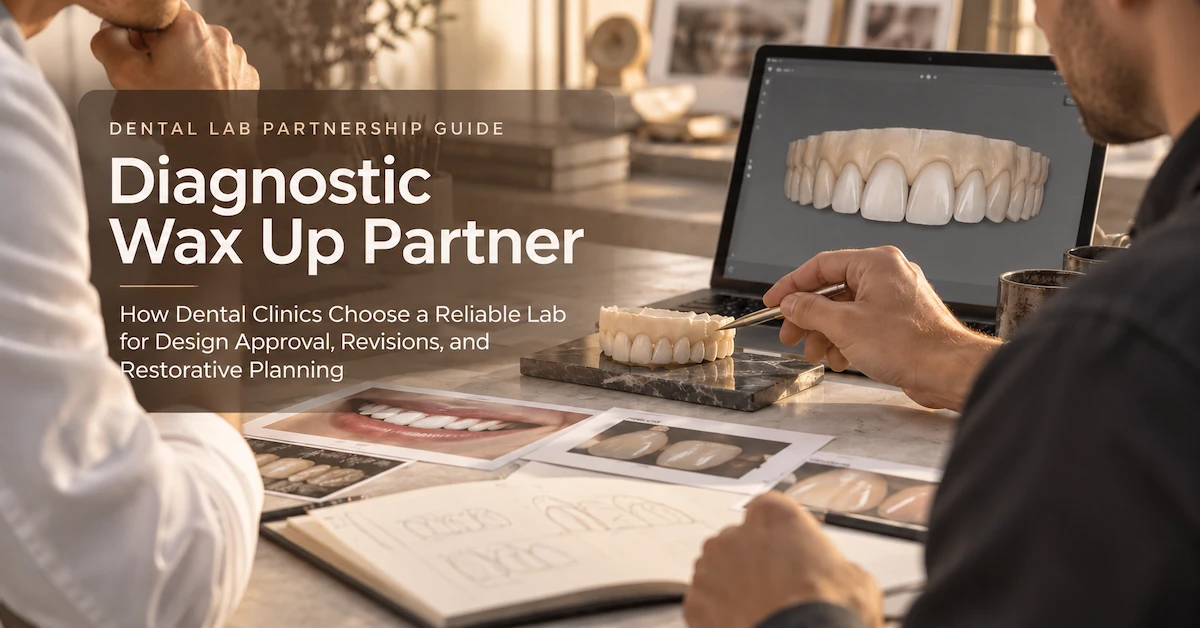
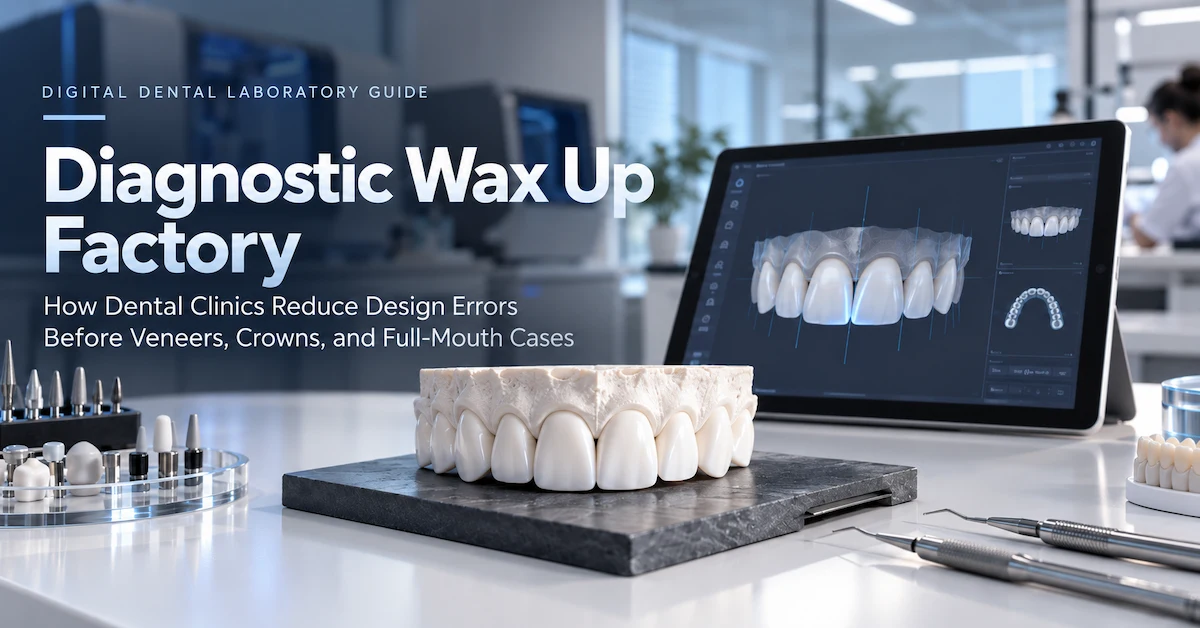
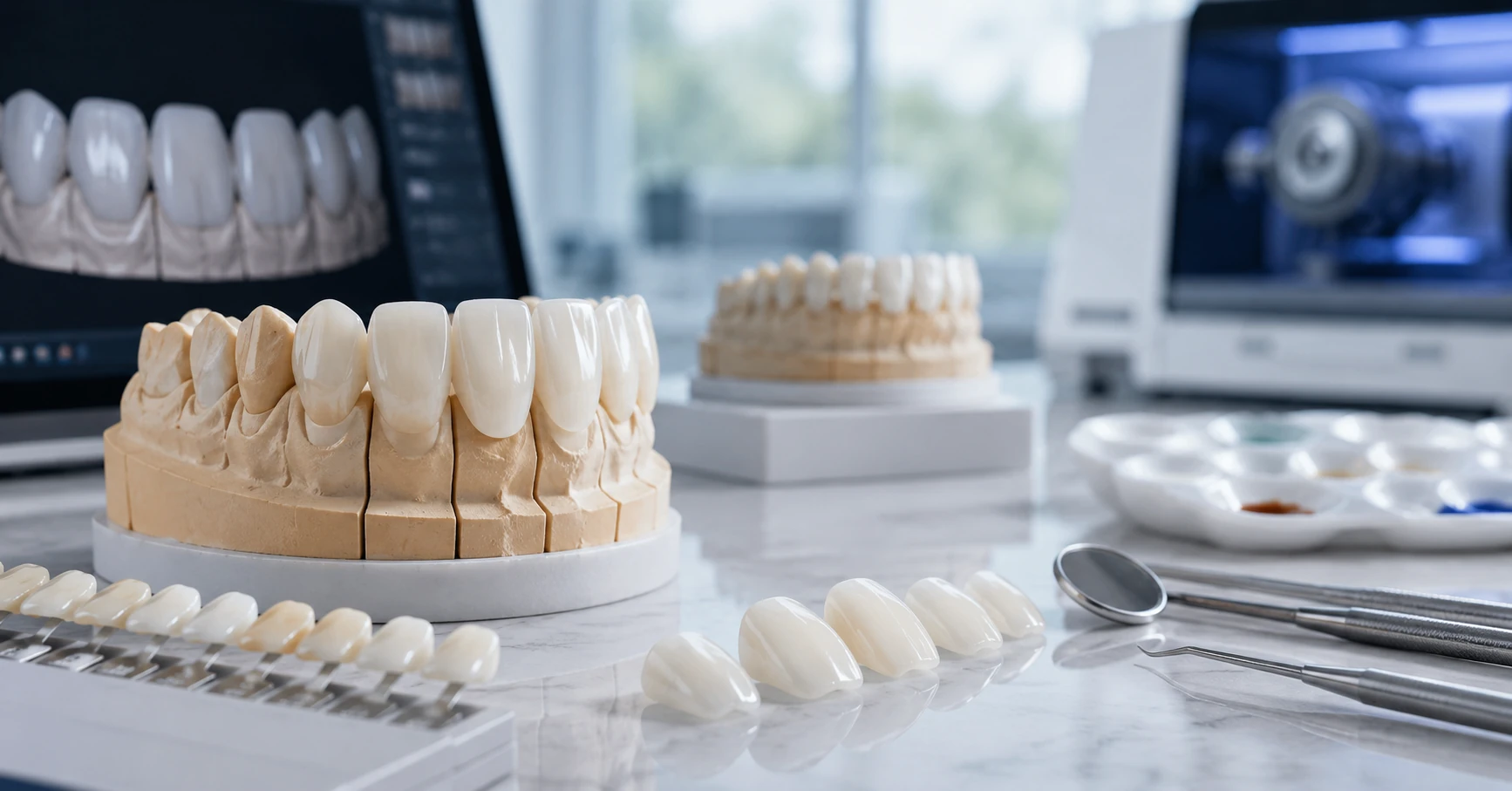
A diagnostic wax up lab service provides dental professionals with a three-dimensional representation of proposed tooth morphology before definitive restorative treatment is completed. Depending on the prescribed case and the laboratory's capabilities, the service may include a digital CAD design, a conventional wax-up, a physical diagnostic model, or selected outputs used for mock-up and provisional planning.
For dentists, the value is not simply seeing a better-looking set of teeth.
The value is being able to examine proposed restorative changes before proceeding to irreversible clinical procedures or expensive definitive fabrication.
A diagnostic wax-up can help answer practical questions:
-
Are the proposed central incisors too long?
-
Will the new tooth proportions match the intended smile design?
-
Does the proposed morphology require more restorative space?
-
Are the facial contours consistent with the planned preparation strategy?
-
Does the design follow the prescribed occlusal relationship?
-
Can the proposed changes be communicated clearly to the patient?
-
Which aspects of the design still require clinical verification?
-
What information should be transferred to the final restoration laboratory?
These questions are particularly important for multi-unit veneers, anterior crowns, worn dentition, and complex rehabilitation.
A useful wax-up creates an earlier opportunity to discuss them. It does not automatically resolve every clinical concern.
For an international dental clinic, the service must also be practical to order. The dentist needs to understand which records to submit, what the laboratory will deliver, how the design can be reviewed, and what happens if changes are necessary.
A diagnostic wax-up should be purchased as a clearly defined planning deliverable, not as an undefined promise of a perfect smile.
Digilabo Dental Laboratory includes diagnostic wax-ups within its veneer-related product structure and describes digital restorative workflows involving scan submission, CAD design validation, production, and quality control.
Its broader digital dental laboratory services provide a starting point for clinics seeking coordinated laboratory support.
This guide focuses specifically on what a diagnostic wax-up service should contain, how to match the service to the clinical application, and what buyers should confirm before placing an order.
What Does a Diagnostic Wax Up Lab Service Include?
There is no universal service package used by every dental laboratory.
One supplier may offer a digital tooth arrangement for clinical review. Another may provide a printed diagnostic model. A more comprehensive service may support design revisions and additional planning outputs.
Buyers should therefore begin with the required deliverable rather than the laboratory's service name.
1. Digital Diagnostic Wax-Up Design
A digital wax-up is a CAD-based representation of proposed restorative tooth morphology.
The design may be produced using intraoral scan data or digitized physical models.
Depending on the clinical prescription, it can address tooth length, width, arrangement, facial contour, incisal position, embrasures, and selected occlusal relationships.
A digital file is particularly useful when the dentist and laboratory are in different locations because the design can be reviewed electronically.
However, a preview image and an exportable CAD file are not necessarily the same deliverable.
The clinic should confirm which files will be supplied.
2. Conventional Diagnostic Wax-Up
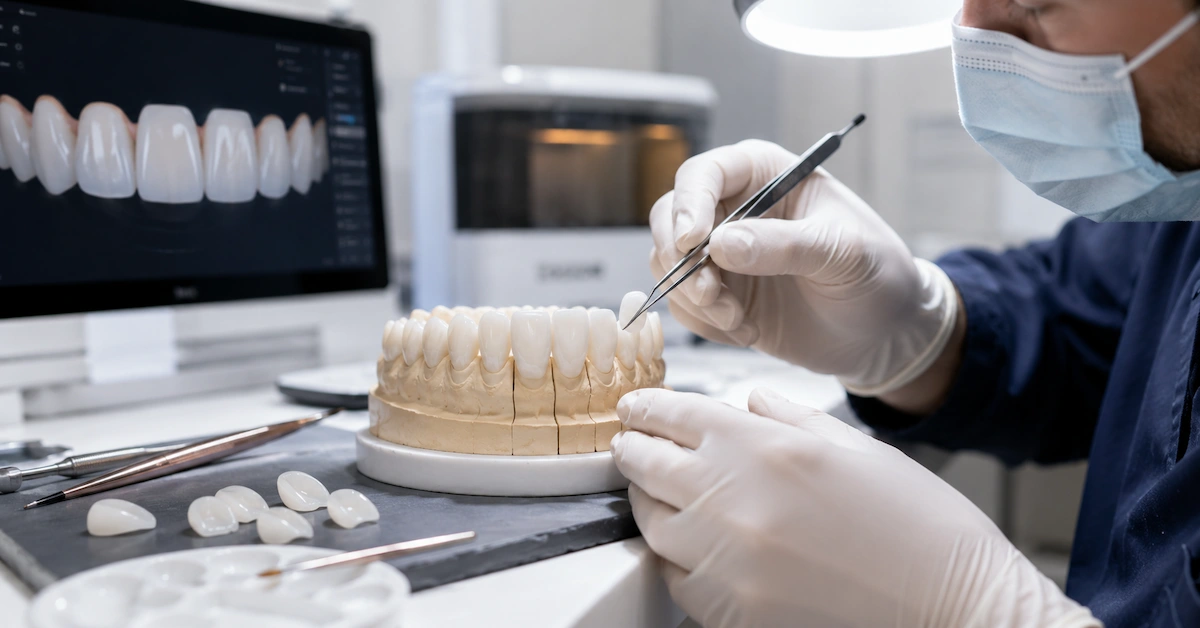
A conventional wax-up involves adding or modifying wax on a diagnostic model to represent the intended restorative morphology.
This approach may be appropriate for clinics using analogue records or planning procedures that benefit from physical model-based assessment.
The quality of the output depends on the accuracy of the starting model, the clinical prescription, and the technician's design work.
3. Physical Diagnostic Model
Some workflows use a digitally designed wax-up to produce a physical diagnostic model through additive manufacturing.
The model may provide a tangible reference for clinical discussion or subsequent laboratory procedures.
If the buyer needs a physical output, the quotation should identify whether model production is included.
A digital preview alone should not be assumed to include a printed model.
4. Design Preview and Review Support
For cosmetic cases, the opportunity to review a design before further production can be particularly valuable.
The laboratory may provide views that allow the clinician to evaluate the proposed changes and request authorized modifications.
Before ordering, ask how previews are delivered, how comments are recorded, and how approval is documented.
5. Planning Outputs for Mock-Ups or Provisionals
An approved diagnostic wax-up may support a clinical mock-up, silicone index, or provisional restoration workflow.
However, these are additional applications rather than automatic components of every diagnostic service.
The specific outputs and their clinical suitability must be confirmed.
Diagnostic Wax-Up Service Deliverables Comparison
| Service Deliverable | Main Purpose | Typical Buyer | What to Confirm |
|---|---|---|---|
| Digital CAD wax-up | Evaluate proposed tooth morphology | Digital dental clinics | Preview and export formats |
| Conventional wax-up | Physical restorative planning | Analogue or hybrid practices | Model requirements and shipment |
| Printed diagnostic model | Physical representation of approved design | Cosmetic and restorative clinics | Material, production, and delivery |
| Design revision | Modify the proposed morphology | Multi-unit aesthetic cases | Number, scope, and cost of revisions |
| Mock-up planning reference | Support clinical simulation | Cosmetic dentists | Required transfer method |
| Provisional design reference | Support selected provisional workflows | Prosthodontists | Compatibility with treatment plan |
| Approved design archive | Preserve the accepted planning version | Clinics with recurring cases | Retention and retrieval terms |
These are service options to discuss with a laboratory, not a claim that every option is automatically included in Digilabo's published offering.
Which Dental Cases Benefit Most From Diagnostic Wax-Up Services?
Not every restoration requires the same planning process.
The appropriate application depends on the complexity of the proposed changes, the clinical treatment plan, and the need for communication before definitive fabrication.
Cosmetic Veneer Treatment
Veneer treatment is one of the most relevant applications for diagnostic wax-ups.
Patients may want changes in tooth shape, apparent length, spacing, or smile symmetry.
Before final restorations are manufactured, a diagnostic design can help the dentist evaluate how the proposed teeth relate to one another.
For example, in a six-unit anterior veneer case, the relationship between central incisors, lateral incisors, and canines is central to the overall visual result.
Designing each tooth independently may fail to address the full smile composition.
A wax-up can provide a common morphological reference for the clinical team.
Clinics working with veneer and aesthetic restoration services should define whether a diagnostic planning stage is required before the definitive veneer prescription is finalized.
Anterior Crown Rehabilitation
Diagnostic planning can also be useful when replacing several anterior crowns.
The dentist may need to assess whether the proposed morphology improves the appearance of worn, damaged, or previously restored teeth.
The planning design can assist discussion of tooth length, symmetry, facial contour, and relationships with untreated teeth.
Final crown fabrication still requires appropriate preparation records, margins, material selection, and clinical approval.
Worn Dentition
Patients with substantial tooth wear may require careful restorative planning.
A diagnostic wax-up can help represent morphology proposed by the treating clinician.
However, the laboratory must not independently determine a new vertical dimension of occlusion or treatment position.
Such decisions require clinical assessment and an approved treatment plan.
The diagnostic design should reflect those decisions rather than replace them.
Full-Mouth Rehabilitation
Complex rehabilitation may involve multiple restorative units, existing prostheses, missing teeth, and functional considerations.
A wax-up can contribute to visualization and planning, but the service requirements are more demanding than those for a straightforward aesthetic case.
The clinician may need to provide records describing the intended occlusal scheme, treatment sequence, and restorative objectives.
Additional verification stages may be necessary before definitive treatment.
Implant-Supported Restorative Planning
In selected implant cases, a proposed tooth arrangement may help establish the intended prosthetic position.
The design can contribute to discussion of tooth placement, restorative space, aesthetics, and prosthetic contours.
It does not substitute for implant imaging, surgical planning, assessment of anatomical limitations, or verification of prosthetic feasibility.
Existing Restoration Replacement
A clinic replacing older veneers or crowns may request a diagnostic wax-up to compare the current appearance with a proposed new morphology.
The dentist should specify which aspects of the original restorations are to be retained and which are to be changed.
This is more useful than instructing the laboratory simply to make the new restorations look better.
Diagnostic Wax-Up vs Smile Design vs Clinical Mock-Up
These three terms describe related but different activities.
Understanding the distinction helps clinics order the correct laboratory service.
Diagnostic Wax-Up
A diagnostic wax-up represents proposed three-dimensional tooth morphology.
It can support analysis of restorative form and provide a reference for subsequent procedures.
Digital Smile Design
Digital smile design commonly emphasizes the relationship between the proposed teeth and the patient's facial or smile appearance.
Some smile-design systems use photographs and visual references.
Not every smile-design preview is a complete three-dimensional dental CAD model.
Clinical Mock-Up
A clinical mock-up is a simulation evaluated in the patient's mouth using an appropriate transfer technique.
It can provide information that is not fully represented by a digital rendering.
Depending on the method and case, the dentist may assess appearance, comfort, speech, or other relevant aspects.
How These Services Relate
| Planning Stage | Primary Output | Main Question |
|---|---|---|
| Smile design concept | Visual aesthetic reference | What appearance is being proposed? |
| Diagnostic wax-up | Proposed 3D tooth morphology | What form is being planned? |
| Printed model or index | Physical transfer reference | How can the design be transferred? |
| Clinical mock-up | Intraoral simulation | How does the proposal appear or function clinically? |
| Definitive restorative design | Production-ready restoration geometry | How will the prescribed restoration be fabricated? |
The stages may be combined or adapted according to the case.
A buyer should not assume that purchasing one automatically includes the others.
For a more detailed discussion of anterior treatment planning, see Digilabo's smile design veneers laboratory guide.
Digital Diagnostic Wax-Up Service: Required Case Files
Accurate communication begins with usable records.
For a digital diagnostic wax up lab service, clinics should confirm the accepted formats and required supporting information before submitting the case.
Upper and Lower Arch Scans
Complete arch scans may be needed to evaluate existing tooth morphology and relationships with adjacent and opposing teeth.
The laboratory's general digital workflow describes support for STL and PLY data.
However, file compatibility for a specific diagnostic deliverable should be confirmed before ordering.
Bite Record
A reliable bite record is particularly important when the diagnostic design involves occlusal relationships.
An inaccurate interarch record can make a visually convincing design misleading.
Where the intended relationship differs from the patient's current recorded bite, the clinician must provide the approved planning information.
Full-Face and Smile Photographs
For aesthetic cases, photographs help communicate the proposed design in relation to the patient's appearance.
Useful records may include:
-
Full-face smile photograph
-
Natural smile photograph
-
Frontal retracted photograph
-
Right and left intraoral views
-
Occlusal views
-
Relevant aesthetic reference images
Photographs should be interpreted with an understanding of their limitations, including camera angle, scale, and distortion.
They are supporting records, not automatic substitutes for clinical examination.
Clinical Prescription
The prescription should identify the intended treatment and describe the requested morphological changes.
It should include tooth numbers, planned restorations, relevant clinical limitations, and any additional instructions needed to interpret the design.
Treatment Objectives
Examples of useful instructions include:
-
Increase the proposed central incisor length within the clinically approved plan
-
Preserve the existing midline
-
Reduce the proposed facial prominence of the lateral incisors
-
Improve symmetry between the planned canine contours
-
Maintain specific existing anatomical features
-
Assess the proposed closure of an anterior space
Specific instructions reduce ambiguity.
Submission Requirements Table
| Case Record | Why It Matters | Priority |
|---|---|---|
| Upper arch scan | Describes existing maxillary morphology | Commonly required |
| Lower arch scan | Provides opposing anatomy | Case dependent, often required |
| Bite record | Defines the relevant interarch relationship | Essential for occlusal planning |
| Digital prescription | States the clinical objectives | Essential |
| Tooth numbers | Defines the treatment scope | Essential |
| Smile photographs | Provides aesthetic references | Strongly recommended for anterior cases |
| Retracted photographs | Shows existing tooth relationships | Recommended |
| Existing restoration information | Clarifies what must be changed | Where applicable |
| Planned restorative materials | Informs downstream constraints | Where relevant |
| Requested outputs | Defines what the laboratory must deliver | Essential |
| Clinical deadline | Supports scheduling | Recommended |
A well-prepared submission can reduce unnecessary clarification, although it cannot eliminate every revision or clinical uncertainty.
How a Professional Dental Laboratory Should Process the Case
A laboratory service should have identifiable stages.
The purpose is to make design decisions traceable and provide the dentist with an opportunity to review important changes.
Step 1: Case Reception
The laboratory receives the prescribed case information.
Files should be associated with the correct case identifier.
Step 2: Technical Intake Review
The laboratory checks whether the records appear sufficient for the requested design.
Missing scans, unclear bite information, contradictory instructions, or incomplete deliverable requirements should be clarified.
Step 3: CAD Preparation
The technician prepares the digital models and identifies the treatment area.
The design process should follow the supplied clinical objectives rather than rely entirely on generic tooth libraries.
Step 4: Diagnostic Morphology Design
The proposed design may address:
-
Tooth proportions
-
Incisal edge position
-
Facial contour
-
Axial inclination
-
Line angles
-
Interproximal relationships
-
Embrasure form
-
Arch arrangement
-
Prescribed occlusal morphology
Step 5: Internal Technical Review
The laboratory checks whether the design follows the received instructions and whether important technical concerns need to be returned to the dentist.
Step 6: Clinical Preview
Where included in the service, the laboratory provides a design preview.
The dentist evaluates the proposal and requests any necessary changes.
Step 7: Revision and Approval
The laboratory modifies the design according to the authorized feedback.
The approved version should be clearly identified.
Step 8: Deliverable Preparation
The laboratory prepares the specified digital files or physical outputs.
The supplier should confirm that the correct approved version is being delivered.
Step 9: Downstream Coordination
If the case proceeds to provisional or definitive restorative production, the approved diagnostic reference can be transferred according to the agreed workflow.
This sequence is a recommended service framework, not a promise that every laboratory uses identical steps.
Digilabo's published CAD/CAM dental laboratory workflow describes scan submission, digital design approval, manufacturing, and QC for its broader restorative operations.
Specific diagnostic wax-up stages should be confirmed when requesting a quotation.
Technical Factors That Determine the Usefulness of a Wax-Up
A design can appear convincing in a rendered image while being poorly matched to the intended clinical procedure.
Several technical variables should therefore be evaluated independently.
Tooth Morphology
The proposed anatomy should reflect the treatment objectives and existing dentition.
A generic tooth shape may not be appropriate for every patient.
Tooth Proportion
Central incisors, lateral incisors, and canines should be assessed as part of an overall aesthetic arrangement.
Standard proportion references can be useful, but there is no single mathematical formula that produces the correct smile for every patient.
Incisal Edge Position
Changes in incisal position may influence the appearance of the smile, phonetics, and functional relationships.
The clinician must review whether the proposed changes are compatible with the treatment plan.
Facial Contour
The proposed restorative volume should be considered in relation to the existing tooth position and preparation strategy.
Excessive facial contour may create difficulties that are not obvious in a frontal preview.
Midline and Symmetry
The design may need to address discrepancies between the existing dental midline and the intended aesthetic arrangement.
However, perfect geometric symmetry is not necessarily the appropriate clinical objective.
Occlusion
Where applicable, the wax-up should reflect the prescribed occlusal relationship.
Virtual occlusal analysis is limited by the accuracy of the records and the assumptions used in the digital model.
It cannot replace clinical verification.
Restorative Space
The laboratory should identify whether the proposed morphology appears inconsistent with the space available under the dentist's intended restorative strategy.
Material-specific requirements become particularly important in later definitive restoration design.
Gingival Relationships
Cervical contours and proposed tooth proportions may need to be considered alongside existing or planned gingival architecture.
If periodontal or surgical changes are planned, they should be communicated before design approval.
What Quality Control Should Be Included in a Diagnostic Wax Up Lab Service?
Quality control is often discussed in terms of final restoration fit or ceramic appearance.
Diagnostic planning requires a different type of inspection.
The laboratory must verify that the intended design has been produced from the correct records and follows the agreed instructions.
A Practical Design Acceptance Checklist
| QC Item | Acceptance Question | Responsible Review |
|---|---|---|
| Case identity | Is the correct case being used? | Laboratory and clinic |
| File version | Are the latest approved records being used? | Laboratory |
| Tooth selection | Are the correct teeth included? | Laboratory and clinic |
| Tooth proportions | Do they follow the prescribed aesthetic plan? | Clinician |
| Incisal position | Does the proposed position meet the clinical objective? | Clinician |
| Facial contour | Is the proposed volume appropriate for review? | Laboratory flags concerns; clinician decides |
| Interproximal anatomy | Does the design follow the agreed morphology? | Laboratory and clinic |
| Occlusal relationship | Is the specified interarch record represented? | Clinician confirms suitability |
| Revision history | Are requested changes documented? | Laboratory |
| Final deliverable | Does the output match the approved version? | Laboratory and clinic |
A high-quality diagnostic service should distinguish technical inspection from clinical approval.
The laboratory can inspect the digital model and flag apparent inconsistencies.
The dentist determines whether the design is appropriate for the individual patient.
Which Digital File Format Should the Laboratory Deliver?
Many buyers understand the files they need to submit but do not define the format they expect to receive.
This can create a problem when the clinic plans to use the approved wax-up in another system.
STL
STL is commonly used to represent three-dimensional surface geometry.
It may be suitable for certain model-printing and CAD workflows.
However, STL does not inherently contain all the information needed for every downstream application.
PLY
PLY can represent three-dimensional geometry and may carry additional information such as color, depending on the export.
The availability of color data does not automatically make a PLY file equivalent to a clinically calibrated photograph.
Native CAD Files
Some workflows require editable native design files.
These may depend on the software environment and licensing arrangements.
A buyer should confirm whether such files are available and whether they can be used with the receiving system.
Preview Files
A rendered image or viewable 3D preview may be sufficient for an initial discussion but unsuitable for manufacturing a physical model.
Before purchasing the service, ask:
Do I need to review the design, manufacture a model, or edit the geometry in my own software?
The answer determines which file format and deliverable should be requested.
Diagnostic Wax-Up Lab Service for Veneer Cases
Veneer planning often emphasizes aesthetic morphology and communication.
A multi-unit case should be assessed as a coordinated arrangement rather than as independent restorations.
Consider an illustrative eight-unit anterior case.
The dentist plans changes to tooth length, shape, and symmetry.
The diagnostic service could provide a proposed arrangement that allows the clinician to review the relationship between the central incisors, lateral incisors, canines, and premolars.
The design may then be modified before further clinical procedures.
The value lies in having an identifiable planning reference.
However, final veneers still require appropriate material selection, preparation records, margins, shade communication, and fabrication checks.
A diagnostic wax-up does not guarantee the final ceramic appearance.
Digilabo's veneer case laboratory guide explains how digital records, shade information, design review, and laboratory communication connect in aesthetic restorative cases.
For clinics requesting a wax-up and later veneer fabrication, the relationship between those stages should be specified in the initial service inquiry.
Diagnostic Wax-Up Services for Full-Mouth Restorative Planning
Full-mouth rehabilitation requires a more detailed approach than routine anterior aesthetic planning.
The design may involve multiple teeth, both arches, existing restorations, and complex functional requirements.
The treating clinician should establish the relevant diagnosis and treatment plan before asking the laboratory to design proposed morphology.
Depending on the case, records may need to reflect:
-
Existing wear
-
Restorative space
-
Intended vertical dimension
-
Approved jaw relationship
-
Occlusal objectives
-
Planned restorative materials
-
Treatment sequence
-
Provisional verification requirements
A laboratory should not independently decide these clinical parameters.
Instead, it should work from the clinician's prescribed plan and identify information gaps.
A 2024 scoping review in Clinical Oral Implants Research examined digital applications for diagnostic and treatment planning in prosthodontics. It identified virtual treatment simulation, including digital smile design and digital wax-up, as an important area of application, while also recognizing limitations in the available clinical evidence.
That distinction matters for buyers.
Digital planning can improve communication and visualization, but it should not be presented as proof that every complex case will achieve a particular outcome.
What Materials Are Used for Diagnostic Wax-Up Outputs?
The word "wax-up" can refer to either a conventional wax-based procedure or a digital representation of proposed tooth anatomy.
The material requirements depend on the actual service.
Conventional Wax
Traditional diagnostic wax-ups use wax applied to a model.
The material and technique should support the intended morphological assessment and any agreed transfer procedure.
Printed Models
Digital workflows may use photopolymer resins or other appropriate materials to manufacture diagnostic models.
The model material must be suitable for the intended application.
A model intended only for visualization may have different requirements from a model used in a more demanding transfer workflow.
Silicone Index Materials
Some clinical techniques use silicone indexes created from an approved model.
The dentist should specify whether index production is required and whether it is included in the laboratory service.
Definitive Restoration Materials
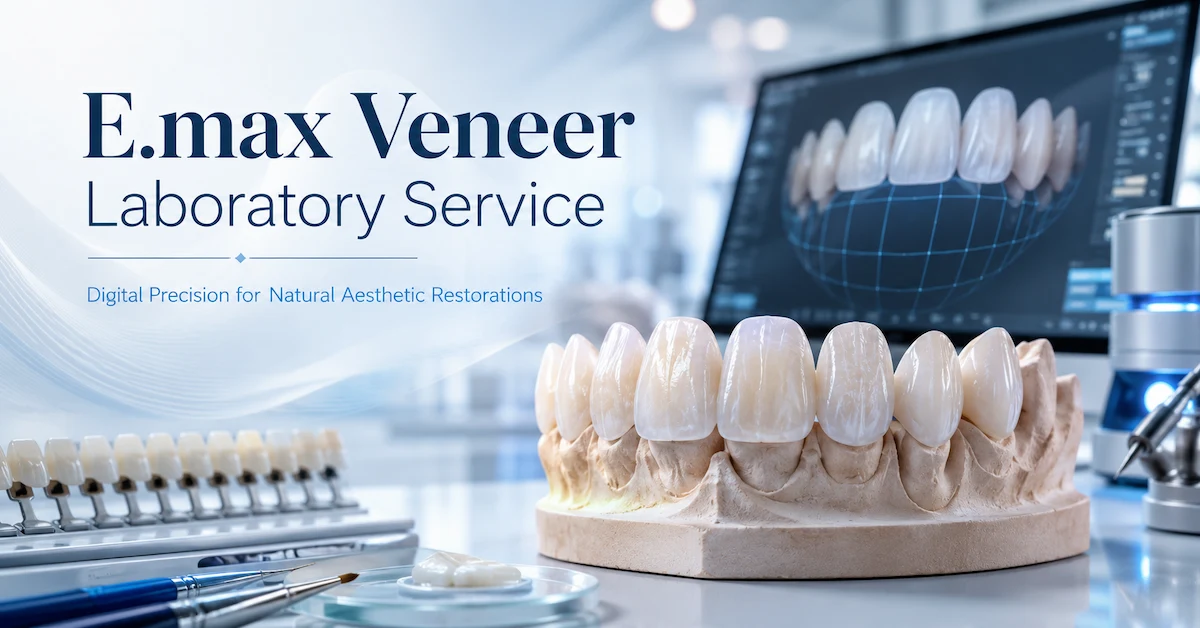
E.max, zirconia, and other restorative ceramics are relevant to the final restoration stage.
They should not be described as materials inherently used to create a diagnostic wax-up.
This distinction is important when clinics compare planning services with definitive restorative manufacturing.
Digilabo's dental product portfolio includes multiple restorative categories. Buyers should identify which planning and manufacturing services they want quoted separately.
How Much Does a Diagnostic Wax Up Lab Service Cost?
There is no universal fee for a diagnostic wax-up service.
Price depends on the complexity of the case and the deliverables required.
A straightforward design involving a small number of anterior teeth should not be assumed to require the same resources as a complex multi-arch rehabilitation.
Main Cost Factors
The quotation may be influenced by:
-
Number of teeth
-
Number of arches
-
Complexity of morphological changes
-
Digital or conventional workflow
-
Need for additional clinical record review
-
Number of design previews
-
Included revision rounds
-
Physical model production
-
Additional planning outputs
-
Expedited processing
-
Shipping requirements
Buyers should request an itemized quotation.
Compare Service Scope, Not Only Unit Price
For example, one supplier may quote for digital design only.
Another may include an initial preview and a defined revision stage.
A third may include physical model production.
Those quotations are not equivalent.
A useful comparison should identify what the buyer receives for the quoted price.
| Cost Component | Questions to Ask |
|---|---|
| Initial design | Is the design fee per tooth, per arch, or per case? |
| CAD preview | Is a reviewable preview included? |
| Revisions | How many revisions are included? |
| File export | Are usable output files included? |
| Printed model | Is physical production separate? |
| Additional outputs | Are indexes or other references priced separately? |
| Priority service | Is expedited processing available? |
| Shipping | Is transport included or charged separately? |
| Design change | How is a major change in prescription priced? |
The objective is to avoid hidden scope differences rather than simply identify the lowest number.
How Long Does Diagnostic Wax-Up Production Take?
Service lead time depends on the case, required output, laboratory workload, and review process.
There are several separate milestones.
Initial Intake Review
The laboratory confirms whether the submitted records are suitable.
Incomplete files may delay the start of design work.
First CAD Preview
The technician prepares the initial proposed morphology.
Clinical Approval
The dentist reviews the design.
The time spent waiting for approval is part of the total process, even though it may not be laboratory production time.
Revisions
Additional design changes may require another review cycle.
Physical Production
If a printed or conventional model is required, production time must be included.
International Delivery
Physical shipment may involve transport and customs processing.
A buyer should not assume that the laboratory's general crown or bridge turnaround is the same as its diagnostic wax-up turnaround.
Ask for separate estimates for the first preview, the final approved design, and physical arrival where applicable.
This approach supports more realistic appointment planning.
What Happens if the Dentist Wants Design Changes?
Revision management should be established before the order begins.
Not every change has the same cause.
Correction of a Technical Error
If the laboratory has not followed an agreed instruction, the issue should be reviewed as a potential correction.
Adjustment Within the Original Design Scope
A clinician may request a change in morphology while keeping the original treatment plan.
The laboratory's quotation should explain whether such revisions are included.
Major Treatment-Plan Change
A new scan, revised tooth coverage, different occlusal plan, or substantial change in restorative objectives may require additional design work.
That may affect the original price and timetable.
Best Practice for Revision Communication
A revision request should identify:
-
Case reference
-
Current version
-
Specific teeth
-
Exact requested changes
-
Whether other approved features must remain unchanged
-
Deadline for the revised preview
For example:
"Please maintain the approved central incisor length from Version 02. Reduce the facial prominence of the lateral incisors and preserve the previously approved midline."
This is more useful than writing "make the smile more natural."
What Can Go Wrong With a Diagnostic Wax-Up Service?
Understanding common errors helps clinics evaluate the service before committing to treatment.
Incomplete Clinical Records
A missing bite record or poor-quality scan can undermine the usefulness of the proposed morphology.
Unrealistic Design Objectives
The requested aesthetic changes may conflict with available tooth structure or the intended restorative approach.
The clinical team must resolve these conflicts.
Unclear Deliverables
A clinic may expect a printable model while the laboratory supplies only rendered images.
The original quotation should prevent this misunderstanding.
Poor Version Control
If several designs exist without clear identification, the wrong version may be approved or delivered.
Insufficient Clinical Review
A technically correct digital model may still be inconsistent with the patient's clinical needs.
Confusion Between Planning and Final Production
An approved wax-up does not necessarily mean the definitive veneers or crowns are ready to manufacture without additional records.
Unclear Revision Costs
Unexpected charges may appear when the original service scope is not documented.
These problems can be reduced through better specification and communication, but no diagnostic service eliminates every clinical or manufacturing risk.
Why Digital Design Approval Matters for Dental Clinics
A diagnostic wax-up should create an opportunity for meaningful clinical review.
A preview is most useful when it supports specific decisions.
Instead of only asking whether the design looks attractive, the dentist can review whether the proposed morphology follows the treatment plan.
For example:
-
Is the intended tooth length represented?
-
Are the prescribed gaps being closed appropriately?
-
Does the canine morphology follow the approved direction?
-
Are the proposed facial contours acceptable?
-
Are there technical concerns that require clinical reassessment?
The approval process should distinguish between aspects already accepted and those still unresolved.
For example, the dentist may approve the overall anterior tooth arrangement while reserving judgment about a particular functional relationship.
That distinction should be documented.
Digilabo's existing anterior aesthetic dental laboratory guide discusses the importance of treating morphological design approval separately from other restorative requirements.
A structured approval record can also help resolve later questions about which version was accepted.
How a Diagnostic Wax-Up Supports Patient Communication
Patients often describe aesthetic preferences in nontechnical language.
They may want a brighter smile, more natural-looking teeth, or less visible asymmetry.
The dentist must translate those preferences into clinically appropriate objectives.
A diagnostic wax-up can provide a reference for explaining the proposed changes.
This may make it easier to discuss the treatment plan than relying on verbal descriptions alone.
However, the dentist should explain that a digital rendering or physical diagnostic model is a planning representation.
The final outcome can be influenced by preparation geometry, material properties, clinical conditions, and treatment adjustments.
A mock-up or provisional stage may provide additional information where appropriate.
The purpose of previewing is to improve the quality of the treatment discussion, not to promise an identical final result under every condition.
How Digilabo Can Fit Into a Diagnostic Wax-Up Workflow
Digilabo Dental Laboratory describes its operation as a full-service dental laboratory supporting digital and conventional restorative cases.
Its website lists diagnostic wax-ups within the Veneers category and identifies aesthetic restorations, crowns, bridges, implant restorations, removable prosthetics, and orthodontic appliances among its broader services.
The company describes a facility of more than 4,000 square meters, with over 300 technical personnel and more than 200 pieces of production equipment.
Its published capabilities include scanning, CAD/CAM-related production, five-axis milling, and resin model printing.
These are company-published descriptions of its overall operation, not automatic commitments for every individual diagnostic wax-up order.
The website also describes a general laboratory process involving:
-
Digital case submission and prescription
-
CAD design review and validation
-
Manufacturing, quality inspection, and shipping
For clinics seeking diagnostic wax-up support, this broader workflow provides relevant background.
However, the exact service scope should be confirmed before placing an order.
In particular, buyers should ask which diagnostic outputs are currently available, what file formats can be delivered, whether physical models can be manufactured, and how design revisions are handled.
The Digilabo company profile provides more information about its technical resources and restorative capabilities.
How to Request the Right Diagnostic Wax-Up Service
A useful laboratory inquiry should describe the intended clinical application and the required deliverable.
Do not begin with price alone.
Start by telling the laboratory what the design is supposed to achieve.
Information to Include in Your Inquiry
Clinic Information
Identify the practice type, country, and primary contact.
Clinical Application
Specify whether the case involves veneers, crowns, anterior rehabilitation, full-mouth planning, or another restorative objective.
Number of Units
Identify the teeth and arches involved.
Available Records
State whether scans, bite records, photographs, and prescriptions are available.
Requested Design
Explain the desired morphological changes and relevant clinical limitations.
Required Outputs
State whether you require digital CAD files, previews, printed models, or other specified deliverables.
Review Requirements
Explain whether a design preview and revision stage are needed.
Deadline
Provide the intended clinical milestone rather than an unexplained urgent request.
Commercial Requirements
Ask for the scope, included revisions, additional charges, and applicable delivery arrangements.
Example Diagnostic Wax-Up Service Inquiry
"Our clinic is preparing a six-unit anterior veneer case and would like to request a diagnostic wax-up laboratory quotation.
We can provide upper and lower digital scans, bite records, frontal smile photographs, and a clinical prescription describing the proposed tooth-shape changes.
Please confirm whether your current service includes digital diagnostic design, a reviewable CAD preview, exportable design files, and optional physical model production.
We would also like to understand the design approval process, revision policy, expected milestones, and itemized pricing before submitting the complete case."
This type of inquiry gives the laboratory enough information to discuss a suitable scope without assuming that every service option is automatically available.
To begin, clinics can request a dental laboratory service quotation and ask for confirmation of the diagnostic wax-up deliverables relevant to their case.
Frequently Asked Questions About Diagnostic Wax Up Lab Service
1. What is a diagnostic wax up lab service?
A diagnostic wax up lab service is a dental laboratory service that creates a representation of proposed tooth morphology for restorative treatment planning. Depending on the laboratory and case, the output may be a conventional wax-up, a digital CAD design, a physical diagnostic model, or another agreed planning reference. Dentists may use these outputs to discuss aesthetics, restorative contours, and selected functional considerations before definitive fabrication. Clinical diagnosis and treatment approval remain the responsibility of the treating dentist.
2. Can a diagnostic wax-up be designed from intraoral scans?
Yes. Many digital dental laboratories can use intraoral scan files to produce CAD-based diagnostic wax-ups. STL and PLY are common formats, although accepted formats vary between systems and laboratories. Additional information such as bite records, photographs, tooth numbers, and clinical instructions may still be necessary. A scan describes existing geometry but does not automatically define the desired restorative outcome. The buyer should confirm file compatibility and submission requirements before ordering.
3. What is the difference between a digital wax-up and a printed wax-up model?
A digital wax-up is a three-dimensional design stored as computer data. A printed diagnostic model is a physical representation manufactured from an appropriate digital design. The digital version can support remote review and revisions, while a physical model may be useful for certain clinical or laboratory procedures. The two outputs may be related, but they are not interchangeable. A laboratory quotation should clearly state whether it includes digital design only or physical model production as well.
4. Is a diagnostic wax-up necessary before every veneer case?
No. The need for diagnostic wax-up planning depends on the dentist's clinical assessment, treatment complexity, proposed changes, and communication requirements. It may be particularly useful for multi-unit anterior cases, substantial tooth-shape changes, or situations where patient expectations require detailed discussion. The dentist should determine whether the planning stage is appropriate for the individual case. A laboratory should not present it as a universal clinical requirement.
5. Can diagnostic wax-ups support full-mouth rehabilitation?
Yes. Diagnostic wax-ups can contribute to planning in selected full-mouth restorative cases by representing the tooth morphology prescribed by the clinician. These cases may involve additional information about occlusion, restorative space, vertical dimension, existing restorations, and the treatment sequence. The laboratory should design according to the approved clinical plan. A wax-up does not replace clinical examination, diagnosis, or the verification procedures required for complex treatment.
6. How much does a diagnostic wax up lab service cost?
Pricing varies according to the number of teeth, complexity, design method, required deliverables, revision scope, physical production, and shipping. A design-only order may have a different cost structure from a case requiring a printed model or additional transfer components. Clinics should request an itemized quotation and confirm which services are included. There is no reliable universal price that applies to every dental laboratory and case type.
7. How long does it take to receive a diagnostic wax-up?
Turnaround depends on case complexity, laboratory workload, completeness of the submission, and the number of review cycles. Initial design delivery, final approved files, and physical model arrival are separate milestones. A clinic should tell the laboratory the intended appointment date and confirm which milestone the quoted timetable covers. General crown or bridge manufacturing times should not be assumed to apply to diagnostic wax-up services.
8. Can a diagnostic wax-up be used to create a clinical mock-up?
An approved wax-up may support a clinical mock-up when an appropriate transfer method is selected. Depending on the case, a physical diagnostic model or index may be required. These items are not necessarily included in a standard digital wax-up service. The dentist must choose and verify the clinical technique, while the laboratory confirms which outputs it can provide. A digital preview alone should not be treated as a completed clinical mock-up.
9. What should dentists check before approving a diagnostic wax-up?
The dentist should check whether the design follows the prescribed tooth numbers, morphology, proportions, incisal positions, facial contours, and relevant functional requirements. The review should also consider whether the proposed design is compatible with the treatment plan and available clinical records. The approved file version and any remaining limitations should be documented. Approval of a wax-up does not automatically approve final restorative margins, materials, shade, or cementation requirements.
10. How can dental clinics request diagnostic wax-up support from Digilabo?
Clinics should prepare a case summary identifying the planned treatment, tooth numbers, available scans, bite information, photographs, desired morphological changes, and required deliverables. They can then contact Digilabo to confirm the currently available diagnostic design options, accepted file formats, approval process, physical model availability, revision terms, quotation, and estimated milestones. Starting with a representative case can help the clinic evaluate whether the laboratory workflow meets its requirements.
Conclusion
A professional diagnostic wax up lab service should provide a clearly defined planning deliverable supported by accurate records, appropriate technical design, and a documented clinical review process. For veneer cases, crown rehabilitation, and complex restorative planning, the main value lies in helping the dental team evaluate proposed morphology before definitive fabrication.
Dental clinics should confirm the required digital or physical outputs, case submission standards, revision arrangements, pricing, and delivery milestones before ordering.Digilabo Dental Laboratory supports digital restorative workflows and aesthetic dental cases; clinics seeking diagnostic wax-up assistance can contact the laboratory to discuss their case and request a tailored quotation.