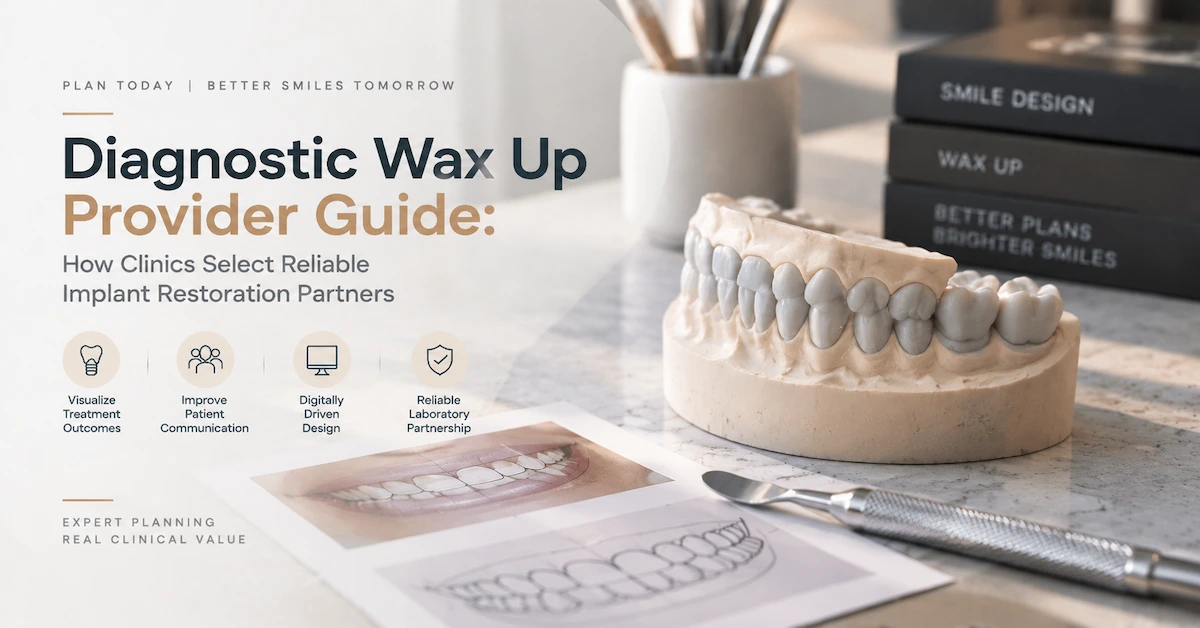

What Is a Digital Smile Design Laboratory?
A digital smile design laboratory supports dental clinics and laboratory partners by transforming clinical records, aesthetic objectives, and restoration requirements into a structured digital planning and manufacturing workflow. Instead of treating each restoration as an isolated production task, digital smile design connects diagnosis communication, aesthetic planning, CAD design, approval, fabrication, and final restoration coordination.
For cosmetic and restorative cases, digital planning is valuable because it creates a shared reference between dentists and laboratory technicians before production begins. A well-organized workflow allows both sides to discuss tooth proportions, smile balance, restoration shape, material selection, and expected outcomes before irreversible manufacturing steps take place.
Digilabo Dental Laboratory provides digital laboratory services that include digital case submission, CAD design communication, and restoration workflows. Its service page provides information about its laboratory process, while the products section shows categories including veneers, diagnostic wax-ups, crown and bridge restorations, zirconia restorations, and other dental laboratory solutions.
A digital smile design laboratory should not be evaluated only by whether it uses digital software or scanning equipment. Buyers should focus on how digital information is managed, how design decisions are reviewed, and how approved concepts are transferred into the final restoration.
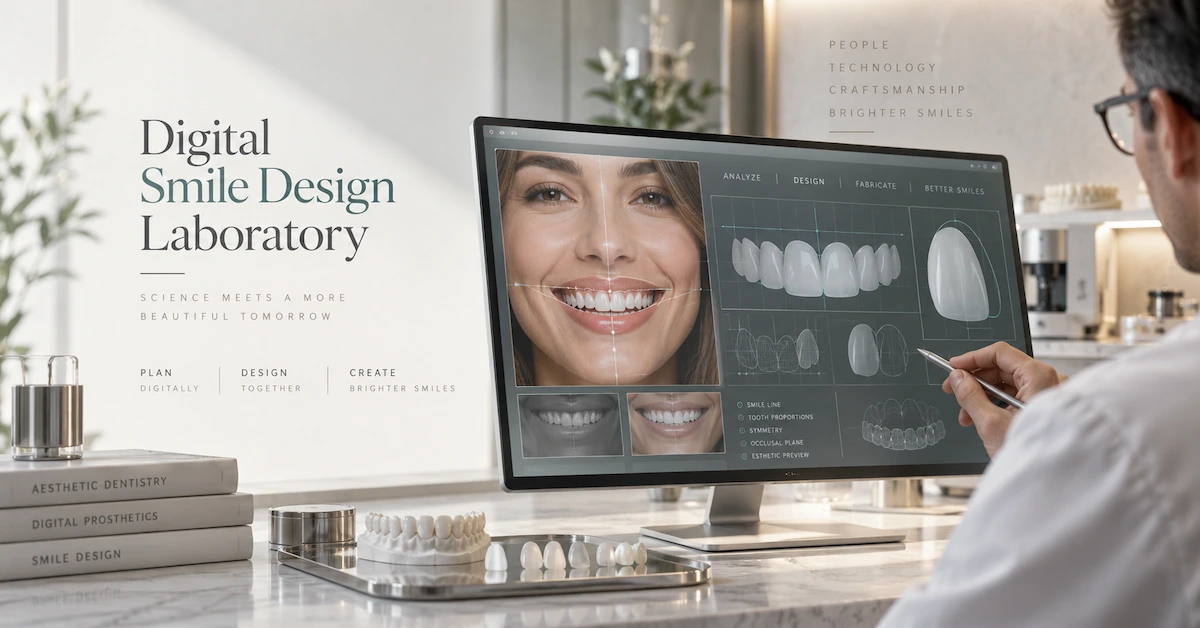
Why Digital Smile Design Matters for Aesthetic Dental Cases
Aesthetic dental cases often involve more than restoring individual teeth. For veneers, anterior crowns, and smile makeover cases, the final appearance depends on the relationship between multiple factors, including tooth proportions, facial contours, incisal edges, smile line, shade communication, and surface characteristics.
Without a structured digital workflow, important decisions may be distributed across different messages, photographs, files, and conversations. This increases the possibility of misunderstanding between the clinic and laboratory.
A digital smile design laboratory helps organize these decisions by creating defined stages:
- collecting complete clinical information;
- creating a digital design reference;
- reviewing proposed changes;
- confirming approval before production;
- maintaining communication records throughout fabrication.
The purpose of digital design is not to replace clinical judgment. The dentist remains responsible for diagnosis, treatment planning, preparation decisions, and final clinical evaluation. The laboratory uses approved information to support the manufacturing process.
Who Needs a Digital Smile Design Laboratory?
A digital smile design workflow is especially useful for dental professionals who handle aesthetic or multi-unit restorative cases.
Cosmetic Dental Clinics
Cosmetic clinics often manage cases where patient expectations involve visible changes to tooth shape, alignment, brightness, and smile appearance. A digital workflow helps the dentist and laboratory discuss these goals using shared references before restoration fabrication.
Restorative Dentists and Prosthodontic Practices
Complex restorative cases may involve multiple materials, several anterior teeth, or a combination of veneers and crowns. Digital planning helps organize the relationship between individual restorations and the overall smile design.
Dental Laboratories
Dental laboratories may use digital smile design workflows to improve communication, manage external production, and coordinate restoration manufacturing with partner laboratories.
Dental Groups and Multi-Location Clinics
Organizations with multiple dentists may need standardized workflows for submitting cases, reviewing designs, and maintaining consistent communication between locations and laboratory partners.
Digital Smile Design Workflow: From Case Submission to Final Restoration
A reliable digital workflow should clearly define what information enters the system, who reviews each stage, and when production approval occurs.
Step 1: Digital Case Submission
The workflow begins with collecting the information required for planning and design.
Typical case information may include:
| Information | Purpose |
|---|---|
| Digital scans | Provides three-dimensional tooth and tissue information |
| Bite records | Helps understand occlusal relationships |
| Clinical photographs | Provides aesthetic references |
| Shade information | Supports restoration color communication |
| Prescription details | Defines restoration requirements |
| Smile references | Communicates aesthetic objectives |
The completeness of submitted information directly affects the efficiency of later design stages. Missing records may require additional communication before the laboratory can proceed.
Step 2: Digital Planning and Design Preparation
After receiving the case information, the laboratory reviews the available data and begins digital planning according to the dentist's instructions.
For aesthetic cases, the design process may involve reviewing:
- tooth proportions;
- tooth length;
- facial contour;
- incisal edge position;
- symmetry;
- relationship between restorations and existing teeth.
The goal is to create a design reference that allows the dentist to review important aesthetic decisions before manufacturing.
Step 3: Digital Design Approval
Approval is one of the most important stages in a digital smile design laboratory workflow.
A clear approval process should define:
- which design version is being reviewed;
- which elements have been approved;
- which areas require modification;
- who is responsible for final approval.
A general approval message such as “approved” may not provide enough detail for complex cases. A more effective approach is to record specific decisions, such as tooth length approval, contour modification requests, or remaining shade instructions.
This reduces confusion when several revisions occur before production.
Step 4: Manufacturing and Restoration Production
After design approval, the laboratory proceeds with the selected manufacturing process according to the restoration requirements.
Depending on the case, production may involve:
- ceramic restoration fabrication;
- CAD/CAM manufacturing;
- finishing and characterization;
- quality inspection;
- packaging and shipment.
Digilabo's restoration services cover different restoration categories, including aesthetic and digital laboratory workflows. Buyers should confirm the specific process applicable to their restoration type rather than assuming every case follows the same manufacturing route.
How Digital Smile Design Improves Communication Between Dentist and Laboratory
One of the biggest advantages of a digital smile design laboratory workflow is improved communication.
Traditional communication may rely heavily on written descriptions such as:
- “make the teeth longer”;
- “make the smile more natural”;
- “increase brightness.”
While these descriptions provide direction, they may still leave room for different interpretations.
Digital design creates a visual reference that allows both parties to discuss specific changes.
Examples of Better Communication
Instead of:
“Please improve the front teeth.”
A clearer instruction may describe:
- which teeth require adjustment;
- whether length, width, or contour should change;
- whether the modification applies to all units;
- whether the change affects the approved design.
This type of communication reduces unnecessary revisions and helps maintain consistency.
Digital Smile Design for Veneer and Smile Makeover Cases
Veneer and smile makeover cases are among the areas where digital planning provides significant communication value.
The site's veneer laboratory guide discusses the importance of case records, photographs, shade information, and aesthetic requirements for veneer workflows.
For smile makeover cases, digital planning can help coordinate:
| Planning Area | Digital Review Purpose |
|---|---|
| Tooth proportions | Evaluate balance between multiple teeth |
| Smile line | Discuss visible tooth display and arrangement |
| Incisal edges | Review edge position and symmetry |
| Tooth contour | Evaluate facial shape and aesthetic form |
| Restoration relationship | Coordinate veneers, crowns, and other restorations |
The dentist determines the clinical treatment plan, while the laboratory supports the design and manufacturing communication process.
Digital Smile Design Laboratory and Material Selection
Digital planning does not replace material selection decisions. Instead, it helps ensure that the selected material is manufactured according to a clearly defined design.
Different aesthetic restorations may involve different material considerations, including:
- veneers;
- glass ceramics;
- zirconia restorations;
- anterior crowns;
- combination restorative cases.
Digilabo's product categories include veneers, zirconia, glass ceramics, and crown-and-bridge restorations. Buyers should confirm the exact material specification for each case rather than referring only to broad categories such as “ceramic restoration.”
Digital Smile Design Laboratory Workflow Comparison
| Traditional Communication | Digital Smile Design Workflow |
|---|---|
| Relies mainly on written descriptions | Uses digital references and visual approval |
| Design changes may be difficult to track | Revision stages can be documented |
| Multiple files may create confusion | Case information can be organized together |
| Approval may be unclear | Approval responsibility can be identified |
| Changes may occur late | Issues can be discussed earlier |
Digital workflows do not eliminate every possible case challenge, but they can create clearer communication points before production begins.
How Should Clinics Evaluate a Digital Smile Design Laboratory?
When selecting a laboratory partner, clinics should evaluate the complete workflow rather than focusing only on equipment or software names.
Important questions include:
Case Communication
- How are digital files submitted?
- How are missing records identified?
- How are questions communicated?
Design Approval
- Is there a digital review stage?
- How are revisions recorded?
- Who confirms final approval?
Production Control
- How does the approved design connect to manufacturing?
- How are restoration specifications recorded?
- How are quality checks performed?
Long-Term Cooperation
- Can the workflow support repeat cases?
- Are communication procedures consistent?
- Are responsibilities clear between clinic and laboratory?
The purpose of these questions is to understand whether the laboratory has a predictable process for managing aesthetic cases.
Quality Control in Digital Smile Design Workflows
Digital planning improves communication, but quality control remains essential after design approval.
A laboratory quality process may review:
- case identification;
- approved design version;
- restoration type;
- material information;
- aesthetic requirements;
- visible finishing quality;
- packaging accuracy.
A digital preview should not be considered the final quality inspection. The finished restoration still requires manufacturing and inspection according to the applicable laboratory process.
Turnaround Time in Digital Dental Workflows
Digital workflows can improve communication efficiency, but total delivery time depends on multiple stages.
A realistic timeline may include:
- Case information review;
- Digital design preparation;
- Dentist approval;
- Manufacturing;
- Finishing;
- Quality inspection;
- Shipping.
Clinics should distinguish between production completion and final delivery to the clinic.
A design revision after approval may affect the schedule, especially in multi-unit aesthetic cases. Therefore, approval timing should be considered part of the overall project plan.
Digital Smile Design Laboratory Outsourcing for Dental Labs
Dental laboratories may also use digital smile design outsourcing when they need additional design or manufacturing support.
Before establishing cooperation, laboratory buyers should clarify:
- case submission format;
- communication process;
- revision handling;
- confidentiality requirements;
- packaging responsibilities;
- delivery expectations.
Digilabo's outsourced dental restoration information provides a reference for laboratories evaluating external production cooperation.
A trial case is often useful before increasing cooperation volume because it allows both parties to evaluate communication quality, design approval, manufacturing consistency, and delivery performance.
Frequently Asked Questions
What is a digital smile design laboratory?
A digital smile design laboratory uses digital planning and communication workflows to support aesthetic dental restorations. It helps organize case information, design review, approval, and manufacturing coordination.
Why is digital smile design useful for veneers?
Digital smile design helps dentists and laboratories discuss tooth proportions, contour, incisal position, and overall aesthetic goals before veneer fabrication begins.
Does digital smile design replace the dentist's treatment planning?
No. The dentist remains responsible for diagnosis, treatment planning, clinical decisions, and final acceptance. The laboratory supports the manufacturing and communication process.
What files are needed for digital smile design?
Requirements vary by case, but may include digital scans, photographs, bite records, shade information, and restoration instructions.
Can digital smile design be used for crowns as well as veneers?
Yes. Digital workflows can support different restorative cases, including veneers, anterior crowns, and other aesthetic restorations when appropriate records are provided.
How does digital approval reduce restoration revisions?
A clear approval stage allows dentists and laboratories to identify design changes before manufacturing, reducing uncertainty about the final production requirements.
Is digital smile design only for cosmetic cases?
Digital workflows are especially valuable for aesthetic cases but can also support broader restorative communication where visual planning and case coordination are important.
How should clinics choose a digital smile design laboratory?
Clinics should evaluate communication workflow, design approval process, restoration capabilities, quality control, and long-term cooperation requirements.
How long does digital smile design take?
The timeline depends on case complexity, record completeness, approval speed, manufacturing requirements, and delivery arrangements.
How can dental laboratories start digital outsourcing cooperation?
Begin with a defined trial case, confirm file requirements and approval procedures, then evaluate workflow consistency before expanding cooperation.
Conclusion
A digital smile design laboratory provides value by creating a structured connection between clinical information, aesthetic planning, design approval, and restoration manufacturing. For clinics and dental laboratory partners, the key evaluation factors are not only digital equipment or software capability, but also how clearly the laboratory manages case information, communicates design decisions, controls revisions, and maintains quality throughout the workflow. Digilabo Dental Laboratory supports digital restoration cooperation through its product categories and laboratory services. Buyers can review the available restoration solutions, understand the service workflow, and contact Digilabo with their case requirements, digital records, aesthetic objectives, and cooperation needs for further discussion.