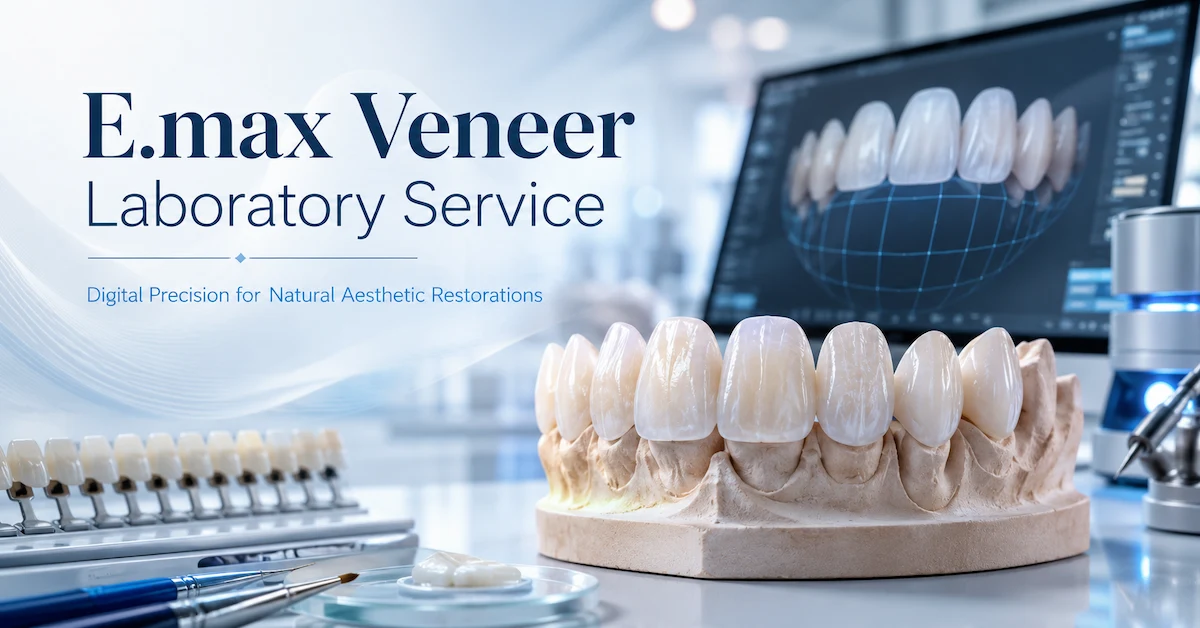

Smile design is one of the most patient-sensitive areas in cosmetic dentistry. Patients are not only asking for “white teeth.” They want a smile that matches their face, age, lip line, personality, and natural tooth proportions.
For dental clinics, this creates a clear challenge: how can you turn subjective aesthetic expectations into a predictable clinical result?
That is where a professional smile design veneers lab becomes important. The right lab does not simply fabricate veneers. It helps dentists evaluate digital scans, plan tooth proportion, create diagnostic wax-ups, select suitable ceramic materials, control shade, and deliver veneers that support both beauty and function.
At Digilabo Dental Laboratory, cosmetic veneer cases are supported through digital case submission, CAD/CAM design, E.max veneer fabrication, diagnostic wax-ups, ceramic finishing, and quality inspection for global dental clinics and lab partners.
What Is a Smile Design Veneers Lab?
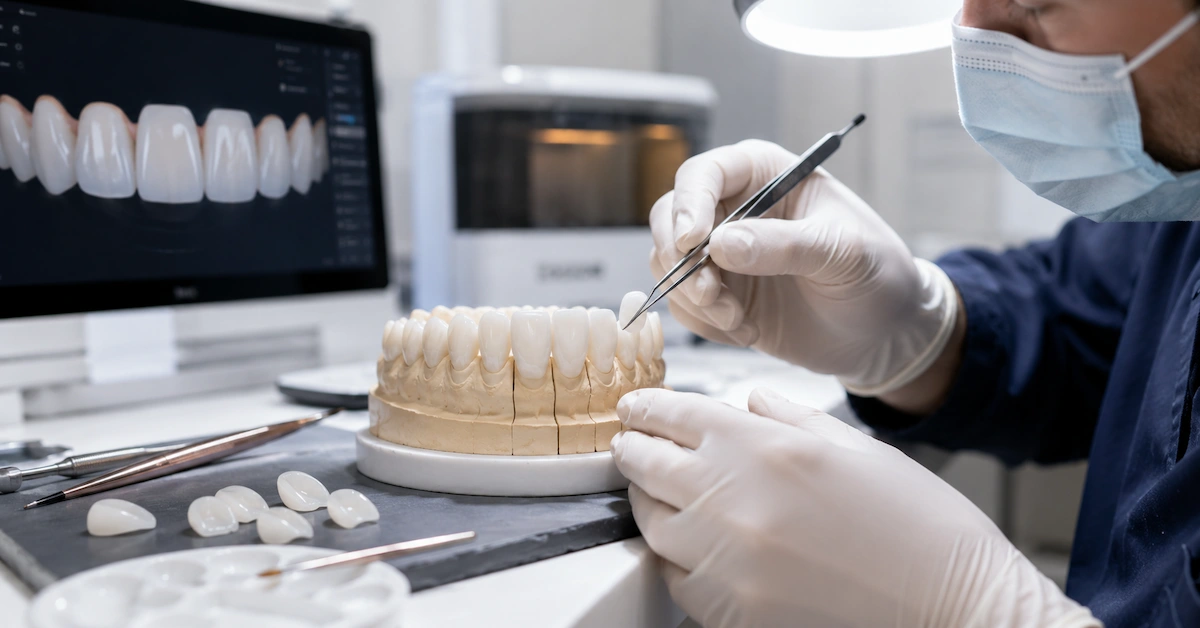
A smile design veneers lab is a dental laboratory that supports aesthetic veneer cases from planning to final restoration.
Compared with a standard veneer supplier, a smile design lab focuses more on the full visual result. It considers how each veneer fits into the patient’s overall smile.
Important design factors include:
- Facial midline
- Smile line
- Tooth length
- Width-to-height ratio
- Incisal edge position
- Gingival contour
- Lip support
- Tooth symmetry
- Surface texture
- Shade and translucency
- Patient expectations
A veneer can be technically well-made but still fail aesthetically if it does not fit the patient’s smile design plan. This is why clinics need a lab partner that understands both digital fabrication and cosmetic case planning.
Why Smile Design Matters in Veneer Cases
Veneer cases are highly visible. Even a small difference in shade, contour, or tooth length can affect the patient’s perception.
Smile design helps clinics improve:
- Patient communication
- Case acceptance
- Treatment planning
- Tooth proportion control
- Final restoration predictability
- Multi-unit veneer consistency
- Aesthetic confidence before fabrication
For example, in a 6-unit or 8-unit veneer case, the lab must consider how the central incisors, lateral incisors, and canines work together. If each veneer is designed separately, the final smile may look uneven or artificial.
A case-focused lab helps the dentist create a more coordinated result before the final ceramic work begins.
Common Smile Design Veneer Cases
| Case Type | Main Challenge | Lab Support Needed |
|---|---|---|
| 4-unit anterior veneers | Matching smile symmetry | CAD design and tooth proportion planning |
| 6-unit smile design | Balanced anterior aesthetics | Diagnostic wax-up and design review |
| 8-unit or 10-unit veneers | Full smile harmony | Smile line and incisal edge planning |
| Minimal-prep veneers | Thin ceramic control | Material and thickness guidance |
| Dark stump shade cases | Shade masking | Opacity and ceramic selection |
| Single veneer in smile zone | Matching natural teeth | Detailed shade and texture control |
| Replacement veneers | Improve old restoration appearance | Case photos and redesign support |
These cases require more than production capacity. They require careful communication between the dentist and the lab.
The Smile Design Veneer Workflow
A reliable smile design veneers lab should follow a clear workflow that helps clinics reduce uncertainty.
1. Case Submission
The clinic sends digital files and aesthetic information to the lab.
Recommended case materials include:
- STL or PLY scan files
- Upper and lower arch scans
- Bite record
- Digital prescription
- Smile photos
- Retracted anterior photos
- Shade tab photos
- Stump shade if needed
- Desired tooth shape
- Number of veneer units
- Material preference
- Patient expectation notes
A complete submission helps the lab understand both the technical and aesthetic goals of the case.
Digilabo’s Service and FAQ page explains the workflow from file upload and prescription to design validation, production, finishing, QC, and shipping.
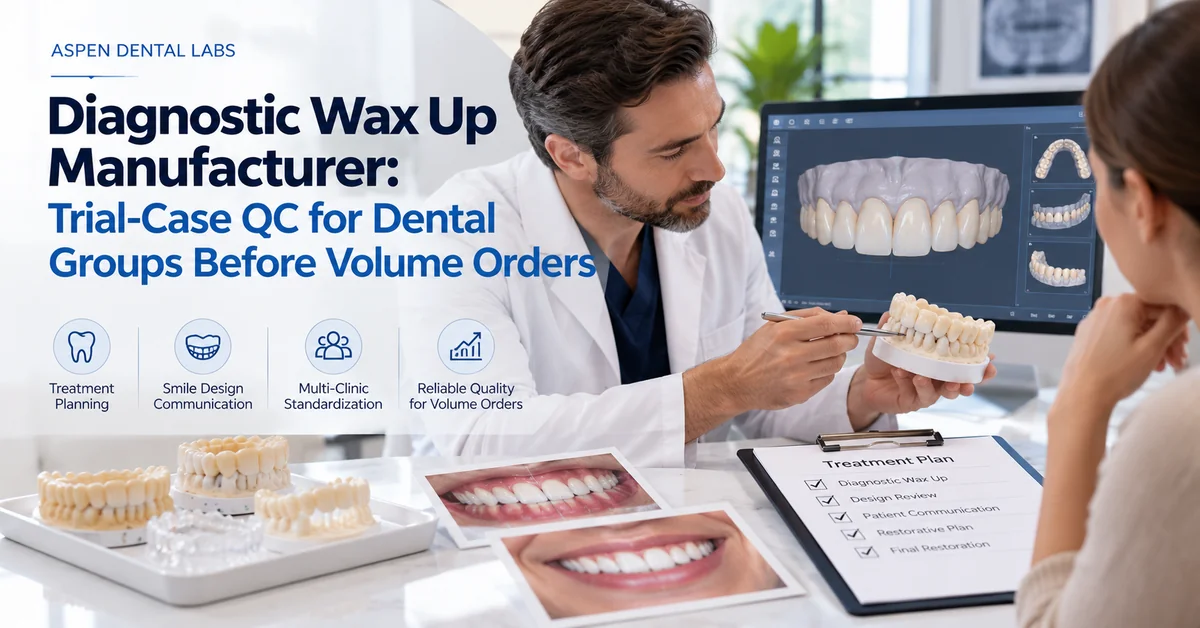
2. Diagnostic Wax-Up or Digital Preview
For smile design cases, diagnostic wax-ups are often useful before final veneer fabrication.
They help dentists:
- Show the patient a visual preview
- Confirm tooth length and shape
- Evaluate smile symmetry
- Adjust the plan before production
- Improve case acceptance
- Reduce communication errors
For multi-unit veneer cases, this step can be especially valuable because patients can better understand the expected result before committing to final restorations.
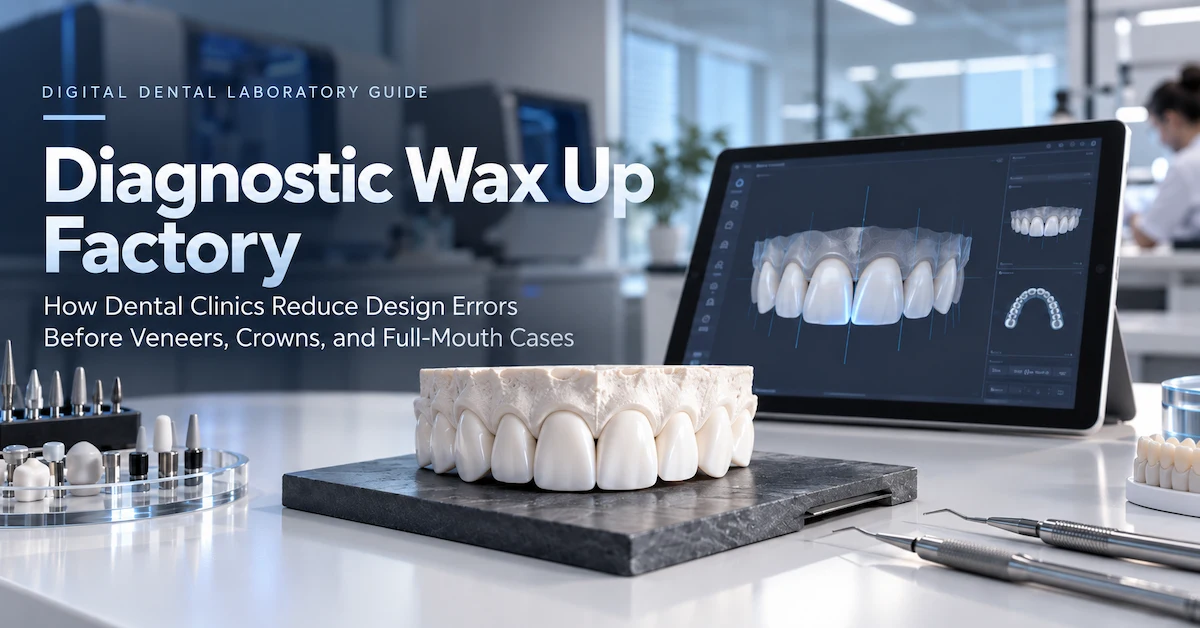
3. CAD Design
After the case is reviewed, the CAD team designs the veneer restorations based on the scan and prescription.
The design should consider:
- Tooth proportion
- Midline
- Incisal edge
- Emergence profile
- Contact points
- Surface contour
- Margin fit
- Smile arc
- Functional guidance
Good veneer design should not only look attractive on a screen. It should also help the dentist seat the restoration smoothly and reduce chairside adjustment.
4. Material Selection
Material choice affects final appearance, strength, thickness, and translucency.
| Material Option | Key Benefit | Best For |
| E.max / lithium disilicate | Natural translucency and strong aesthetics | Most cosmetic veneer cases |
| Layered ceramic | High shade and texture customization | Complex anterior smile cases |
| Zirconia-based options | Higher strength and masking ability | Special cases requiring more opacity |
| Diagnostic wax-ups | Visual planning before final veneers | Smile design approval and case planning |
For many cosmetic veneer cases, E.max is a strong choice because it offers a balance of strength and natural translucency. However, the best material depends on preparation design, underlying tooth color, required opacity, and the dentist’s aesthetic goal.
You can explore Digilabo’s veneer and diagnostic wax-up categories on the Products page.
What Makes a Smile Design Veneers Lab Reliable?
1. Strong Understanding of Aesthetic Dentistry
A good lab should understand that veneer cases are not only about shape. They involve smile harmony, value, chroma, translucency, and natural light reflection.
2. Digital Workflow Support
A modern lab should accept digital scans, STL/PLY files, scan codes, and digital prescriptions. This helps the clinic communicate faster and allows the lab to check margins, occlusion, and restoration design more efficiently.
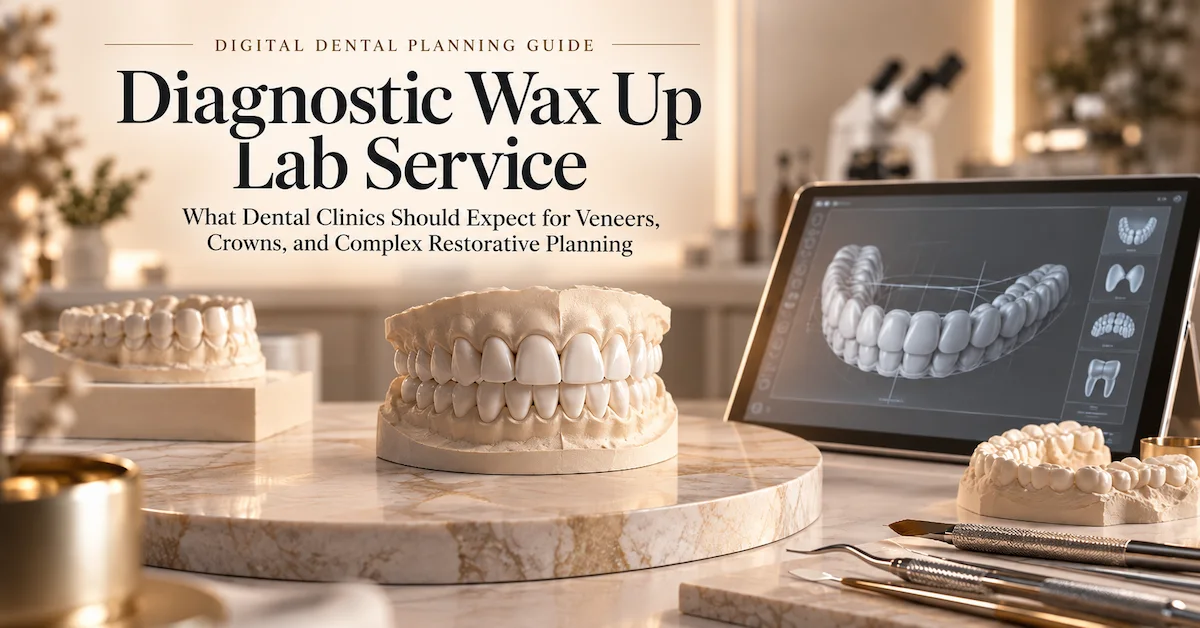
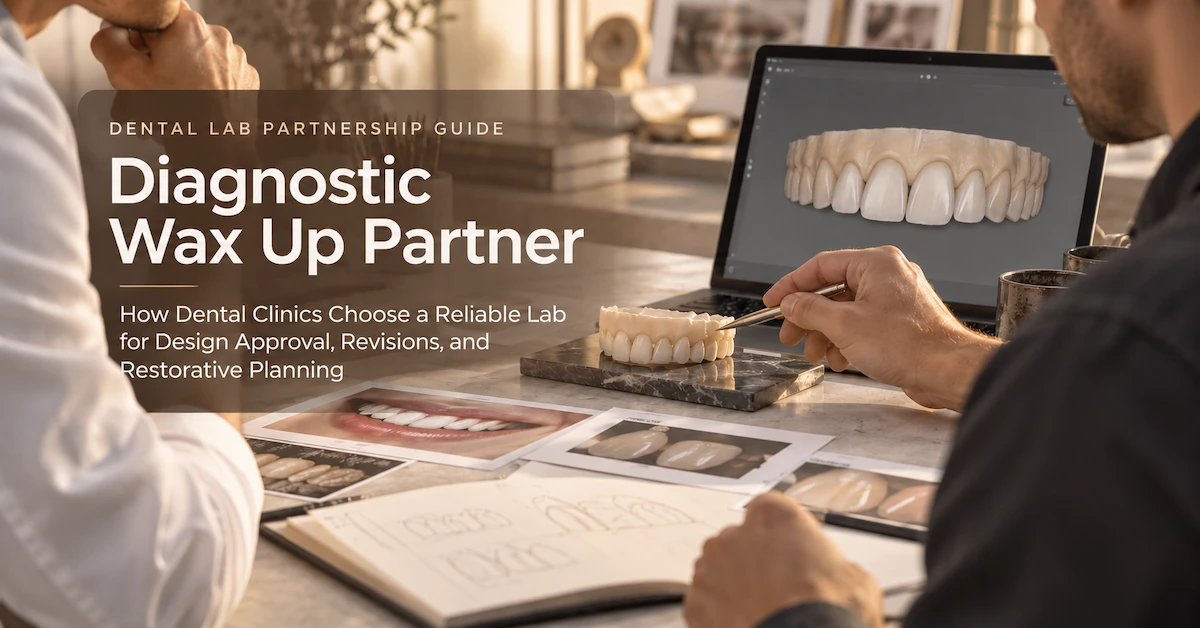
3. Diagnostic Wax-Up Capability
Diagnostic wax-ups are valuable for case planning and patient communication. They help clinics avoid misunderstandings before final fabrication.
4. Practical Shade Communication
Shade matching requires more than one shade number. A reliable lab should request shade tab photos, stump shade, smile photos, and notes about the patient’s preferred final look.
5. Experienced Ceramic Finishing
The final veneer surface should look natural, not flat. Skilled technicians can adjust texture, incisal translucency, stain, glaze, and surface reflection.
6. Clear QC Before Shipment
The lab should check margin, seating, contact, occlusion, surface finish, shade consistency, and final case details before delivery.
You can learn more about Digilabo’s lab capacity, technical team, equipment, and material standards through the About Us page.
Smile Design Case Checklist for Clinics
Before sending a smile design veneer case, clinics can use this checklist.
| Case Detail | Why It Matters |
| Full-arch digital scans | Helps evaluate bite and restoration position |
| Bite record | Supports occlusion and seating |
| Smile photos | Helps plan tooth length and smile line |
| Retracted photos | Shows margins and tooth condition |
| Shade tab photos | Improves shade communication |
| Stump shade | Important for dark underlying teeth |
| Preferred tooth shape | Helps match patient expectations |
| Diagnostic wax-up request | Useful for patient approval |
| Material preference | Guides strength and translucency |
| Delivery schedule | Helps plan appointments |
A well-prepared case allows the lab to work more accurately and reduces the chance of remake or delay.
Common Problems When Smile Design Is Not Communicated Clearly
Many veneer case issues are not caused by ceramic alone. They often happen because the lab did not receive enough design information.
Common problems include:
- Veneers look too long or too short
- Tooth shape does not match the patient’s face
- Midline appears off
- Shade looks too opaque
- Surface texture appears artificial
- Multi-unit veneers lack symmetry
- Incisal edge position feels wrong
- The patient expected a different smile style
- Chairside adjustment takes too much time
A specialized smile design veneers lab helps reduce these risks by reviewing case details before fabrication and supporting clear communication throughout the process.
How Digilabo Supports Smile Design Veneer Cases
Digilabo supports global clinics with veneer and aesthetic restoration cases through a digital dental lab workflow.
For smile design veneer cases, Digilabo can provide:
- Digital scan-based case review
- STL/PLY file workflow
- CAD/CAM veneer design
- E.max veneer fabrication
- Diagnostic wax-ups
- Custom shade communication
- Ceramic staining and glazing
- Surface texture finishing
- Margin and fit inspection
- QC photos before shipment
- International delivery support
For clinics that also need crown and bridge, implant restorations, removables, or orthodontic appliances, Digilabo provides broader dental lab support beyond veneers. You can read more dental lab topics on the Digilabo Blog.
How to Choose the Right Smile Design Veneers Lab
When comparing lab partners, clinics should ask these questions:
| Question | Why It Matters |
| Do you support STL/PLY files? | Ensures digital workflow compatibility |
| Can you provide diagnostic wax-ups? | Helps patient communication and planning |
| Do you fabricate E.max veneers? | Supports cosmetic anterior cases |
| How do you handle shade matching? | Reduces color mismatch risk |
| Do you review case design before production? | Helps avoid remake problems |
| Do you provide QC before shipment? | Improves confidence before seating |
| Can you support repeat cases? | Builds long-term consistency |
The right lab should help the clinic work more efficiently, not create additional correction work.
FAQ About Smile Design Veneers Lab
1. What is a smile design veneers lab?
A smile design veneers lab is a dental laboratory that supports aesthetic veneer cases with digital planning, diagnostic wax-ups, CAD design, ceramic fabrication, finishing, and quality control.
2. Why is smile design important for veneers?
Smile design helps ensure veneers match the patient’s face, lip line, tooth proportion, shade expectations, and overall aesthetic goal.
3. What should clinics send for a smile design veneer case?
Clinics should send STL/PLY scans, bite record, prescription, smile photos, retracted photos, shade tab photos, stump shade if needed, and notes about the desired tooth shape.
4. Are diagnostic wax-ups necessary for every veneer case?
Not always, but they are highly useful for multi-unit veneer cases, patient approval, and cases where tooth shape or smile design must be previewed before final fabrication.
5. What material is commonly used for smile design veneers?
E.max or lithium disilicate is commonly used for cosmetic veneer cases because it offers natural translucency and strong aesthetic performance.
6. Can Digilabo support digital smile design veneer cases?
Yes. Digilabo supports digital veneer case submission, CAD/CAM design, E.max veneers, diagnostic wax-ups, ceramic finishing, QC, and international dental lab services.
7. How can clinics reduce remake risk in veneer cases?
Clinics can reduce remake risk by sending complete scans, clear photos, accurate shade information, patient expectations, and design preferences before production begins.
8. Where can clinics learn more about Digilabo’s veneer services?
Clinics can visit Digilabo Dental Laboratory, explore the Products page, review the Service and FAQ page, or learn more through the Blog page.
Conclusion
A successful smile design veneer case depends on more than ceramic craftsmanship. It requires clear case planning, digital workflow, diagnostic support, material selection, shade control, and reliable lab communication.
For cosmetic clinics, choosing the right smile design veneers lab can improve patient communication, increase case acceptance, reduce adjustment time, and support more predictable aesthetic results.
Digilabo provides digital veneer case support, diagnostic wax-ups, E.max veneer fabrication, ceramic finishing, QC inspection, and international delivery for global clinics. If your clinic needs a reliable lab partner for smile design veneer cases, Digilabo can help you manage aesthetic restorations with a clearer and more efficient workflow.