
When Patients Expect Restorations That Look Completely Natural
In modern restorative dentistry, patients increasingly evaluate restorations not only by comfort and function, but by how naturally they integrate into the smile. Even when a crown fits correctly, issues such as opacity, inconsistent translucency, unnatural surface texture, or inaccurate shade layering can make restorations visually noticeable.
These aesthetic inconsistencies are rarely caused by material selection alone. They are often linked to limitations in layering techniques, digital shade control, or manufacturing precision.
A professional esthetic crown manufacturer focuses on balancing aesthetics, material science, and structural reliability to produce restorations that closely replicate natural dentition.
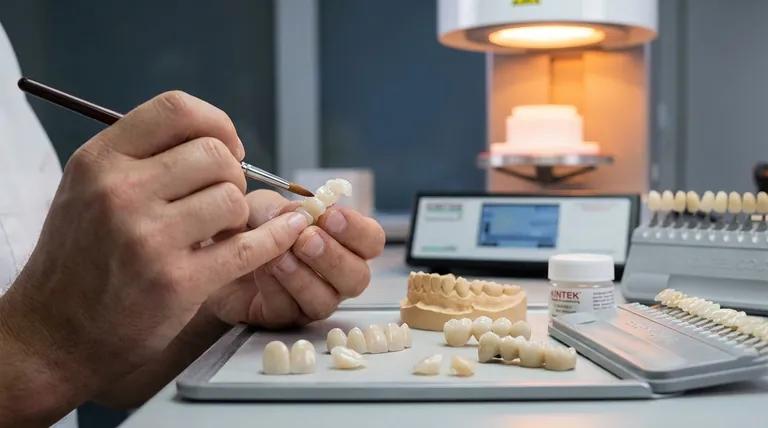
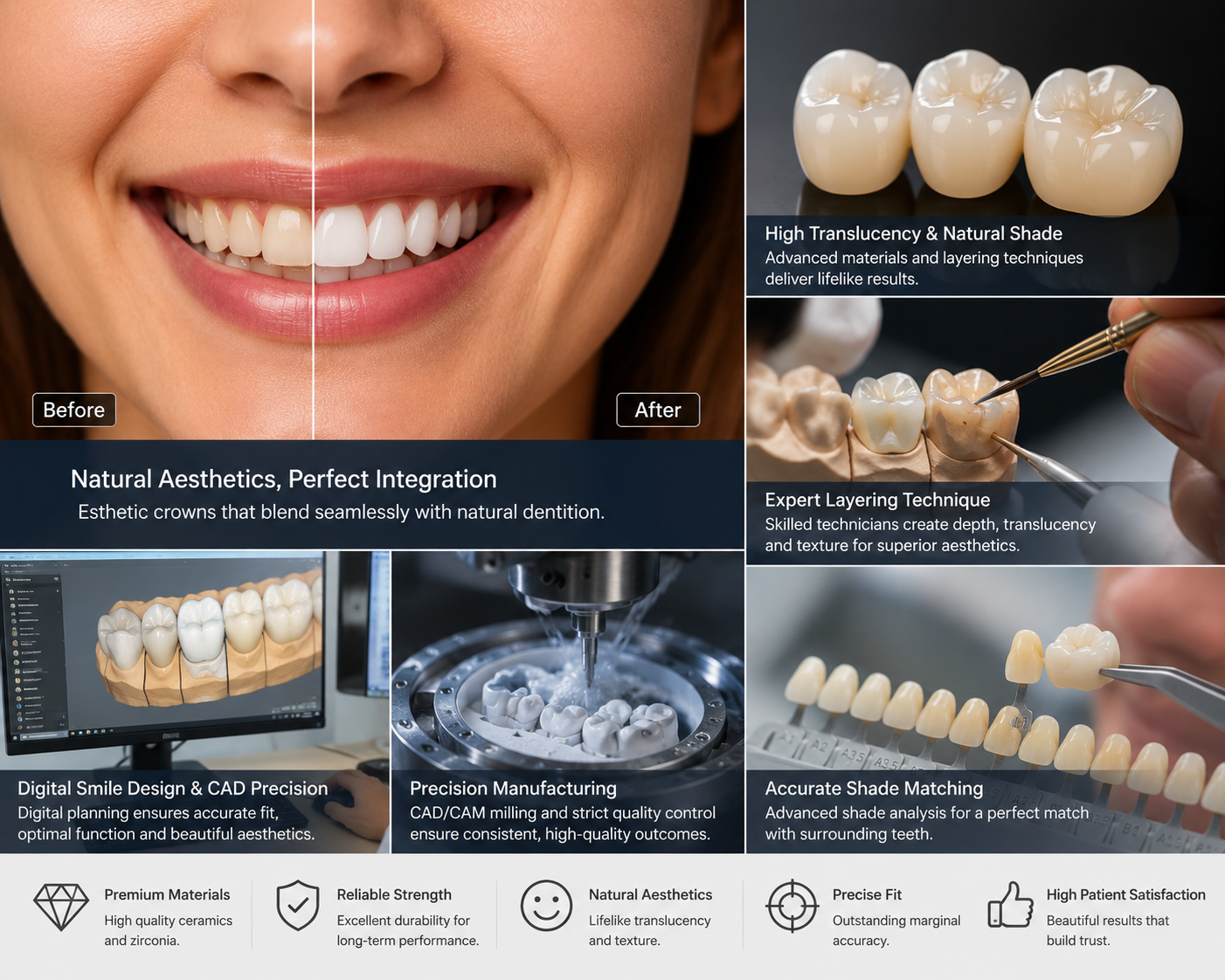
At Digilabo, esthetic crown production combines CAD/CAM workflows, digital shade analysis, ceramic layering techniques, and controlled firing protocols to ensure restorations achieve both visual realism and functional stability.
What Defines an Esthetic Crown Manufacturer
Aesthetic crown manufacturing requires more than standard crown production.
A qualified esthetic crown manufacturer should provide:
- Digital shade mapping and analysis
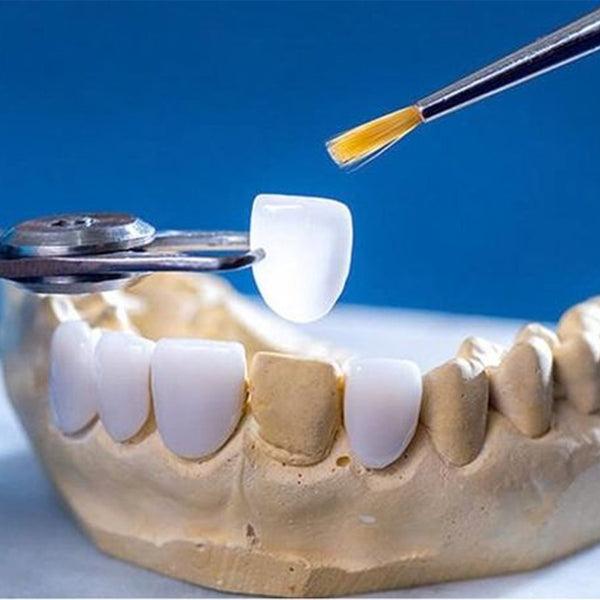
- Layered ceramic or zirconia techniques
- Surface texture customization
- Controlled translucency adjustment
- Accurate marginal fit and occlusion control
Because natural teeth are not uniform, esthetic crowns must reproduce subtle optical characteristics rather than simple color matching.
Materials Used in Esthetic Crown Manufacturing
Different aesthetic cases require different material strategies.
At Digilabo, esthetic restorations commonly include:
- Layered zirconia for balanced strength and translucency
- Lithium disilicate for high-end anterior aesthetics
- Glass ceramics for superior light transmission
- Monolithic zirconia for aesthetic posterior cases
Esthetic Crown Material Comparison
| Material | Translucency | Strength Range | Typical Application |
|---|---|---|---|
| Lithium Disilicate | High | 360–400 MPa | Anterior crowns |
| Layered Zirconia | Medium-High | 700–900 MPa | Esthetic restorations |
| Glass Ceramic | Very high | Lower | Cosmetic veneers/crowns |
| Monolithic Zirconia | Medium | 900–1200 MPa | Posterior aesthetics |
Key Aesthetic Manufacturing Variables
- Layer thickness affects light behavior
- Firing consistency impacts final shade
- Surface texture influences realism
- Digital shade mapping improves integration
Even minor deviations can affect how the restoration appears under natural light.
Why Clinics Choose Specialized Esthetic Crown Manufacturers
High-aesthetic restorative cases require greater consistency.
Clinics often move toward specialized esthetic crown manufacturers after experiencing:
- Shade mismatch in anterior cases
- Crowns that appear flat or opaque
- Inconsistent translucency
- Increased aesthetic remakes
A reliable esthetic crown manufacturer provides:
- Predictable visual outcomes
- Better integration with adjacent teeth
- Reduced remake rates in cosmetic cases
- Improved patient satisfaction
Because in cosmetic dentistry, small visual differences become highly noticeable.
Standard Crown Production vs Esthetic Crown Manufacturing
| Factor | Standard Crown Workflow | Esthetic Crown Workflow |
|---|---|---|
| Focus | Function | Function + aesthetics |
| Shade control | Basic | Advanced digital mapping |
| Surface texture | Standardized | Customized |
| Translucency control | Limited | High precision |
| Remake rate (esthetic cases) | 6–10% | 2–4% |
Aesthetic-focused workflows reduce visual inconsistencies significantly.
Case Insight: Improving Anterior Crown Acceptance
A cosmetic dental clinic experienced repeated remake requests for anterior crowns. While the restorations fit properly, patients frequently noticed differences in translucency and surface appearance compared to adjacent teeth.
After partnering with Digilabo:
- Digital shade mapping improved color accuracy
- Layered zirconia techniques enhanced translucency
- Surface texture customization improved realism
Within several cases:
- Aesthetic acceptance improved significantly
- Remake requests decreased
- Patient satisfaction scores increased
The improvement came from controlled aesthetic manufacturing, not simply changing materials.
How an Esthetic Crown Manufacturer Supports Long-Term Satisfaction
Aesthetic restorations must maintain appearance over time.
A professional esthetic crown manufacturer supports this by:
- Maintaining stable shade consistency
- Controlling surface wear behavior
- Ensuring precise marginal adaptation
- Delivering natural optical integration
Because patients remember how a restoration looks long after placement.
Q&A
Q: What is an esthetic crown manufacturer?
A: A manufacturer specializing in highly aesthetic crowns designed to replicate the appearance of natural teeth.
Q: Which material is best for esthetic crowns?
A: Lithium disilicate and layered zirconia are commonly used due to their translucency and natural appearance.
Q: Why do some crowns look unnatural?
A: Poor translucency control, inaccurate shade layering, and limited surface customization are common causes.
Working With Digilabo as Your Esthetic Crown Manufacturer
Digilabo provides esthetic crown solutions through digital workflows, advanced ceramic layering techniques, and controlled manufacturing systems designed for natural-looking restorations.
Learn about our labs and technical capabilities:
https://www.aspendentallabs.com/about-us
View complete restoration solutions:
https://www.aspendentallabs.com/products
Excellent aesthetic restorations are not just about color matching.
They're about making the restoration truly integrate into the natural dental arch.