
What Should an Implant Bridge Manufacturer Provide Beyond Fabrication?
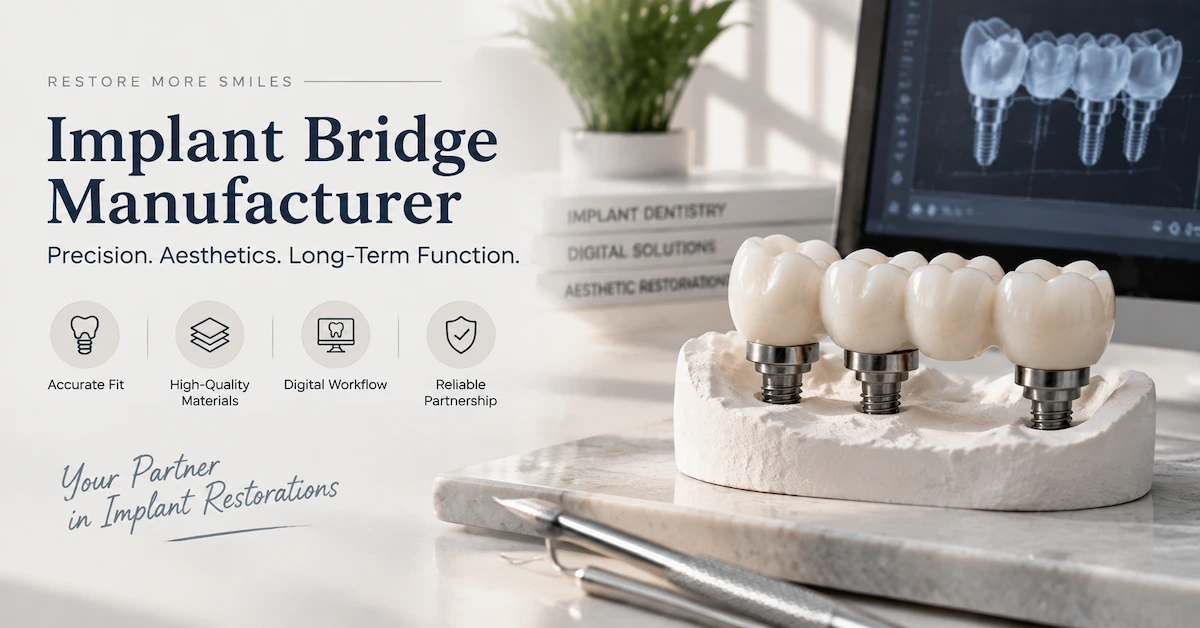
An implant bridge manufacturer should provide more than a finished implant-supported restoration. For dental clinics, implant specialists, and laboratory buyers, the value of a manufacturing partner depends on how effectively the laboratory manages the complete workflow: case submission, implant information review, digital design, material confirmation, production, quality inspection, and delivery coordination.
Implant bridge cases are different from many conventional restorations because the final restoration must work within a complete implant treatment plan. The laboratory needs accurate information about implant components, restoration requirements, available digital records, occlusal considerations, and the approved design direction before fabrication begins.
Digilabo Dental Laboratory provides implant restoration services as part of its broader dental laboratory capabilities. Buyers can review the company's implant restoration solutions and laboratory service workflow to understand the available restoration categories and cooperation process.
The most reliable implant bridge manufacturer relationship is built around clear communication rather than only production capacity. A good workflow helps identify missing information before manufacturing and creates clear approval points throughout the case.
Who Needs an Implant Bridge Manufacturer?
An implant bridge manufacturer is commonly selected by implant dentists, prosthodontic practices, dental clinics, dental groups, and other laboratories that require external implant restoration support.
Different buyers have different expectations.
Implant Clinics and Prosthodontic Practices
These buyers usually focus on:
- accurate implant case communication;
- predictable restoration design;
- material selection support;
- digital approval workflow;
- delivery coordination.
For implant specialists, the laboratory partnership should support the clinical workflow rather than simply manufacture a restoration after receiving files.
Dental Laboratories
Dental laboratories may outsource implant bridge production when they require:
- additional CAD/CAM capability;
- implant restoration expertise;
- production capacity support;
- specialized finishing processes.
For laboratory-to-laboratory cooperation, communication responsibility and case information transfer become especially important.
Dental Groups and Multi-Location Clinics
Organizations managing multiple locations may need standardized processes for:
- case submission;
- design approval;
- documentation;
- quality review;
- repeat cooperation.
A scalable implant workflow requires consistency, not only technical capability.
Define the Implant Bridge Case Before Requesting a Quote
An implant bridge is not a single standardized product. The final restoration depends on multiple case factors, including implant position, restoration design, material selection, and clinical requirements.
Before requesting a quotation, buyers should provide a complete case brief.
Implant Bridge Case Submission Checklist
| Case Information | What Should Be Confirmed | Why It Matters |
|---|---|---|
| Implant system | Implant brand, connection type, and relevant component information | Ensures restoration compatibility discussion |
| Case scope | Number of implants and restoration units | Defines production requirements |
| Digital records | Scans, bite records, and available files | Supports digital design |
| Prescription | Dentist's restoration requirements | Defines the requested outcome |
| Occlusal information | Relevant bite and functional records | Supports restoration planning |
| Implant position | Available implant-related records | Influences design decisions |
| Soft tissue information | Relevant clinical references where required | Supports emergence profile discussion |
| Material preference | Requested material or options for review | Avoids unclear quotations |
| Design approval | Responsible reviewer | Establishes authorization before production |
| Delivery requirement | Required arrival date | Supports realistic scheduling |
The required records depend on the clinical situation. The treating dentist determines which information is necessary for the individual implant case.
Why Digital Workflow Matters for Implant Bridge Production
Modern implant restoration workflows increasingly rely on digital communication because implant cases often involve multiple technical decisions before fabrication.
A digital workflow allows the clinic and laboratory to coordinate:
- implant information;
- restoration design;
- occlusion;
- emergence profile;
- aesthetic requirements;
- production approval.
Digilabo's digital dental laboratory services provide a reference point for discussing digital case communication and restoration workflow.
Digital Implant Bridge Workflow
Case Review
The laboratory reviews submitted information and identifies missing or unclear details before design begins.
Digital Design
The restoration is designed according to the approved prescription, implant information, and available records.
Design Approval
The clinic reviews the proposed design and confirms required modifications before production.
Manufacturing
The approved restoration moves into fabrication according to the confirmed material and design requirements.
Quality Review
The finished restoration is checked according to the applicable laboratory process before shipment.
This structure helps reduce unexpected changes after manufacturing has already started.
How Should Buyers Compare Implant Bridge Materials?
Material selection should be discussed according to the specific implant restoration case rather than choosing one material as universally superior.
Different materials may involve different considerations related to:
- aesthetics;
- strength requirements;
- restoration design;
- fabrication process;
- clinical expectations.
Digilabo Dental Laboratory provides different restoration categories, including zirconia-related solutions within its product range.
Implant Bridge Material Comparison
| Material Option | Buyer Should Confirm | Main Discussion Point |
|---|---|---|
| Zirconia implant bridge | Exact zirconia type and restoration design | Balance between aesthetics and structural requirements |
| Ceramic restoration options | Specific ceramic system and construction method | Optical appearance and finishing requirements |
| Hybrid restoration approaches | Components and manufacturing process | Coordination between materials and design |
The purpose of comparison is to clarify the production specification, not to replace clinical decision-making.
What Should an Implant Bridge Manufacturer Control During Design?
Implant bridge design involves more than creating a digital shape. The laboratory should understand how the restoration fits within the overall treatment plan.
Important design discussions may include:
- restoration contour;
- implant connection information;
- occlusal considerations;
- cleaning accessibility;
- aesthetic requirements;
- relationship with surrounding teeth.
Design Approval Should Be Clearly Documented
Before manufacturing begins, the buyer should know:
- which design version is approved;
- what changes have been requested;
- who approved the design;
- whether additional modifications affect production timing.
A documented approval process helps both the clinic and laboratory avoid confusion during complex cases.
Quality Control for Implant Bridge Manufacturing
A professional implant bridge manufacturer should have a quality review process connected to the actual case requirements.
Buyers should understand what information is checked before shipment.
Potential Quality Review Points
Depending on the restoration and laboratory workflow, review may include:
- case identification;
- restoration type;
- implant-related information;
- approved design version;
- material specification;
- visible finishing quality;
- packaging accuracy.
A general statement such as “high quality” does not explain how a specific restoration was evaluated. Buyers should focus on whether the laboratory can maintain traceable case information and communicate clearly when questions arise.
Implant Bridge Manufacturing Time Should Be Divided Into Stages
The total delivery timeline for an implant bridge includes more than fabrication.
A practical workflow may include:
- Case information review;
- Digital design;
- Dentist approval;
- Manufacturing;
- Finishing;
- Quality inspection;
- Shipment.
Clinics should distinguish between:
- production completion date;
- shipment date;
- final clinic arrival date.
A design revision or missing case information may affect the schedule, especially for complex implant restorations.
How Should Clinics Evaluate Implant Bridge Outsourcing Risks?
Outsourcing implant bridge production requires clear communication because errors can affect clinical scheduling and patient management.
Common Purchasing Risks
| Risk | How Buyers Can Reduce It |
|---|---|
| Incomplete implant information | Submit complete implant records before design |
| Unclear material specification | Confirm the exact restoration proposal |
| Design misunderstanding | Use documented approval stages |
| Late changes | Record revisions before production |
| Unclear remake responsibility | Define review procedures in advance |
| Delivery uncertainty | Separate production and shipping timelines |
A strong outsourcing relationship does not eliminate every possible issue, but it creates a clearer process for identifying and solving problems.
How Dental Laboratories Can Work With an Implant Bridge Manufacturer
Dental laboratories considering external implant bridge production should evaluate more than technical capability.
Important cooperation factors include:
- communication process;
- case information transfer;
- confidentiality;
- design revision handling;
- packaging;
- delivery management.
Digilabo's outsourcing service information provides a reference for laboratories evaluating external restoration cooperation.
Start With Representative Cases
A trial case allows buyers to evaluate:
- communication efficiency;
- design accuracy;
- approval process;
- production consistency;
- delivery reliability.
Expanding cooperation after testing the workflow can help establish more predictable long-term collaboration.
How to Choose the Right Implant Bridge Manufacturer?
A suitable implant bridge manufacturer should match the buyer's actual workflow requirements.
Before cooperation, consider:
Technical Capability
Can the laboratory support the restoration types and digital communication process required?
Case Management
Does the laboratory have a clear method for receiving information, reviewing cases, and handling approvals?
Quality Communication
Can the laboratory explain how cases are checked and how questions are resolved?
Long-Term Cooperation
Can the workflow support repeat orders and consistent communication?
The right partner is not only a manufacturer but also part of the restoration planning and communication process.
Frequently Asked Questions
What is an implant bridge manufacturer?
An implant bridge manufacturer is a dental laboratory or manufacturing partner that produces implant-supported bridge restorations according to dentist prescriptions, implant information, and approved design requirements.
What information is needed before ordering an implant bridge?
Buyers typically need implant-related information, digital records, restoration requirements, and other case-specific details determined by the treating dentist.
Can implant bridges be designed digitally?
Yes. Digital workflows can support implant restoration planning, design review, and communication between clinics and laboratories.
How should clinics choose an implant bridge manufacturer?
Clinics should evaluate case communication, digital workflow, design approval, quality control, material options, and delivery management.
What materials are used for implant bridges?
Material options depend on the specific restoration requirements. Buyers should confirm the exact material and construction method proposed for their case.
Why is design approval important for implant bridges?
Design approval allows clinics and laboratories to confirm important restoration details before manufacturing begins.
How long does implant bridge production take?
The timeline depends on case complexity, record completeness, approval speed, manufacturing process, finishing, and shipping arrangements.
Can dental laboratories outsource implant bridge production?
Yes. Dental laboratories may cooperate with external partners when they need additional production support or specialized workflows.
How can remake risks be reduced?
Clear case records, complete implant information, documented approvals, and defined communication procedures can help reduce misunderstandings.
How can I start cooperation with Digilabo Dental Laboratory?
Prepare the case information, restoration requirements, digital records, and delivery expectations, then contact Digilabo through the Contact Us page for case-specific discussion.
Conclusion
Choosing an implant bridge manufacturer requires evaluating the complete restoration workflow rather than comparing only manufacturing prices. Dental clinics and laboratory buyers should consider how the laboratory manages case submission, implant information review, digital design, material communication, approval stages, quality control, delivery planning, and post-production support. A reliable implant restoration partner helps create a more predictable process from initial case information to final restoration delivery. Digilabo Dental Laboratory provides implant restoration solutions supported by digital laboratory workflows and customized case communication. Buyers can review the implant restoration categories, understand the laboratory service process, and contact Digilabo with their implant bridge requirements for further discussion.