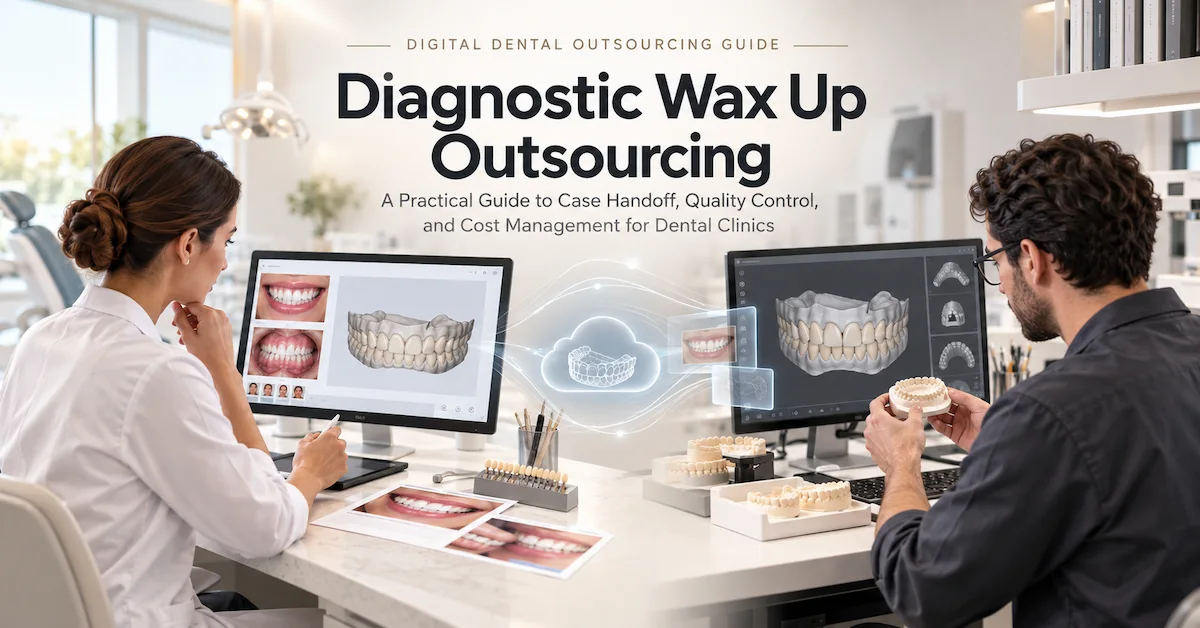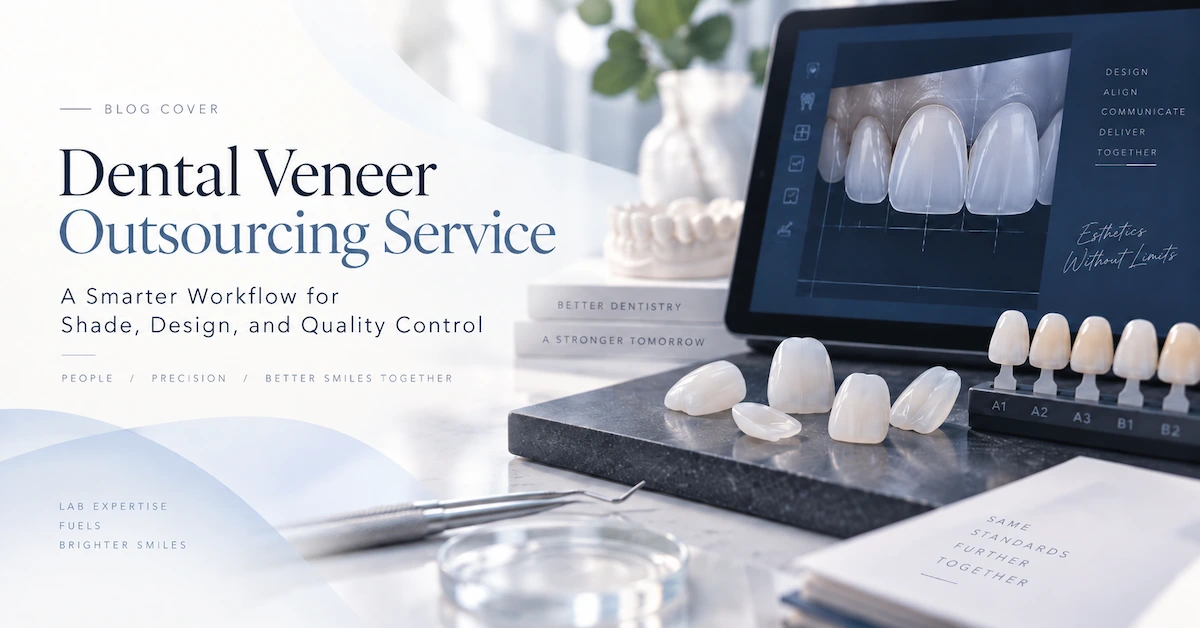

What Should a Smile Makeover Dental Laboratory Actually Provide?
A smile makeover dental laboratory should provide more than the fabrication of several veneers or anterior crowns. For cosmetic clinics, prosthodontists, restorative dentists, and laboratory buyers, the real value lies in coordinating multiple visible restorations under one controlled aesthetic plan. That process may involve diagnostic planning, digital scans, photographs, shade references, wax-ups, CAD design, material confirmation, revision control, ceramic finishing, quality review, and final delivery.
This becomes especially important when several anterior teeth are restored together. A single restoration may look acceptable when viewed alone but still appear inconsistent within the complete smile if tooth proportions, incisal positions, surface texture, brightness, or characterization are not coordinated across the case. Digilabo Dental Laboratory presents veneers, diagnostic wax-ups, crown-and-bridge restorations, zirconia, glass ceramics, and other restorative categories within its product range, giving clinics several laboratory options to discuss according to the prescribed treatment plan.
The treating dentist remains responsible for diagnosis, treatment planning, clinical preparation, material approval, and final clinical acceptance. Digilabo's role is to translate the prescribed case information into a manufacturable laboratory workflow and identify questions that need clarification before production.
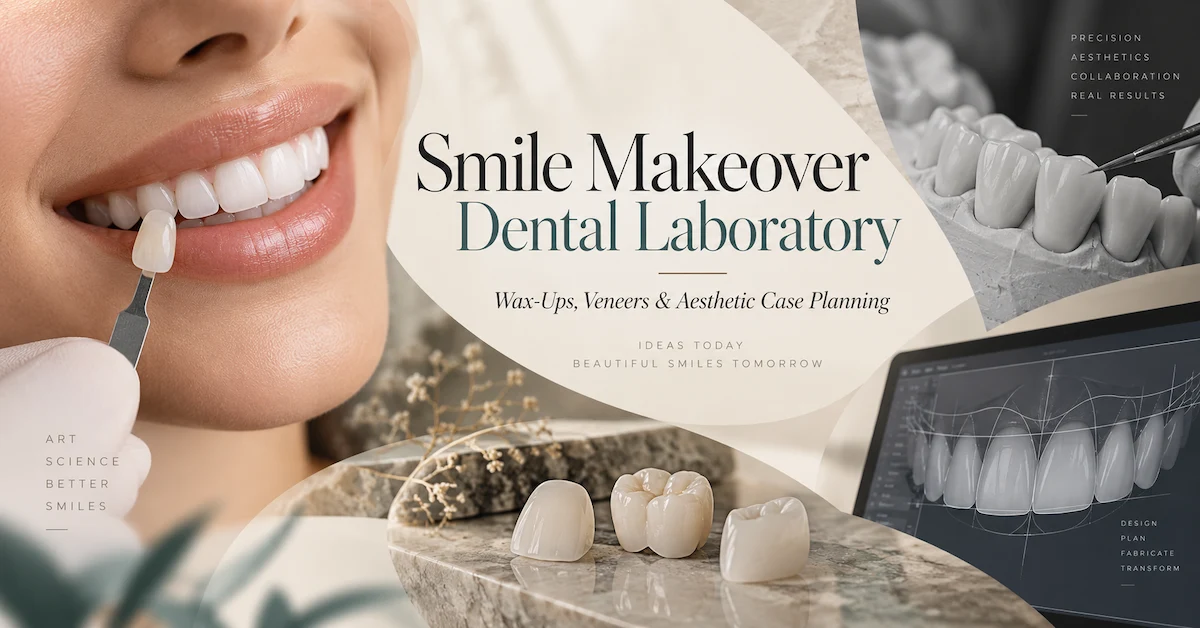
Who Typically Needs Smile Makeover Laboratory Support?
A smile makeover dental laboratory is particularly relevant for cosmetic dental clinics handling multi-unit anterior cases, restorative dentists coordinating veneers and crowns, prosthodontic practices managing complex rehabilitation, dental groups seeking a repeatable laboratory workflow, and other dental laboratories that require external design or ceramic production support.
The purchasing requirement varies significantly between these buyers. A cosmetic clinic may be focused on predictable design approval and communication with its dentist, while another laboratory may care more about white-label cooperation, case identification, confidentiality, production consistency, and after-sales responsibility. This is why supplier selection should begin with the actual cooperation model rather than with a generic statement such as “we need cosmetic restorations.”
Cases That Need Different Levels of Coordination
A single veneer beside natural teeth places strong emphasis on matching the surrounding dentition. A six- or eight-unit veneer case creates a different challenge because the laboratory must coordinate several restorations as one design. Mixed cases involving veneers and crowns may require even more control because different restoration types still need to appear visually related within the smile.
Digilabo's service page provides the starting point for understanding its laboratory workflow, while the About Us page provides additional information about Digilabo Dental Laboratory and its digital manufacturing capabilities.
Define the Smile Makeover Before Requesting a Final Quote
“Smile makeover” describes an aesthetic objective, not a complete laboratory prescription. Two cases carrying the same description may involve very different numbers of teeth, restorative materials, preparation conditions, design requirements, and production stages. A useful quote therefore begins with a defined case scope.
The clinic should identify which teeth are involved, which restorations are prescribed, what visual changes are requested, what should remain unchanged, which materials have already been selected by the treating dentist, and who will approve the laboratory design.
Smile Makeover Case Submission Checklist
| Case Information | What the Clinic Should Define | Why It Matters |
|---|---|---|
| Case identification | Case reference and tooth numbers | Keeps all records connected to the correct case |
| Restoration map | Veneer, crown, implant restoration, or other prescribed restoration for each tooth | Prevents ambiguity in mixed cases |
| Digital records | Current scans and relevant bite records | Establishes the files used for laboratory design |
| Prescription | Dentist's restoration and material instructions | Defines the requested laboratory work |
| Preparation information | Relevant preparation details and visible margins | Helps identify questions before design |
| Smile photographs | Full-smile and facial references where appropriate | Provides context beyond individual tooth geometry |
| Intraoral photographs | Anterior and shade-reference views where appropriate | Supports aesthetic communication |
| Target shade | Shade system and desired appearance | Creates a common color reference |
| Preparation shade | Underlying tooth color where relevant | Helps communicate optical conditions |
| Morphology objective | Length, width, contour, symmetry, and requested changes | Guides the design stage |
| Incisal objective | Edge position and characterization requirements | Coordinates the visible smile line |
| Planning stage | Diagnostic wax-up, digital design, or other agreed preview | Defines what is reviewed before manufacturing |
| Design approver | Dentist or authorized reviewer | Clarifies who can approve production |
| Required arrival | Requested clinic arrival date | Supports production and logistics planning |
This table is a laboratory communication framework rather than a universal clinical protocol. The treating dentist determines the records and clinical decisions required for the individual patient.
Why Diagnostic Wax-Ups Matter in Smile Makeover Cases
Diagnostic planning can be particularly valuable when several visible teeth need to change together. A diagnostic wax-up or agreed digital design can provide a common reference for tooth length, width, incisal edge position, symmetry, and general morphology before definitive restorations are manufactured.
Digilabo includes Diagnostic Wax-Ups within the restoration categories displayed on its products page. For buyers, however, the important question is not simply whether “wax-ups are available.” The quotation should state what the planning deliverable actually includes.
Clarify the Planning Deliverable
The buyer should confirm whether the case involves a digital design, physical planning model, or another agreed deliverable. Revision scope should also be discussed before work begins. A planning design that establishes morphology should not automatically be interpreted as final approval of ceramic shade, optical characteristics, or every later production decision.
Record Exactly What Has Been Approved
Instead of replying only “approved,” a clinic can document the approval more precisely. For example, tooth length, facial contour, and incisal position might be approved while the shade and individual characterization instructions remain subject to a separate confirmation.
This distinction becomes useful if the case changes later because the laboratory can identify which stage needs to be revised rather than restarting the entire discussion.
Control the Complete Smile Design, Not Only Individual Teeth
Multi-unit aesthetic cases should be reviewed as a coordinated group. The laboratory may need to consider tooth-to-tooth proportions, line angles, contact positions, incisal embrasures, facial contours, smile-line relationships, and surface texture across several restorations.
This does not mean every restoration should be identical. Individual variation may be part of the intended aesthetic design. The important point is that these differences should be intentional and connected to the agreed case plan.
What Should Be Reviewed During Digital Design?
Depending on the case, a dentist may want to review tooth length, width, facial contour, incisal edge position, general symmetry, contact relationships, and relationships between adjacent units before manufacturing begins.
Digital design becomes most useful when it creates a controlled decision point. If one anterior unit is changed, the clinic and laboratory can evaluate whether the neighboring restorations are also affected rather than modifying the tooth in isolation.
Digilabo's service workflow can be used to discuss how digital case submission, design communication, and production approval are handled for an actual order.
Shade Planning Requires More Than One Color Code
Shade communication is one of the most sensitive parts of a smile makeover because multiple restorations need to work together while also relating to any untreated natural teeth.
A nominal shade provides a useful starting reference, but an aesthetic case may require additional information concerning overall brightness, neighboring teeth, cervical and incisal characteristics, preparation color where relevant, translucency, and surface characterization.
A smile makeover dental laboratory should therefore receive a coherent set of shade references instead of several disconnected instructions.
Create One Consistent Shade Record
If shade-tab photographs are submitted, the reference should be clearly identifiable. Clinical photographs should belong to the current case, and later changes should be documented as revisions rather than added as informal messages.
Instructions such as “make it brighter” or “more natural” can leave too much room for interpretation. A more useful instruction identifies what should change relative to an existing reference.
Single-Tooth Matching and Multi-Unit Cases Are Different
A single veneer may need to integrate closely with adjacent natural teeth. In a multi-unit smile makeover, the priority may instead be consistency across several new restorations while maintaining an appropriate relationship with the remaining dentition. These cases should not automatically receive the same laboratory communication strategy.
How Should Clinics Compare Veneers, Crowns, and Other Aesthetic Restorations?
A smile makeover does not necessarily use one restoration type for every tooth. Depending on the clinical treatment plan, a case may contain veneers, anterior crowns, or other prescribed restorations. The laboratory quotation should therefore identify what is being produced for each tooth instead of treating “smile makeover” as a single product.
Digilabo's products section organizes multiple restorative categories, allowing buyers to discuss each prescribed component within one laboratory relationship.
Smile Makeover Restoration Comparison
| Restoration or Planning Element | What the Buyer Should Confirm | Main Aesthetic Discussion | Purchasing Risk if Undefined |
|---|---|---|---|
| Veneer | Exact material and manufacturing approach | Shade, translucency, contour, and neighboring-tooth integration | “Veneer” may be treated as the complete specification |
| Anterior crown | Material and construction | Contour, shade, texture, and integration with veneers or natural teeth | Different restoration types may look disconnected |
| Diagnostic wax-up | Deliverable and revision scope | Tooth proportion, edge position, symmetry | Planning approval may be confused with final restoration approval |
| Mixed crown-and-veneer case | Tooth-by-tooth restoration and material map | Consistency across different constructions | Units may be designed independently |
| Other aesthetic restoration | Confirmed product and relevant production requirements | Integration into the complete smile design | Generic instructions may hide important differences |
The laboratory comparison should clarify manufacturing choices, while the treating dentist determines clinical suitability.
Material Names Should Not Replace the Specification
Terms such as “E.max,” “zirconia,” or “ceramic” may be used conversationally, but buyers should still confirm the exact material or material series being proposed for the actual restoration.
The purchasing goal is not to decide that one material is universally better. It is to make sure that the clinic knows what is being quoted and that the laboratory has a clear production specification.
Questions to Resolve Before Material Approval
The clinic should understand which material is proposed for each restoration, whether several materials are being combined within one case, whether those choices affect the aesthetic workflow, and what happens if the material request changes after the design is approved.
A material change made late in the process may affect fabrication, finishing, pricing, or scheduling, so it should be recorded as a formal case revision.
What Should the Digital Smile Makeover Workflow Look Like?
A repeatable workflow makes the roles of the clinic and laboratory easier to understand. For Digilabo Dental Laboratory, buyers should use the published service information as the starting point, then confirm the exact stages applicable to the individual case.
1. Case Intake
Digilabo receives the current digital records, prescription, photographs, shade references, and other relevant information. All files should be connected to one identifiable case.
2. Technical Review
The submitted information is reviewed before the case moves forward. Missing files or contradictory instructions should be clarified rather than silently interpreted.
3. Diagnostic Planning
When requested and agreed, a diagnostic wax-up or digital planning stage can establish the intended morphology for the multi-unit case.
4. Restoration Design
The laboratory translates the prescription and agreed planning information into the actual restoration design.
5. Design Revision
The dentist reviews the design and identifies specific changes. Each revision should remain distinguishable from the previous version.
6. Final Design Approval
The clinic identifies the version authorized for fabrication. Any shade or characterization instructions handled separately should remain connected to the same case.
7. Fabrication and Finishing
The restorations are manufactured according to the confirmed material and approved design. Finishing instructions should remain accessible to the technicians completing the aesthetic work.
8. Quality Review
The completed case is reviewed against the relevant prescription and production information before shipment.
9. Delivery and Feedback
The restorations are packaged and shipped according to the agreed destination and schedule. If a question is reported after delivery, the case can be reviewed against the existing records.
Quality Control Should Evaluate Both Individual Units and the Complete Case
A multi-unit smile makeover introduces two levels of quality review. Each restoration needs to be checked individually, but the units may also need to be considered together against the approved aesthetic plan.
Depending on the restoration and laboratory procedure, case review may involve case identification, requested material, approved design version, shade instructions, contacts, relevant occlusal information from the supplied records, margins, surface finishing, and visible defects.
Ask for Traceability Instead of Generic Quality Claims
A broad statement such as “strict QC” does not explain how the actual case was reviewed. For long-term cooperation, it is more useful for a buyer to understand whether Digilabo can identify the material used, retrieve the approved design version, and relate a reported concern back to the original case instructions.
This becomes particularly important when several restorations are produced together because one design change may affect more than one unit.
Turnaround Time Should Be Divided Into Real Case Milestones
A smile makeover case may include more approval stages than a simple routine restoration. Clinics should therefore avoid treating a general production time as the complete period between sending records and receiving restorations.
A useful timeline distinguishes case receipt, technical review, planning, design approval, production, finishing, quality inspection, shipment, and clinic receipt.
Why Design Revisions Can Change the Schedule
If the dentist substantially changes a multi-unit design after approval, neighboring units may also need to be reviewed. The impact is potentially greater than changing one isolated restoration.
For this reason, the clinic should confirm how revision requests affect the schedule before committing to a final patient delivery appointment.
Compare the Complete Case Cost, Not Only the Per-Unit Price
Two laboratories can quote different prices because they include different services. One may include diagnostic planning, design revisions, characterization, physical models, packaging, or selected additional work, while another may quote these separately.
A meaningful comparison therefore starts by making the scope visible.
What Should the Quote Identify?
For a smile makeover, the quotation should make clear the number of units, restoration type for each tooth, material specification, planning work where requested, design-review scope, revision terms, aesthetic finishing requirements, models where applicable, packaging, shipping, and other relevant charges.
This approach is particularly important in mixed cases because a single total price does not tell the buyer which service is associated with each part of the treatment plan.
Define Revision and Remake Responsibility Before Manufacturing
A revision requested during the digital design stage is different from a remake requested after manufacturing. A restoration that does not follow the approved production information is also different from a case where the aesthetic objective changes after approval.
A reliable smile makeover dental laboratory relationship should make these situations easier to distinguish.
What Should Buyers Confirm?
Before a large case begins, the clinic should know what information is needed to report a concern, whether photographs or replacement records are required, whether the original restoration needs to be returned, how responsibility is reviewed, whether a changed design is treated as new work, and how replacement scheduling is handled.
Documenting these terms before production reduces uncertainty when a subjective aesthetic disagreement occurs later.
How Should Another Dental Laboratory Outsource Smile Makeover Cases?
Laboratory-to-laboratory outsourcing adds another communication layer because the manufacturing laboratory may not communicate directly with the prescribing dentist. The outsourcing laboratory must therefore transfer the prescription, photographs, shade references, design changes, and approvals without losing information.
For broader outsourcing discussions, buyers can review Digilabo's services and company profile, then confirm the specific cooperation arrangement directly rather than assuming that every white-label or packaging requirement is automatically available.
Start With a Representative Trial Case
A trial case should evaluate the complete workflow, not only the final appearance. Review whether technical questions are raised before manufacturing, whether revisions are easy to track, whether the approved version is clear, whether several restorations remain coordinated, and whether post-delivery communication follows a predictable process.
Expanding volume after the workflow has been tested is generally more useful than judging a new laboratory relationship from marketing photographs alone.
How to Request a Smile Makeover Quote From Digilabo Dental Laboratory
A useful inquiry should give Digilabo enough information to understand the case without guessing. Include the tooth numbers, prescribed restoration for each tooth, available digital records, relevant photographs, shade references, preparation information where applicable, material request if already determined, aesthetic objectives, planning requirements, required clinic arrival date, and the person responsible for design approval.
Clinics and laboratory buyers can first review Digilabo Dental Laboratory's restoration products, service workflow, and company information. A defined case can then be submitted through the Contact Us page for case-specific discussion.
Frequently Asked Questions
What Is a Smile Makeover Dental Laboratory?
A smile makeover dental laboratory supports prescribed aesthetic cases involving multiple visible teeth. The laboratory may assist with diagnostic planning, digital design, veneers, anterior crowns, fabrication, finishing, and related laboratory stages according to the dentist's prescription and the services agreed for the case.
Does a Smile Makeover Always Mean Veneers?
No. Smile makeover describes an aesthetic treatment objective rather than one laboratory product. The treating dentist may prescribe veneers, crowns, implant-related restorations, or a combination of restorative approaches depending on the individual case.
What Information Should Be Sent to the Laboratory?
The exact records depend on the case, but relevant information may include current digital scans, the prescription, bite records, photographs, shade references, preparation information, tooth-by-tooth restoration instructions, and aesthetic objectives determined by the treating dentist.
Why Use a Diagnostic Wax-Up?
A diagnostic wax-up or agreed digital planning design can help establish tooth length, proportion, incisal position, and other morphology before definitive restorations are manufactured.
Should the Dentist Approve the Digital Design?
When design review is part of the laboratory workflow, approval helps document the morphology authorized for production. The clinic should identify the approved version and understand which aspects of the final restoration are represented by that review.
How Should Shade Be Communicated Across Several Restorations?
Use consistent references across the complete case. Shade information, clinical photographs, preparation color where relevant, and characterization instructions should be associated with the same case and updated clearly when requirements change.
Can Different Restorative Materials Be Used in One Smile Makeover?
A treatment plan may contain different restoration types or materials. The treating dentist determines the clinical plan, while the laboratory quotation should clearly identify what material and construction are proposed for each manufactured restoration.
How Should Clinics Compare Smile Makeover Laboratory Quotes?
Compare the complete scope rather than only the unit price. Review the restorations, materials, diagnostic planning, design revisions, aesthetic finishing, models where relevant, shipping, delivery milestones, and remake terms included in each quotation.
How Long Does a Smile Makeover Laboratory Case Take?
The total timeline depends on the individual case and may include record review, planning, design approval, manufacturing, finishing, quality review, and transportation. Buyers should request case-specific milestones rather than assuming one turnaround applies to all cases.
How Can a Clinic Start Working With Digilabo?
Begin with a defined case and provide the available records, restoration map, aesthetic requirements, material instructions, and requested schedule. Use Digilabo Dental Laboratory's contact page to discuss the specific laboratory workflow before manufacturing begins.
Conclusion
Selecting a smile makeover dental laboratory is ultimately about controlling a multi-unit aesthetic case from the initial prescription through planning, design approval, fabrication, finishing, quality review, delivery, and post-delivery communication. For clinics and laboratory buyers, the strongest evaluation goes beyond an attractive portfolio or per-unit price and examines whether the laboratory can coordinate several restorations under one approved design, maintain consistent shade and morphology instructions, clarify material specifications, control design revisions, define realistic delivery milestones, and establish remake responsibilities before production begins. Digilabo Dental Laboratory supports clinics and laboratory partners through its range of restorative products and digital laboratory services. Buyers can review Digilabo's products and services, then contact Digilabo with a defined smile makeover case, available records, aesthetic objectives, planning requirements, and delivery needs for case-specific discussion.