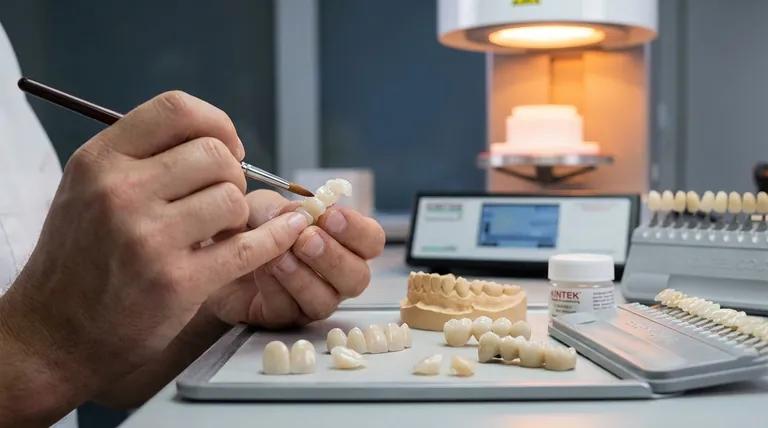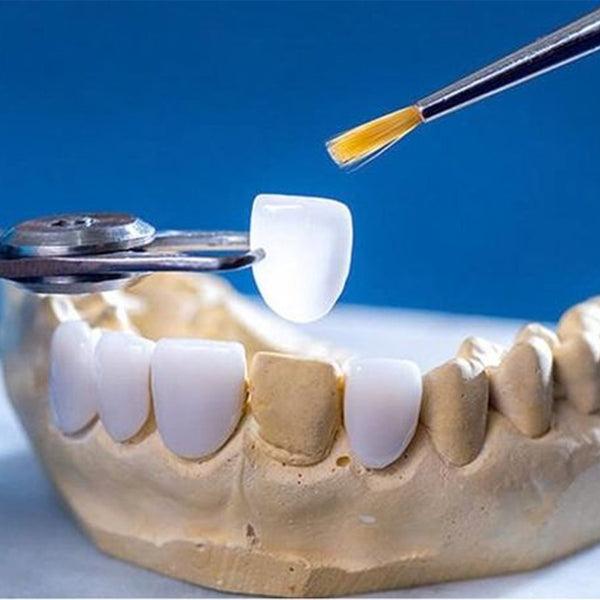

As cosmetic dentistry becomes more competitive, veneer quality is no longer judged only by fit. Patients now expect restorations to deliver natural translucency, seamless shade integration, and stable long-term aesthetics under different lighting conditions.
For clinics, inconsistent veneer production often creates operational problems that go far beyond aesthetics. Remake cases, delayed delivery, mismatched shades, and repeated chairside adjustments can disrupt schedules and reduce patient confidence.
A professional veneers production lab helps clinics solve these issues through standardized digital workflows, controlled ceramic manufacturing, and precise aesthetic processing systems.
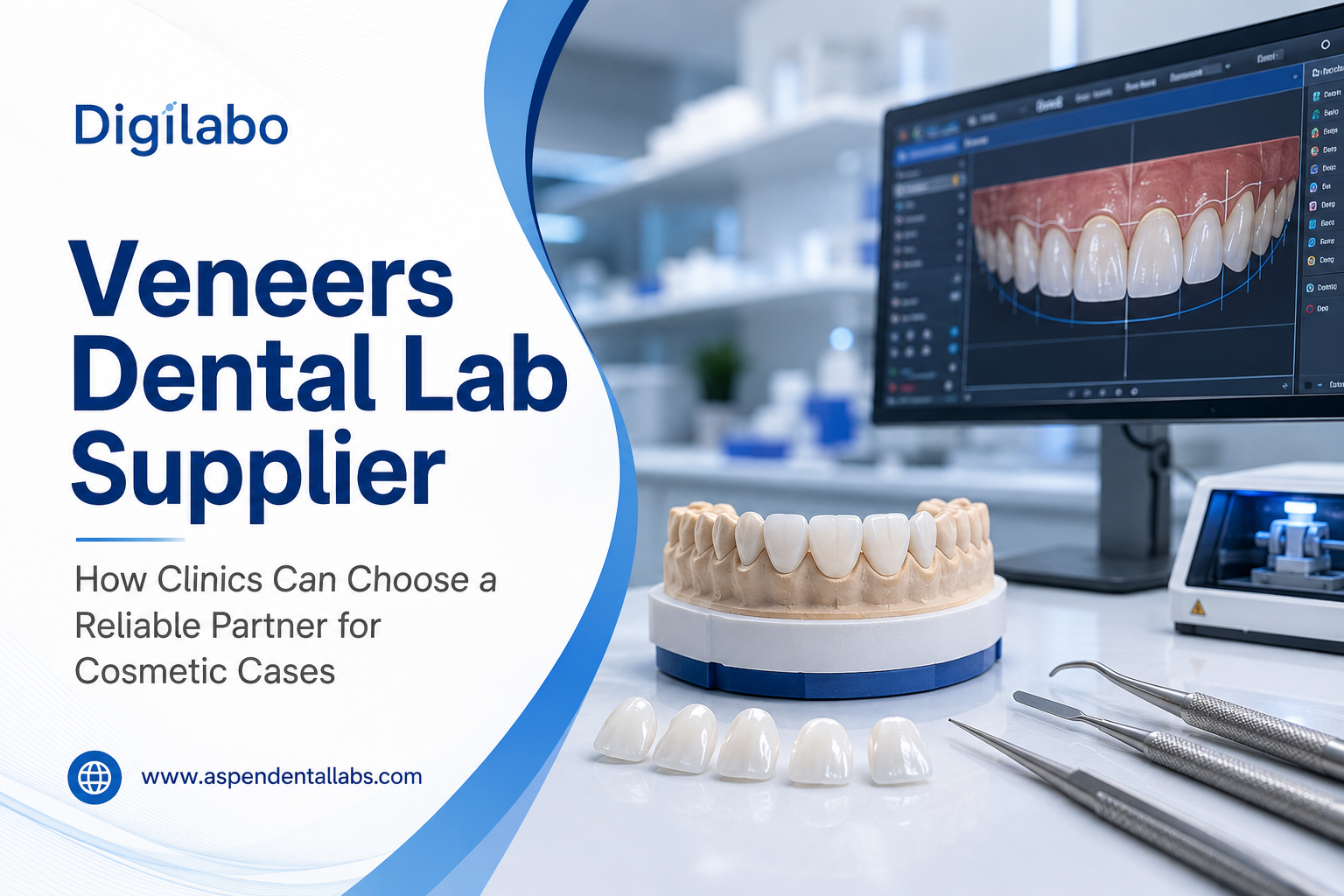
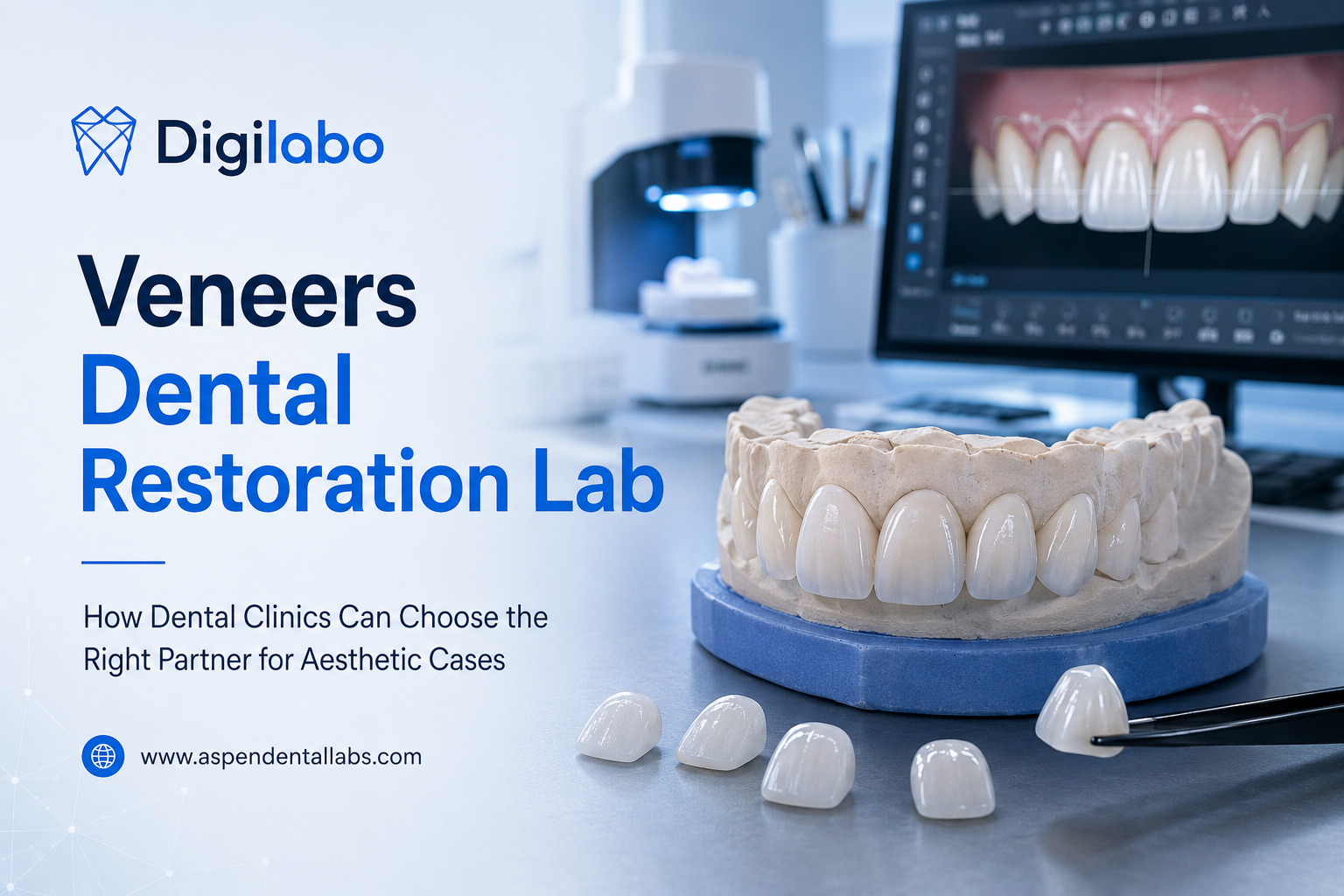
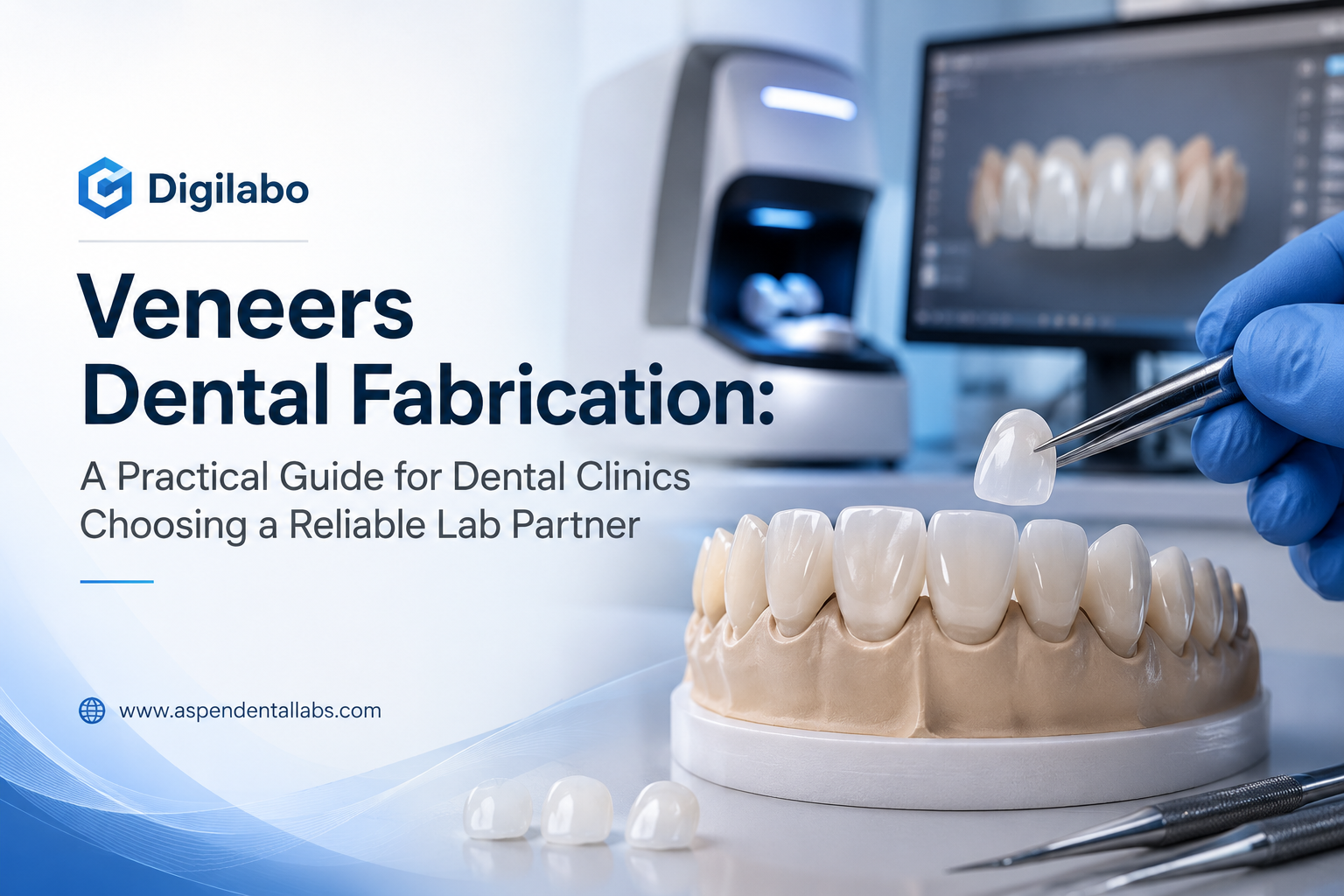
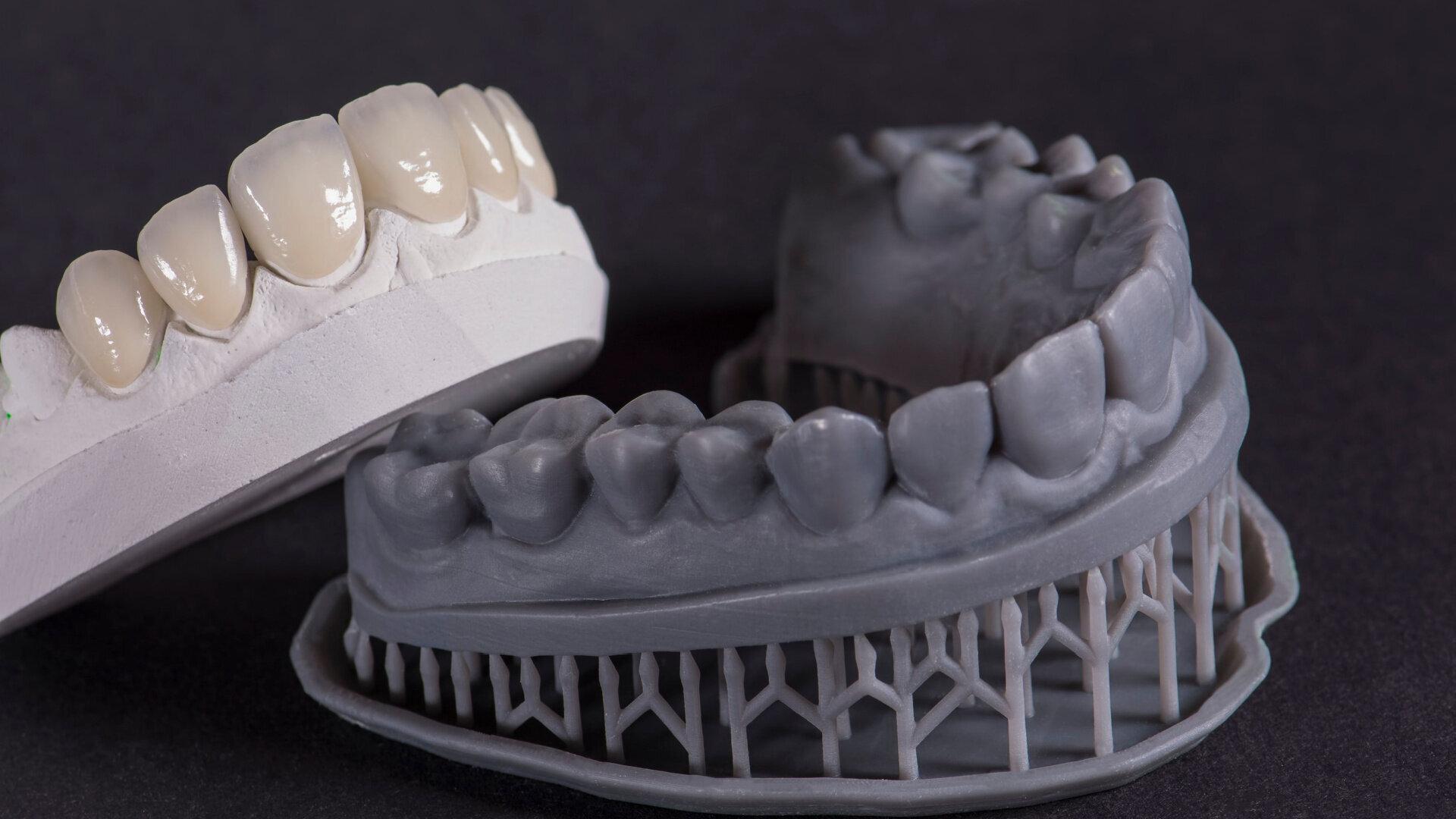
At Digilabo, veneer production combines CAD/CAM workflows, digital smile design, ceramic layering protocols, and multi-stage inspection systems to improve cosmetic consistency across different veneer cases.
The American Academy of Cosmetic Dentistry continues emphasizing the importance of precision manufacturing and aesthetic control in modern veneer restorations.
https://www.aacd.com
What Defines a Professional Veneers Production Lab
A veneers production lab requires much more than ceramic fabrication capability.
A reliable production workflow must control:
- veneer translucency consistency
- ceramic layering depth
- marginal adaptation accuracy
- digital design precision
- surface texture and light reflection
Unlike posterior restorations, veneers are highly sensitive to visual inconsistencies.
Even small differences in:
- ceramic firing temperatures
- polishing methods
- shade mapping
- edge finishing
can noticeably affect the final appearance of a smile.
Materials Commonly Used in Veneers Production
At Digilabo, veneer production commonly includes:
- lithium disilicate veneers
- feldspathic porcelain veneers
- layered ceramic veneers
- hybrid ceramic restorations
Veneer Material Comparison
| Material | Translucency | Strength Range | Typical Application |
|---|---|---|---|
| Lithium Disilicate | High | 360–400 MPa | Standard esthetic veneers |
| Feldspathic Porcelain | Very high | Lower | Premium smile design |
| Layered Ceramic | High | Medium | Customized veneers |
| Hybrid Ceramic | Medium | 150–200 MPa | Conservative restorations |
Key Production Variables
- CAD/CAM precision improves adaptation
- Layering depth affects optical realism
- Surface texture controls natural reflection
- Controlled firing stabilizes final shade
In aesthetic dentistry, production consistency is often more important than production speed.
Why Clinics Depend on Specialized Veneers Production Labs
Many cosmetic clinics initially work with general dental laboratories. Over time, they begin facing recurring issues:
- unstable veneer shade outcomes
- inconsistent translucency
- increasing remake rates
- communication gaps during smile design cases
A professional veneers production lab helps stabilize cosmetic workflows through repeatable manufacturing systems and digital production control.
Clinics often choose specialized veneer production partners because they provide:
- predictable aesthetic quality
- scalable cosmetic workflows
- stable turnaround times
- reduced veneer remakes
- better digital workflow compatibility
For high-volume cosmetic clinics, production reliability directly impacts treatment efficiency.
Standard Veneer Workflow vs Professional Veneers Production Workflow
| Workflow Factor | General Lab Workflow | Veneers Production Lab |
|---|---|---|
| Aesthetic consistency | Variable | High |
| Shade control | Moderate | Precise |
| Digital workflow integration | Basic | Advanced |
| Cosmetic remake rate | 6–10% | 2–4% |
| Surface characterization | Limited | Customized |
The largest improvement usually comes from workflow standardization.
Case Insight: Improving Veneer Consistency Across Cosmetic Cases
A cosmetic dental clinic experienced recurring veneer remake cases caused by inconsistent translucency and uneven shade transitions between anterior restorations.
After partnering with Digilabo:
- digital smile previews standardized communication
- ceramic layering protocols improved consistency
- CAD/CAM workflows reduced veneer variation
Within several months:
- veneer remakes decreased significantly
- chairside adjustment time was reduced
- patient acceptance improved across smile design cases
The improvement came from production control and workflow consistency rather than changing veneer materials alone.
How Digilabo Supports Modern Veneers Production
Digilabo supports cosmetic dental clinics through scalable veneer production systems designed for precision and aesthetic stability.
Our veneer production workflow includes:
- STL digital file compatibility
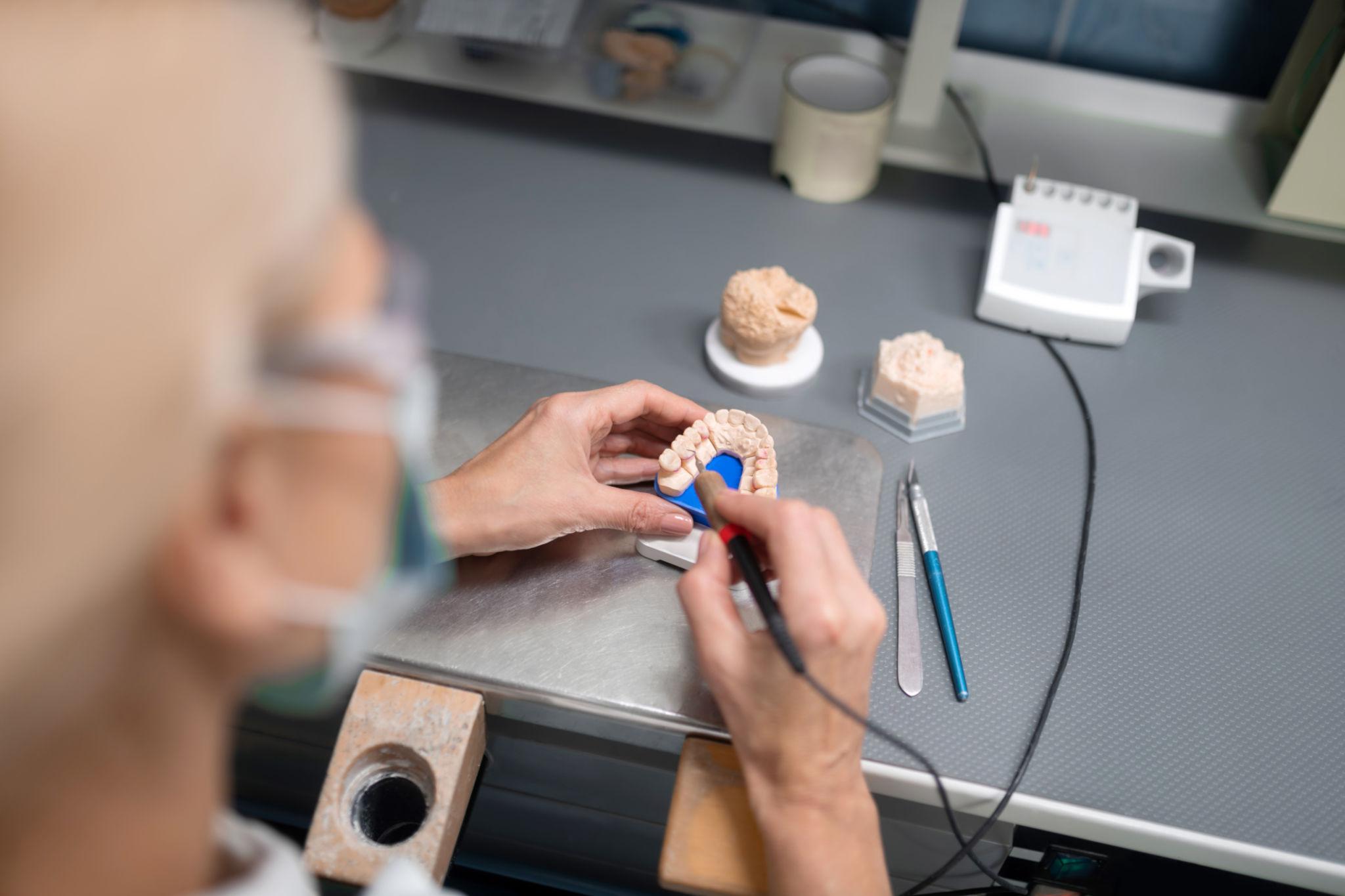
- CAD/CAM veneer design
- customized ceramic layering
- controlled firing cycles
- multi-stage quality inspection
To maintain consistent veneer quality, restorations are inspected for:
- shade stability
- translucency balance
- marginal fit
- surface texture consistency
Our production systems follow internationally recognized digital manufacturing and quality control standards used in modern cosmetic dentistry.
Q&A
Q: What is a veneers production lab?
A:
A veneers production lab specializes in manufacturing cosmetic veneer restorations through digital workflows and controlled ceramic processing systems.
Q: Why do clinics use specialized veneer production labs?
A:
Specialized veneer labs improve aesthetic consistency, reduce remake cases, and provide scalable cosmetic workflows.
Q: Which materials are commonly used for veneers?
A:
Lithium disilicate, feldspathic porcelain, and layered ceramics are widely used due to their translucency and aesthetic performance.
Working With Digilabo
Digilabo helps clinics improve cosmetic veneer workflows through digital production systems, advanced ceramic processing, and scalable manufacturing support.
Learn about our labs and technical capabilities:
https://www.aspendentallabs.com/about-us
View complete restoration solutions:
https://www.aspendentallabs.com/products
More service and process details:
https://www.aspendentallabs.com/service-page
A stable veneer production system is not just a matter of manufacturing efficiency.
It determines whether each aesthetic restoration is natural, consistent, and predictable.