
A diagnostic wax-up helps dental professionals evaluate a proposed restoration design before definitive treatment. For veneer clinics, cosmetic dentists, prosthodontists, and dental laboratories, choosing the right diagnostic wax up supplier involves more than finding the lowest quotation. The service scope, case information, design approval process, and acceptance criteria all influence whether the delivered wax-up supports the intended planning workflow.
This guide explains how to prepare a request for quotation, compare supplier proposals, assess a first case, and establish a repeatable ordering process. It is designed for dental clinics and laboratory partners sourcing diagnostic wax-up services for individual restorations, multi-unit veneer cases, and smile-design workflows.
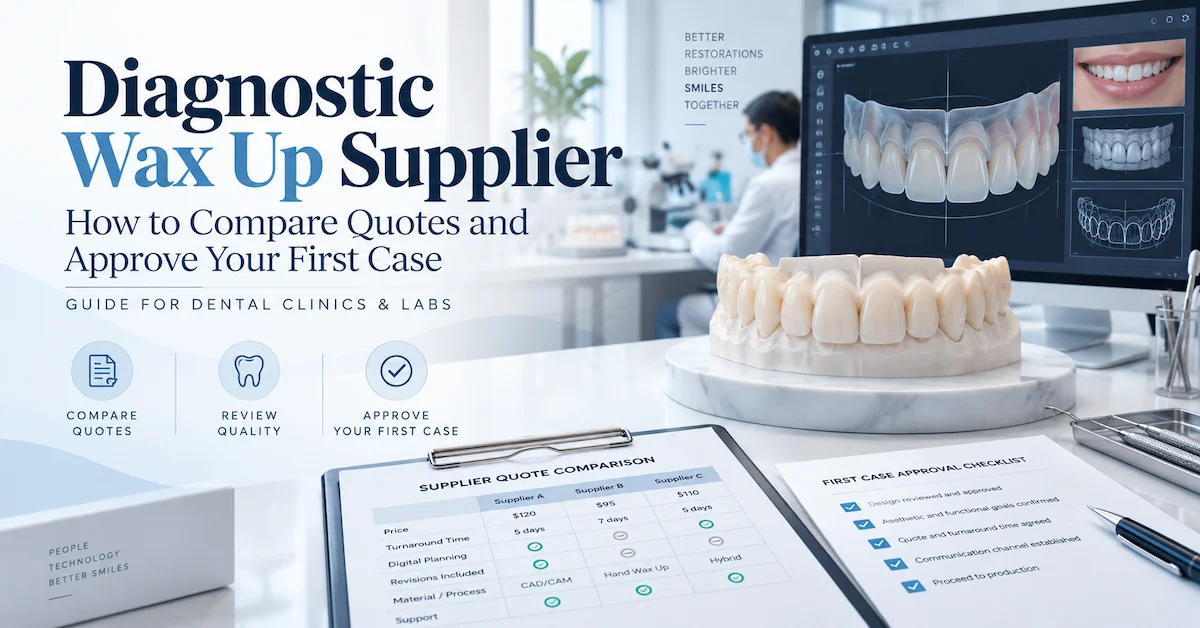
1. What Does a Diagnostic Wax Up Supplier Provide?
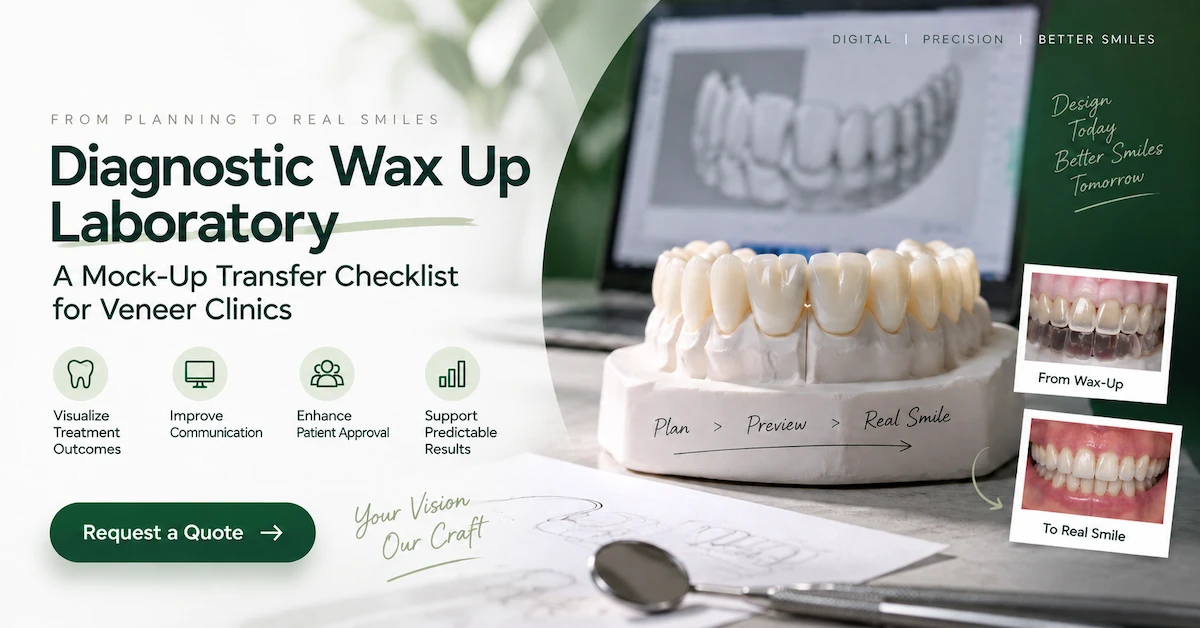
A diagnostic wax-up supplier creates a proposed restoration form that helps the dental team assess tooth shape, proportions, length, contours, and the overall restorative concept. Depending on the agreed service, the deliverable may be a physical wax-up, a digital design, or a digital plan used to manufacture a physical model or transfer aid.
These deliverables are related but not interchangeable. A digital design file is not automatically a finished physical wax-up, and a physical wax-up does not necessarily include every file or accessory needed for clinical transfer. Buyers should specify exactly what they expect to receive.
| Service option | Potential deliverable | Buyer should confirm |
|---|---|---|
| Digital diagnostic wax-up | Approved digital restoration design | File format, included units, revision limits, and file usability |
| Physical wax-up | Waxed diagnostic model or specified physical design | Arch, unit count, model requirements, and shipping protection |
| Wax-up with transfer planning | Wax-up plus separately agreed transfer-related items | Whether a silicone index, matrix, or other component is included |
| Smile-design case support | Design work based on scans and visual references | Required photographs, design instructions, approval stages, and final deliverables |
For a broader overview of available laboratory categories, visit the dental laboratory product portfolio. Confirm the availability and scope of a specific wax-up configuration with the laboratory before ordering.
2. Which Buyers Need a Diagnostic Wax-Up Supplier?
Cosmetic and Veneer Clinics
Clinics planning multiple anterior veneers may need a visual reference before definitive restorations are fabricated. A diagnostic wax-up can help the dentist evaluate proposed tooth proportions and discuss the restorative concept with the patient. The laboratory needs clear design instructions and suitable case records to interpret the requested outcome.
Prosthodontists and Restorative Specialists
More complex restorative cases may involve changes in tooth length, contour, occlusal relationships, or the distribution of restorative space. These cases benefit from a defined prescription and a documented approval process. The clinician remains responsible for clinical assessment and treatment decisions.
Dental Laboratories and Outsourcing Partners
Dental laboratories may outsource selected design or wax-up tasks when internal resources are limited or when a case requires additional design support. These buyers should pay particular attention to file compatibility, revision control, communication responsibilities, and consistency between repeated orders.
3. What Information Should You Send for a Quote?
A quotation is only meaningful when the supplier understands the requested work. Sending only the phrase “diagnostic wax-up” leaves important details unresolved and can result in incomparable proposals.
Prepare the following information where relevant to the case:
- Restoration scope: Specify the arch, teeth or units involved, and whether the request concerns an anterior, posterior, or full-arch design.
- Digital records: Identify the available intraoral scans, model scans, bite records, and requested file formats.
- Visual references: Supply appropriate smile photographs, retracted views, shade references, and design examples when needed.
- Design instructions: Explain the intended tooth shape, length, contour, symmetry, and any specific areas requiring attention.
- Clinical context: Include the dentist's relevant prescription and constraints, without asking the laboratory to replace clinical judgment.
- Required deliverables: State whether you need digital files, a physical wax-up, a model, or separately specified transfer components.
- Approval requirements: Explain who reviews the design, how revisions are requested, and what constitutes final approval.
- Schedule and destination: Provide the requested completion date, shipping destination, and any appointment-related constraints.
Patient information should be shared only through an appropriate, secure channel and limited to what is necessary for the case. Confirm the applicable privacy and data-handling arrangements with your supplier.
4. How to Compare Diagnostic Wax-Up Supplier Quotes
Do not compare quotations until their scope has been standardized. One supplier may quote for a digital design only, while another may include a physical model or additional revisions. The lower headline price may therefore represent a different service.
| Quotation item | Questions to ask | Why it matters |
|---|---|---|
| Design scope | How many units and which design tasks are included? | Prevents hidden scope differences |
| Digital files | Which formats and editable or export files will be supplied? | Supports workflow compatibility |
| Physical output | Is a physical wax-up or model included? | Clarifies manufacturing and delivery expectations |
| Revisions | How many review rounds are included, and what counts as a new request? | Controls redesign costs |
| Shipping | Are packing, shipping, and related charges included? | Establishes the total delivered cost |
| Lead time | When does the stated turnaround begin, and does approval affect it? | Helps coordinate clinical appointments |
| Quality acceptance | What inspection criteria and correction procedures apply? | Reduces disputes over subjective expectations |
Request a written quotation that separates the service fee, optional items, shipping, and any additional revision charges. If the supplier cannot confirm a final price before reviewing the case, ask which details are needed to provide a reliable estimate.
5. How to Evaluate a Supplier's Digital Workflow
Digital tools can make case transfer and design review more convenient, but the presence of CAD software alone does not establish that a supplier's workflow suits your clinic. Buyers should verify how case data moves through the actual process.
File Intake and Compatibility
Ask which scan and design formats the laboratory accepts, how files are associated with prescriptions, and how missing or unreadable data is handled. If your practice uses a scanner-specific submission platform, confirm the supported transfer method before sending the first case.
Design Review and Revision Control
Agree on how the proposed design will be presented for review. Establish how feedback should identify a particular tooth or contour, who can approve changes, and how the supplier distinguishes an approved revision from an earlier version.
Final Deliverable Verification
Before closing the order, confirm that the received files or physical items match the quotation. Verify the unit count, requested output, case identification, and approved revision. These simple checks help prevent a design from being mistaken for the final approved version.
For information about the laboratory's broader workflow, consult the dental laboratory services page and confirm any case-specific requirements directly with the team.
6. First-Case Approval: A Practical Acceptance Checklist
A first order is an opportunity to evaluate whether the supplier's communication and deliverables fit your workflow. Before placing repeated orders, use a written checklist instead of relying on a general impression.
| Checkpoint | What the buyer should verify |
|---|---|
| Case identity | The patient or case reference matches the prescription and supplied files. |
| Scope | The requested teeth, arch, and units are included. |
| Design brief | The delivered proposal reflects the approved instructions and reference information. |
| File usability | Digital outputs open in the intended workflow and use the agreed format. |
| Physical condition | Where applicable, the wax-up or model arrives intact and identifiable. |
| Revision status | The approved version is clearly distinguished from earlier drafts. |
| Transfer accessories | Any separately ordered matrix, index, or accessory is present as specified. |
| Documentation | Outstanding questions, corrections, and acceptance are recorded. |
A wax-up is a planning aid, not proof that a definitive restoration will fit or that a proposed treatment is clinically appropriate. The dentist must evaluate the design, restorative space, occlusion, preparation requirements, and transfer method within the clinical context before proceeding.
7. Common Procurement Mistakes That Increase Costs
Comparing Prices Without Matching the Scope
A digital-only quote should not be compared directly with a package that includes physical output, transfer accessories, and additional design revisions. Create a common specification and ask every supplier to quote against it.
Leaving Design Expectations Unspecified
Words such as “natural,” “esthetic,” or “ideal proportions” may not communicate the same visual target to every person. Provide clear references and identify the design characteristics that matter most. The dentist should review and approve the proposed design.
Assuming Unlimited Revisions
Clarify whether revisions caused by a misunderstanding of the original instructions are treated differently from changes to the approved design. A written policy helps both sides distinguish correction from a new scope of work.
Ignoring Delivery and Scheduling
A quoted production time may not include time spent waiting for missing files, design approval, or international shipping. Ask when the schedule begins and which events can change the estimated completion date.
Ordering Repeated Cases Without Standardization
Once a workflow is approved, document the preferred file formats, prescription fields, design references, review contacts, and acceptance criteria. A consistent process makes future orders easier to manage and compare.
8. How to Request a Diagnostic Wax-Up Supplier Quote
A clear enquiry helps the laboratory determine whether the requested service matches its available workflow and what additional information is needed. Include the following details in your initial message:
- Your organization type: dental clinic, specialist practice, or dental laboratory.
- The case type and number of teeth or units involved.
- The digital files, photographs, and prescription details available.
- Whether you require a digital design, physical wax-up, or additional transfer items.
- Your expected review process and required deliverables.
- Your target schedule and shipping destination.
- Your expected monthly case volume if you are evaluating a continuing partnership.
For an enquiry tailored to your case, use the Aspen Dental Labs contact page. You can also review the laboratory profile to learn more about the company before discussing your requirements.
Planning a Diagnostic Wax-Up Case?
Send your case scope, available digital records, required deliverables, and target schedule to discuss the appropriate laboratory workflow and quotation requirements.
Request a Case Quote → Explore Laboratory Products9. Frequently Asked Questions
What should I look for in a diagnostic wax up supplier?
Look for clear service scope, suitable digital workflow, documented design revisions, transparent quotation terms, defined acceptance criteria, and responsive case communication. Confirm each capability against your actual requirements rather than relying on general marketing claims.
What files are needed for a diagnostic wax-up quote?
Requirements depend on the case and requested deliverable. They may include upper and lower arch scans, bite records, photographs, a prescription, and specific design references. Ask the supplier to confirm its exact intake requirements before submission.
Is a digital wax-up the same as a physical wax-up?
No. A digital wax-up is a virtual design, while a physical wax-up is a tangible representation of the proposed form. Confirm whether the quotation includes one or both, along with any model or transfer accessories.
How can I compare diagnostic wax-up costs?
Compare equivalent scopes, including unit count, design tasks, file delivery, physical output, revisions, shipping, and correction policies. A meaningful comparison uses the total cost for the same specified deliverables, not only the starting price.
How many design revisions should be included?
There is no universal number suitable for every laboratory or case. Agree on the included review rounds, the method for submitting feedback, and the charges or approval needed for additional changes before ordering.
Can a diagnostic wax-up be used for veneer treatment planning?
It can help visualize a proposed tooth form and support discussion of restorative options. Its suitability and clinical implications must be evaluated by the treating dentist, and it should not be treated as a guarantee of the final restoration outcome.
What should I check when receiving the first case?
Confirm the case identity, unit count, approved design revision, file usability, physical condition if applicable, and presence of all quoted deliverables. Record any discrepancy and agree on the correction process before moving to the next clinical step.
Can dental laboratories outsource diagnostic wax-up work?
Some laboratories source external design or wax-up services to support workload or specific case requirements. Before establishing a partnership, verify file compatibility, communication responsibilities, confidentiality arrangements, revision control, and repeat-order procedures.
Does the quoted turnaround include shipping?
Not necessarily. Ask whether the stated time covers design, approval, manufacturing, packing, and transportation. Confirm the estimated schedule for your destination and whether missing records or delayed approvals affect it.
How do I request a quotation from Aspen Dental Labs?
Use the contact page and provide your case type, required deliverables, available files, unit count, and schedule. The laboratory can then clarify the information needed to assess your request.
Conclusion
Choosing a diagnostic wax up supplier is a procurement decision that should be based on defined deliverables, compatible digital records, clear design instructions, documented approval, and transparent costs. Dental clinics and laboratory partners can reduce avoidable delays by standardizing case submissions, comparing equivalent quotations, and checking the first case against an agreed acceptance checklist.
Before committing to repeat orders, confirm that the supplier's actual service scope matches your clinical workflow and that responsibilities for design approval, revisions, delivery, and corrections are clearly documented. To discuss a potential case or request a tailored quotation, visit Aspen Dental Labs Contact Us.