
When Dental Prosthetics Don’t Fit as Expected: What a Professional Dental Prosthetics Lab Changes
A patient returns for crown delivery. The restoration looks perfect on the model—but once seated, something feels off. The bite is slightly high. Contacts are tighter than expected. Adjustment takes longer than planned.
This is one of the most common frustrations in restorative dentistry.
In many cases, the issue isn’t the scan or the preparation. It comes down to how the prosthesis was designed and manufactured inside the dental prosthetics lab.
At Digilabo, we’ve seen clinics struggle not because of lack of technology, but because their lab partner lacks standardized prosthetic design protocols and material control.
Our approach focuses on three things:
-
Functional occlusion accuracy
-
Material-specific design strategy
-
Digital-to-production consistency
According to the American College of Prosthodontists, long-term prosthetic success depends heavily on accurate fit, occlusion stability, and material selection—all of which are directly influenced by laboratory quality.
How a Dental Prosthetics Lab Defines the Outcome of Every Restoration
Every prosthetic restoration—whether a crown, bridge, or implant case—is a combination of design and execution.
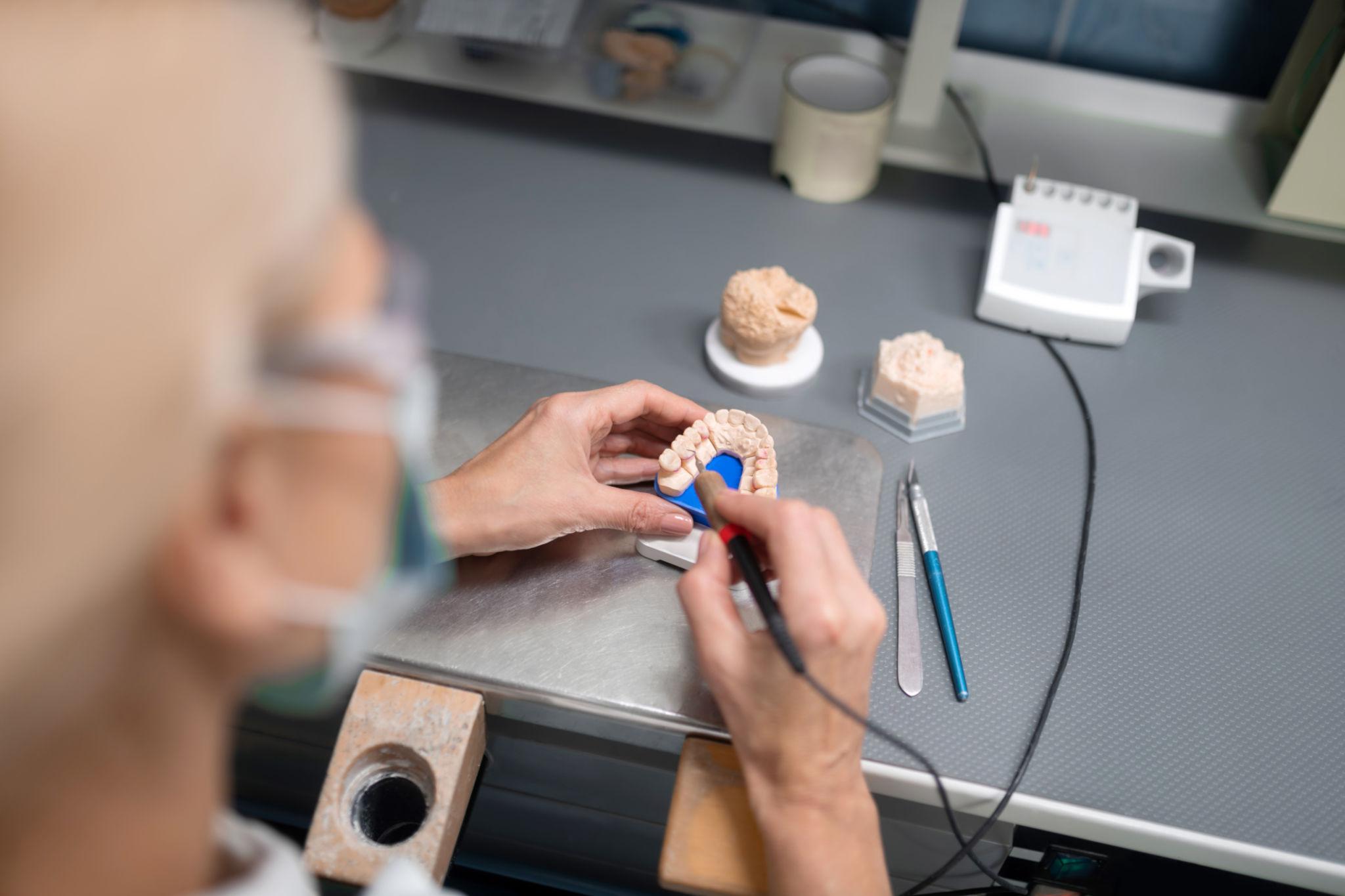
A professional dental prosthetics lab doesn’t just “produce” restorations. It interprets clinical data and transforms it into functional prosthetics.
In real workflows, this includes:
-
Margin detection and refinement
-
Occlusion mapping using digital articulation
-
Contact point calibration
-
Structural thickness control for strength
Small design errors at this stage can result in:
-
20–30% increase in chairside adjustment time
-
Higher risk of occlusal imbalance
-
Increased remakes
That’s why advanced labs rely on CAD-based simulation before manufacturing begins.
Materials, Structure, and Engineering: What Happens Behind Each Prosthetic
Not all prosthetics are created equal—even when they look similar.
The real difference lies in how materials are selected and processed.
Common prosthetic materials include:
-
Monolithic zirconia (high strength, posterior use)
-
Layered zirconia (balance of strength and aesthetics)
-
Lithium disilicate (esthetic anterior restorations)
-
PMMA (temporary restorations)
-
Titanium interfaces (implant prosthetics)
Key Material & Performance Comparison
| Material | Flexural Strength | Main Application | Adjustment Sensitivity |
|---|---|---|---|
| Zirconia | 900–1200 MPa | Posterior crowns/bridges | Low |
| Lithium Disilicate | 360–400 MPa | Veneers/anterior crowns | Medium |
| Hybrid Ceramic | 150–200 MPa | Conservative restorations | High |
| PMMA | <120 MPa | Temporary prosthetics | High |
Even more important is design adaptation:
-
Posterior crowns require thicker occlusal surfaces
-
Implant restorations require passive fit precision
-
Veneers demand micro-level margin accuracy
A well-structured dental prosthetics lab aligns material selection with real clinical conditions—not just aesthetics.
Why Clinics Rely on Specialized Dental Prosthetics Labs Instead of General Labs
There is a clear shift happening in the industry.
Clinics are moving away from general dental labs and choosing specialized prosthetics-focused laboratories.
The reasons are practical:
-
More consistent prosthetic fit across cases
-
Reduced need for chairside adjustments
-
Better handling of complex implant cases
-
More predictable long-term outcomes
Operational Impact Comparison
| Metric | General Lab | Prosthetics-Focused Lab |
|---|---|---|
| Remake rate | 7–10% | 2–4% |
| Occlusion accuracy | Moderate | High precision |
| Implant case success rate | Variable | Highly consistent |
| Average adjustment time | 10–15 min | 4–6 min |
These differences directly affect clinic efficiency and patient satisfaction.
A Clinical Case: When Prosthetic Design Solves a Repeated Problem
A dental clinic approached Digilabo after experiencing repeated issues with implant crowns.
The restorations looked correct but often required chairside adjustments due to minor misfits in occlusion and contact.
After reviewing their workflow, we identified the issue:
The previous lab relied on manual articulation rather than digital occlusion simulation.
Our solution included:
-
Full digital articulation of the case
-
Adjusted contact strength based on opposing dentition
-
Controlled zirconia thickness for stress distribution
Within two months:
-
Adjustment time reduced by 55%
-
Implant seating improved significantly
-
Remake frequency dropped by nearly 40%
The prosthetics didn’t change in appearance.
But functionally, they performed far better.
How Digital Dental Prosthetics Labs Improve Predictability
Predictability is what every dentist ultimately wants.
Modern prosthetics labs achieve this through:
-
CAD/CAM design standardization
-
Digital occlusion simulation
-
Automated milling and 3D printing
-
Consistent material processing
The International Team for Implantology emphasizes that precision in prosthetic design and manufacturing is critical for implant success and long-term stability.
By removing manual variability, digital prosthetics labs create more reproducible results.
What to Expect From a High-Level Dental Prosthetics Lab
When working with a professional lab, dentists should expect more than just production.
A reliable dental prosthetics lab should provide:
-
Case-specific design recommendations
-
Material selection guidance
-
Digital preview before manufacturing
-
Consistent turnaround time
-
Clear communication on complex cases
This transforms the lab from a supplier into a true clinical partner.
Q&A
Q: What is a dental prosthetics lab?
A: A dental prosthetics lab specializes in designing and manufacturing dental restorations such as crowns, bridges, dentures, and implant prosthetics based on clinical data.
Q: Why are prosthetics labs important for implant cases?
A: Implant restorations require high precision. Even small deviations can affect fit and long-term stability, making lab expertise critical.
Q: Do digital prosthetics labs reduce adjustment time?
A: Yes. Digital workflows improve accuracy, often reducing chairside adjustment time by 40–60%.
Working With Digilabo for Dental Prosthetics
Digilabo operates as a specialized dental prosthetics lab, supporting clinics with digitally designed crowns, bridges, implant restorations, and removable prosthetics.
If you’d like to learn more about our lab background and workflow standards, visit:
https://www.aspendentallabs.com/about-us
Or explore our prosthetic solutions and service categories here:
https://www.aspendentallabs.com/products
A well-designed prosthetic is not just about aesthetics.
It’s about function, longevity, and confidence in every case.